Nvidia DLSS 5 switches detail modes in real time
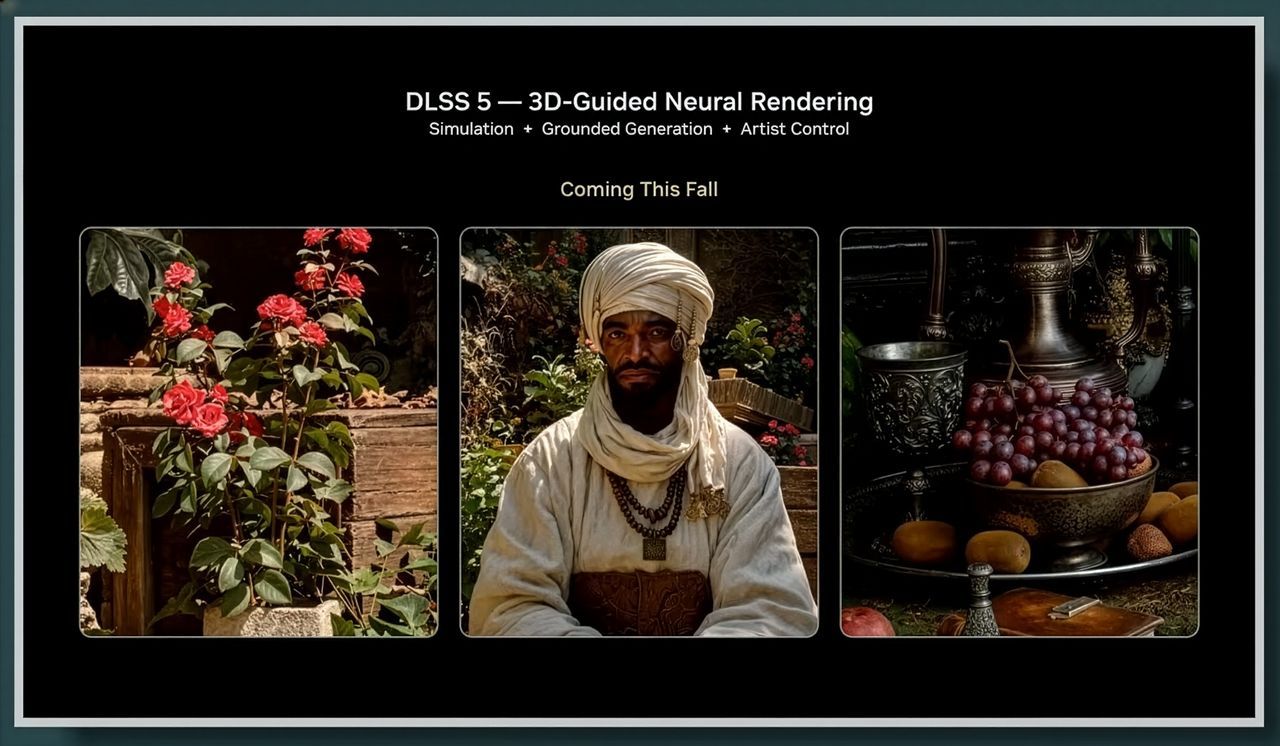
Nvidia’s DLSS 5: When AI Painted the Picture and Sparked a Riot
The world of gaming graphics has just been shaken up by Nvidia’s latest leap in artificial intelligence-infused technology. Earlier this year, Nvidia unveiled DLSS 5, an upscaling system that promised to transform visual fidelity with photorealistic lighting and materials. While the promise of stunning visuals is undeniable, the rollout was met with a significant dose of skepticism and even backlash from some enthusiasts who felt the AI integration had crossed a line.
When Nvidia first introduced DLSS 5, there was a debate about where the boundaries of artistic creation should end and technological assistance begin. The reaction suggested that some felt the push toward AI-driven image enhancement was overstepping the scope of what gamers expected from their visual experiences.
Despite the initial friction, Nvidia’s CEO Jensen Huang remained steadfast in his defense, assuring the community that DLSS 5 would preserve artistic intent. He argued that the gaming community simply misunderstood the potential of this new generation of technology, and he doubled down on defending the innovation.
So, what exactly did DLSS 5 bring to the table? The core innovation lies in its flexible approach to image generation. Instead of forcing a single visual style, DLSS 5 introduces three distinct models, allowing developers unprecedented control over scene complexity. This means that different elements within a game—such as characters versus the background environment—can be rendered with varying levels of detail and impact on performance.
Crucially, this system operates in real-time, giving developers the liberty to dynamically switch between these models without any perceptible latency. This level of fine-tuning allows designers to tailor visual fidelity exactly where it is needed, moving beyond a one-size-fits-all upscaling approach.
DLSS 5 doesn’t rely solely on upscaling; it acts as part of a broader ecosystem that includes DLSS, FSR, and XeSS. These technologies now serve as essential anti-aliasing solutions in modern titles and enhance complex features like ray tracing, integrating seamlessly into the overall rendering pipeline.
The development process itself presented significant technical hurdles. Nvidia navigated challenges related to preserving original creative vision and managing the complexity of generative AI models, which typically handle multiple frames simultaneously rather than just a single image. Optimizing this technology while maintaining performance remained key objectives for the engineering teams.
Despite these complexities, the results are clearly pushing boundaries. The new models demonstrate impressive efficiency, with some versions running on a single GPU and being highly VRAM efficient. Nvidia is also promising real-time 4K performance thanks to a more compact model that has learned from larger diffusion models.
As the industry continues to evolve—with competitors like AMD finally catching up with robust upscaling solutions—DLSS 5 stands as a massive step forward for visual technology. While the debate over artistic intent will continue, the path ahead is clear: expect further refinement and optimization as Nvidia continues to tune the models based on community feedback.
The official release date remains pending, but experts anticipate DLSS 5 will launch sometime in Q3 2026, marking a major evolution for how we experience high-fidelity gaming visuals.
Credit