Razer Blade 16 (2026) Visuals and Performance Review
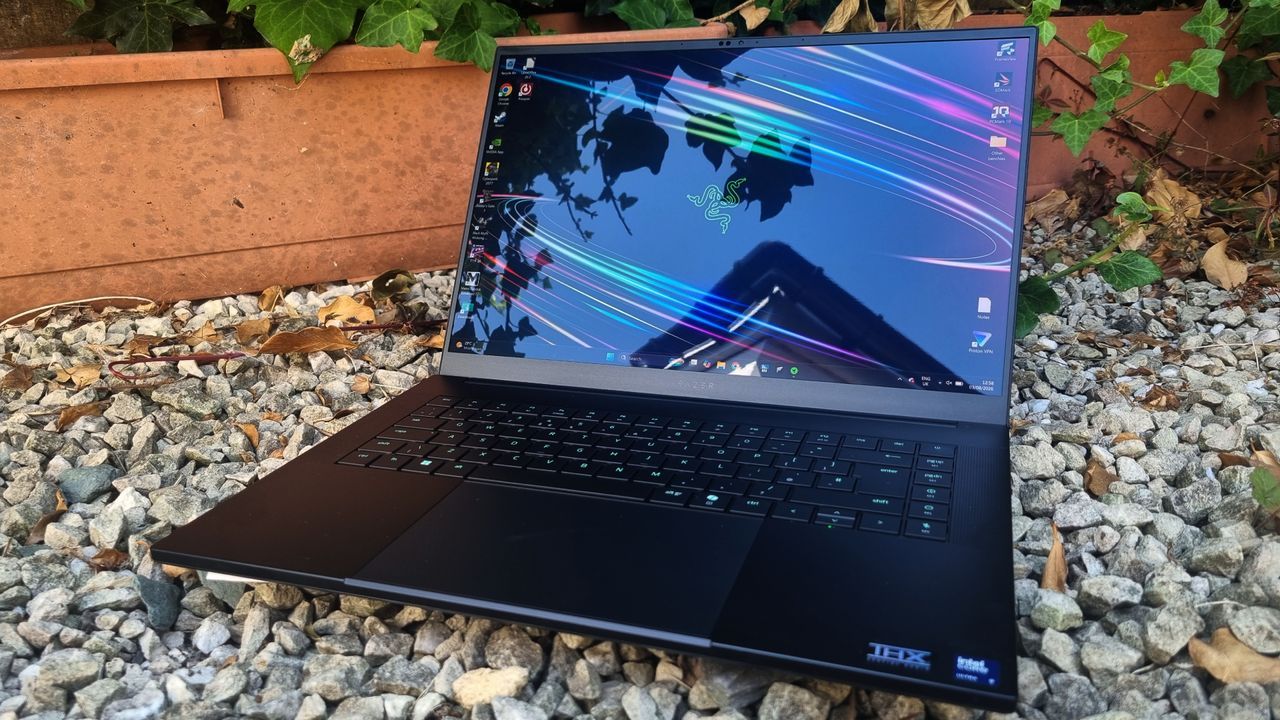
This text is a detailed review focusing on the performance, battery life, aesthetics, and value proposition of the Razer Blade 16 (2026), comparing it against other high-end gaming laptops.
Here is a summary of the key points discussed:
1. Gaming Performance & Temperatures
Gaming Temps: Thermal results were recorded during Metro Exodus EE runs for various configurations.
Thermal Comparison (Data Table): The review provides specific temperature averages and maximums for four different laptops running similar setups, including the Razer Blade 16 (2026), Asus ROG Zephyrus G16 (2026), Razer Blade 16 (2025), and Lenovo Legion Pro 7i Gen 10.
The data shows variations in CPU/GPU temperatures across these systems.
2. Real-World Gaming Experience
Performance Settings: The reviewer noted that dropping the Blade 16 into Balanced power mode significantly reduces fan noise, component speeds, and temperatures, although this impacts gaming performance.
FPS Results: In Cyberpunk 2077 at 1600p with quality upscaling and frame gen enabled, the reviewer achieved an average of 100 fps with 68 fps 1% lows.
Conclusion on Performance: The author believes the Blade 16 is capable of being “civilised” in a way most high-powered laptops are not, justifying its expense by combining portability, balanced performance, and battery life.
3. Battery Life
Claim vs. Test: The new Blade 16 claims better overall battery life than the older model, but real-world gaming tests did not fully prove this advantage.
PCMark 10 Gaming Battery Life Test Data:
Razer Blade 16 (2026): 102 minutes
Asus ROG Zephyrus G16 (2026): 117 minutes
Razer Blade 16 (2025): 135 minutes
Lenovo Legion Pro 7i Gen 10: 73 minutes
Power Saving: Enabling the extra Battery Saver setting in Synapse yielded an additional six minutes of battery life, which was noted as not “mindblowing.”
4. Aesthetics and Software
Aesthetics: The Blade 16 is described as a “gorgeous machine” with a moody, purposeful aesthetic, successfully blending gaming hardware with a refined design suitable for business settings. The 240 Hz OLED display is also highlighted as stunningly vibrant.
Razer Synapse Software: While the software allows customization (Silent, Balanced, Performance modes) to manage fan noise and performance when plugged in, the reviewer noted that power configuration while on battery remains limited to preset options.
5. Value Proposition
Price Concern: The review acknowledges that the Blade 16 is now substantially more expensive due to the broader “memory crisis” in the market.
Comparison to Competitors: While it is extremely desirable, the reviewer questions how much the ultra-premium design justifies the cost compared to competitors like the Lenovo Legion Pro 7i, which can often be found for significantly less.
Final Verdict: The Blade 16 is still one of the best gaming laptops available, but at these high prices, it “lost just a touch of its shine.”
Buy on Amazon
Credit