SHOGUN 2 remake bugs and AI infuriate gamers
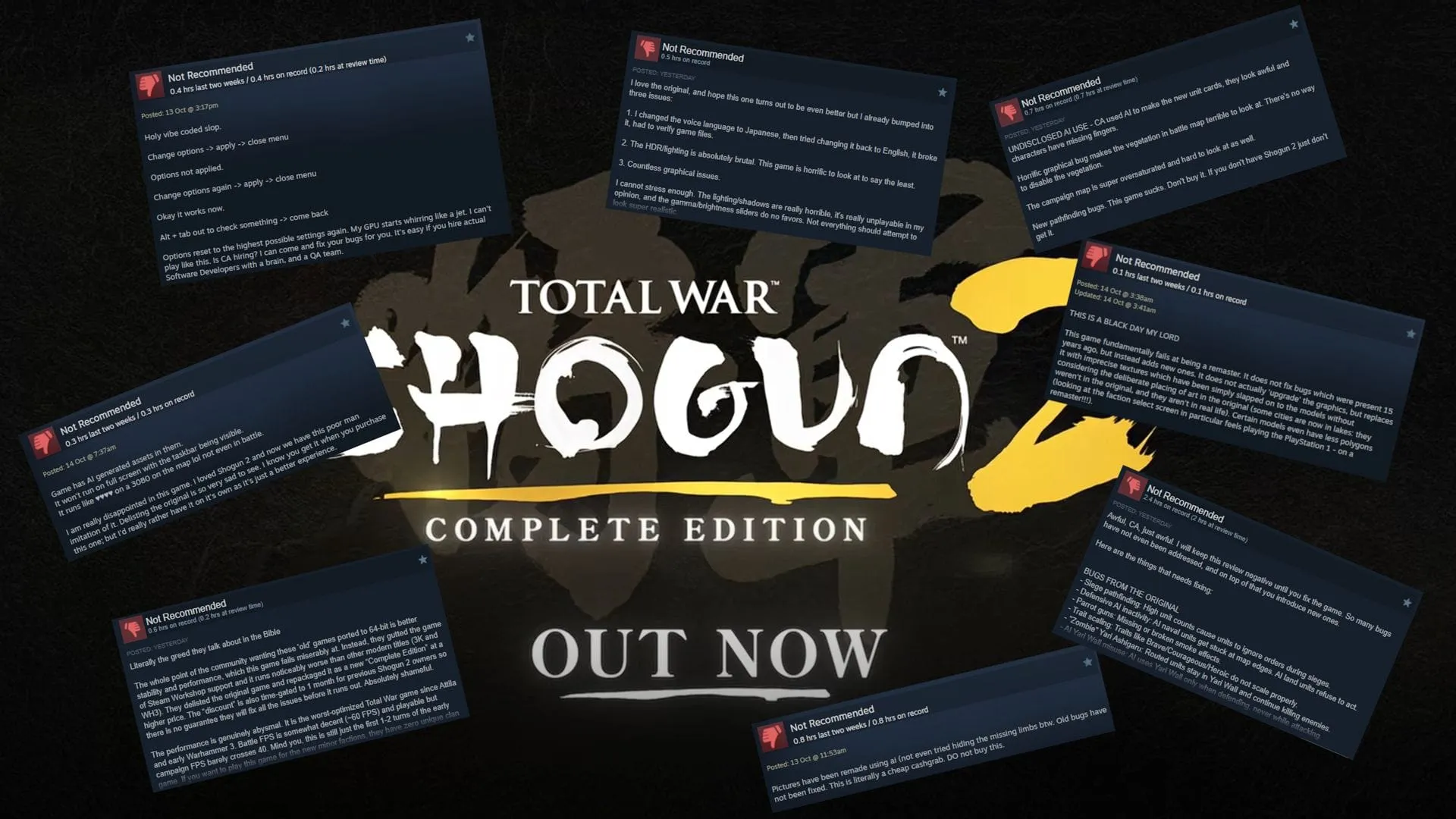
The world of gaming often pushes the boundaries of what we expect from a remake or remaster, but lately, there’s a new layer of controversy entering the mix—one involving artificial intelligence. SEGA’s discovery regarding the Total War: SHOGUN 2 “Enhanced” version has thrown a significant spotlight on the ethics and quality control of modern game development.
The original Total War: SHOGUN 2, released in 2011, holds a solid reputation, sitting at a Very Positive rating on Steam with over 22,000 user reviews. However, the new “Complete Edition,” which launched in late 2026, has drawn a much darker response, registering an Overwhelmingly Negative rating on Steam.
This sharp decline in reception immediately sparked a deeper investigation among players, leading to speculation about the source of the graphical and performance troubles. While many reviewers pointed to game-breaking bugs and poor performance, a growing chorus of discussion focused on something more subtle: the alleged use of AI in the development process.
When you look closely at the visual output of the enhanced version, questions arise. Do the unit cards look artificially smoothed? Do characters sport uncanny features, such as faces resembling parts of cars rather than proper portraits? These visual inconsistencies suggest that the process of graphical enhancement might have leaned too heavily on automated, rather than careful, AI upscaling techniques.
The larger issue is the lack of transparency. Steam now requires publishers to disclose whether AI was involved in game development, yet there is no such disclaimer on the Total War: SHOGUN 2 remake page. This omission fuels the suspicion that the graphical quality was compromised without player knowledge.
This debate highlights a critical distinction in the gaming landscape: the difference between a high-quality, thoughtfully executed upgrade and a rushed, potentially flawed cash grab. Remasters should offer genuine improvements, providing quality-of-life fixes and upgraded graphics, much like the The Witcher 3: Wild Hunt Remastered, which earned a perfect five stars and a 92% rating on Metacritic, free of charge to owners of the original game.
The reaction to SHOGUN 2 feels like a stark contrast to that success. While gamers are certainly accustomed to remakes occasionally having rough patches, the current outcry seems to center less on typical glitches and more on the perceived sloppiness of the underlying technology. It forces us to ask whether the focus has shifted from simply fixing bugs to ensuring that the artistic vision of the original game is preserved, regardless of the tools used for enhancement.
Buy on Amazon
Credit
