World’s first AI mobile workstation with homegrown CPU and mystery GPU
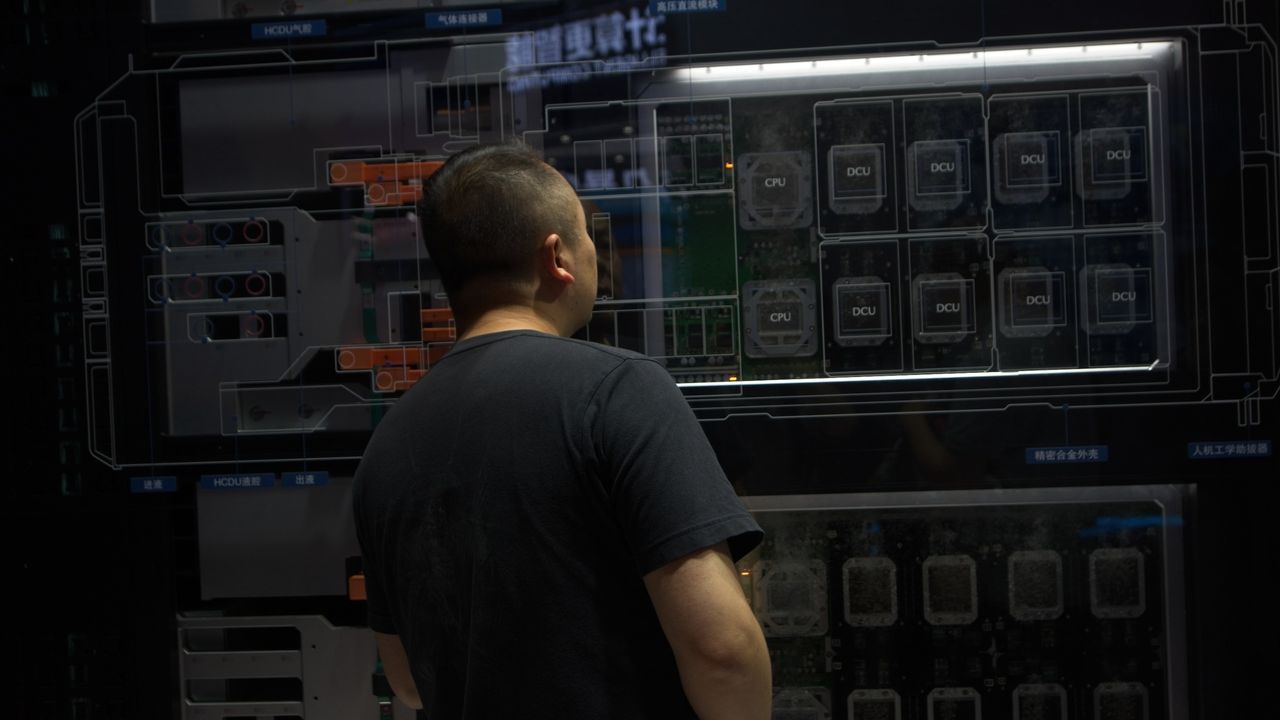
While names like Sugon and Hygon may not always make the headlines in lists of the best CPUs, they are quietly revolutionizing the landscape of artificial intelligence hardware in China. They are moving beyond the server room and into the realm of portable performance, teasing a mobile workstation that promises to redefine AI capabilities on the go.
This new device is less about traditional bulky workstations and more about redefining portability. The mobile workstation features a sleek design, measuring only 0.665 inches thick, placing it firmly in the category of thin, lightweight premium laptops. This slim profile ensures that power and cutting-edge processing are no longer confined to giant desktop towers; they are ready for the modern, mobile user.
At the core of this device is a potent combination of components designed specifically for intensive AI workloads. It is set to feature a powerful 64-thread processor paired with 16GB of VRAM, giving it the necessary muscle to handle complex neural network calculations efficiently.
The real excitement lies in the performance claims. The combination of this processor and a discrete graphics card is projected to deliver AI inference speeds up to 3X to 5X faster than mainstream cloud APIs. In practical terms, the device is rumored to be capable of processing up to 50 tokens per second when running massive 35-billion-parameter Mixture of Experts (MoE) models locally.
This performance leap is a game-changer. Current cloud services typically offer throughput ranging between 30 and 80 tokens per second for similar tasks. If Sugon can deliver on these benchmarks, this mobile workstation could fundamentally shift how AI processing is approached, making massive models accessible and runnable locally.
The mystery remains around the specific silicon powering the system. Although Sugon has yet to officially announce the processor, industry speculation points toward sourcing from their long-time partner, Hygon. This could involve leveraging Hygon’s latest C86-5G chips, which feature a new self-developed microarchitecture and support advanced features like AVX-512 and four-way simultaneous multithreading.
If confirmed, a chip utilizing this newer architecture could offer a 16-core, 64-thread configuration, providing the necessary density and power to run advanced AI tasks. This move signals a strategic shift, blending the high-performance expertise of the server world with the demands of the mobile computing market.
While the exact pricing and availability of this forthcoming mobile workstation remain undisclosed, the promise of localized, super-fast AI performance suggests that this device is poised to become a significant contender in the ongoing battle for portable AI computing.
Buy on Amazon
Credit
