Yellow paint and talking characters in Minesweeper
The modern landscape of triple-A gaming often feels like a constant exercise in excessive handholding. Players frequently encounter puzzles that seem to actively compensate for player uncertainty, leading to a sense of dread that the game is holding the player back. This tendency to overcompensate for potential player frustration has appeared in various forms, from obvious puzzle hints in action-adventure titles to brightly colored distractions designed to guide movement.
We see this pattern manifest in games like God of War: Ragnarok, where hints are almost too generous, in Stellar Blade, where yellow paint is splashed across every ledge, and in Marvel’s Wolverine, where the game occasionally plays itself for large portions of the experience.
To explore these habits without taking sides in the debate, one can turn to a delightfully absurd antidote: Triple-A Minesweeper by developer Mike Lacher. This spoof game expertly skewers some of the most egregious design habits found in blockbuster gaming.
Before diving into the experience, a quick recommendation: give it a try. It requires only about five minutes, and it promises not only to provide a laugh but also a moment of reflection on game design.
Unlike traditional Minesweeper, which demands careful strategy, Triple-A Minesweeper immediately throws players into a unique scenario. Instead of starting with the grid, the game begins with a series of un-skippable title cards for third-party software and developers. Then, your character, the Sweeper, slowly opens his eyes as a woman named Nora appears to guide you through the task: sweeping mines.
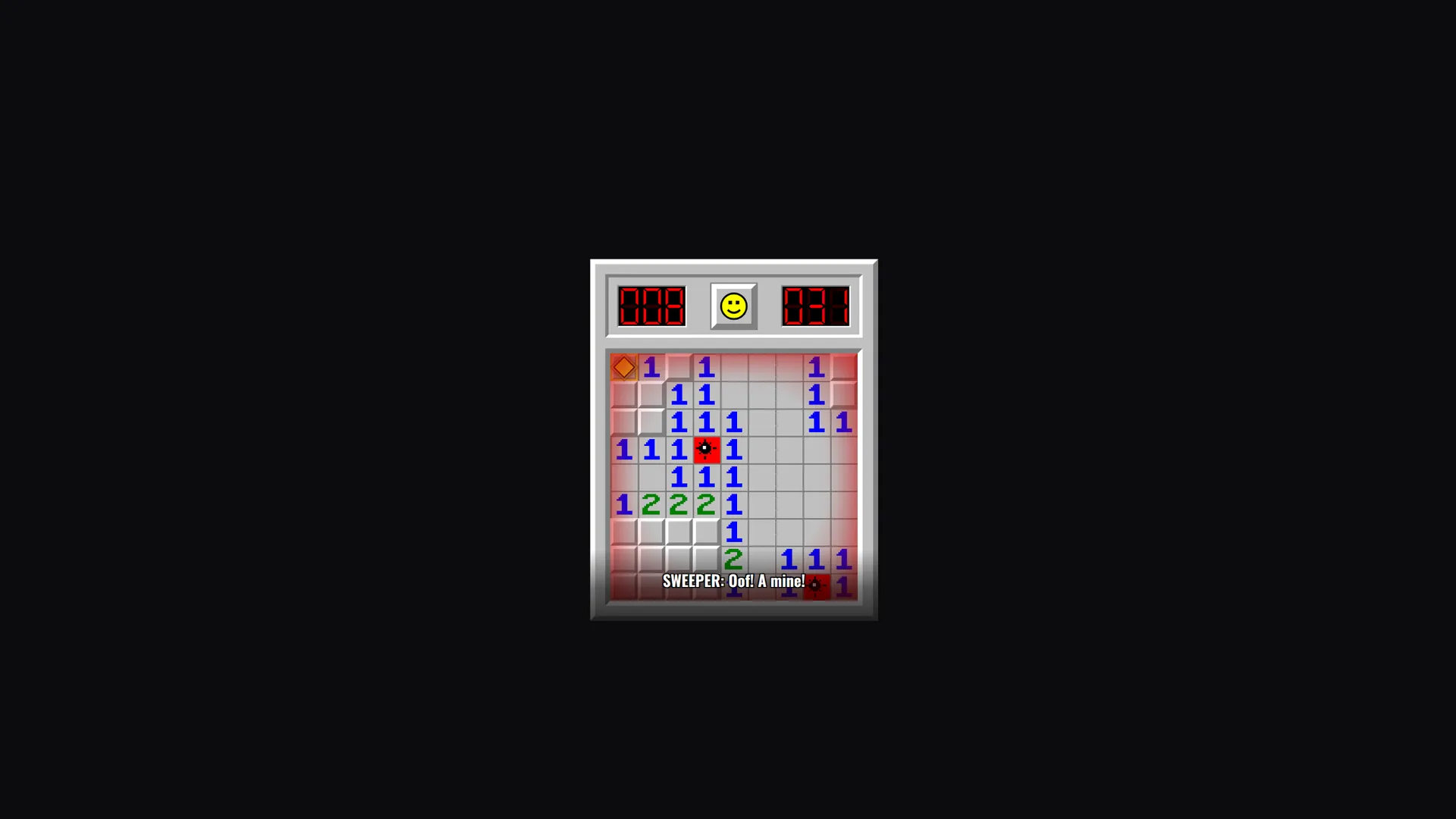
Nora’s assistance is immediate and heavily detailed. A diamond-shaped yellow marker points directly to the spot where the player should click. If that wasn’t enough guidance, the Sweeper vocalizes his thoughts, offering obvious clues like, “Pretty sure there’s one mine nearby” or “I think there’s two mines around here”.
But the real comedy comes when players attempt to ignore the obvious. If you choose to venture off-piste and hit a mine, you don’t face immediate doom. Instead, the Sweeper simply exclaims, “Oof, a mine!” and the game continues. The consequence is less about failure and more about absurdity, highlighting the disconnect between the player’s action and the game’s expected reality.
Even when the player does nothing at all, the game insists on commentary. The Sweeper constantly reiterates the need to sweep mines, while random characters chime in via voice comm, such as a malevolent figure known as “The Don” and even the local radio DJ. This constant, maddening chatter serves as a perfect satire of overly scripted and directionless design.
Ultimately, Triple-A Minesweeper is an astute commentary on design decisions. It reminds us that while intentions behind those choices may be well-meaning, the execution often falls short. The lesson is clear: design should aim to be subtler and more inventive, moving beyond the need for constant, heavy-handed intervention.
Credit
