Creality K2 Pro: Reviewing the Metal Behemoth
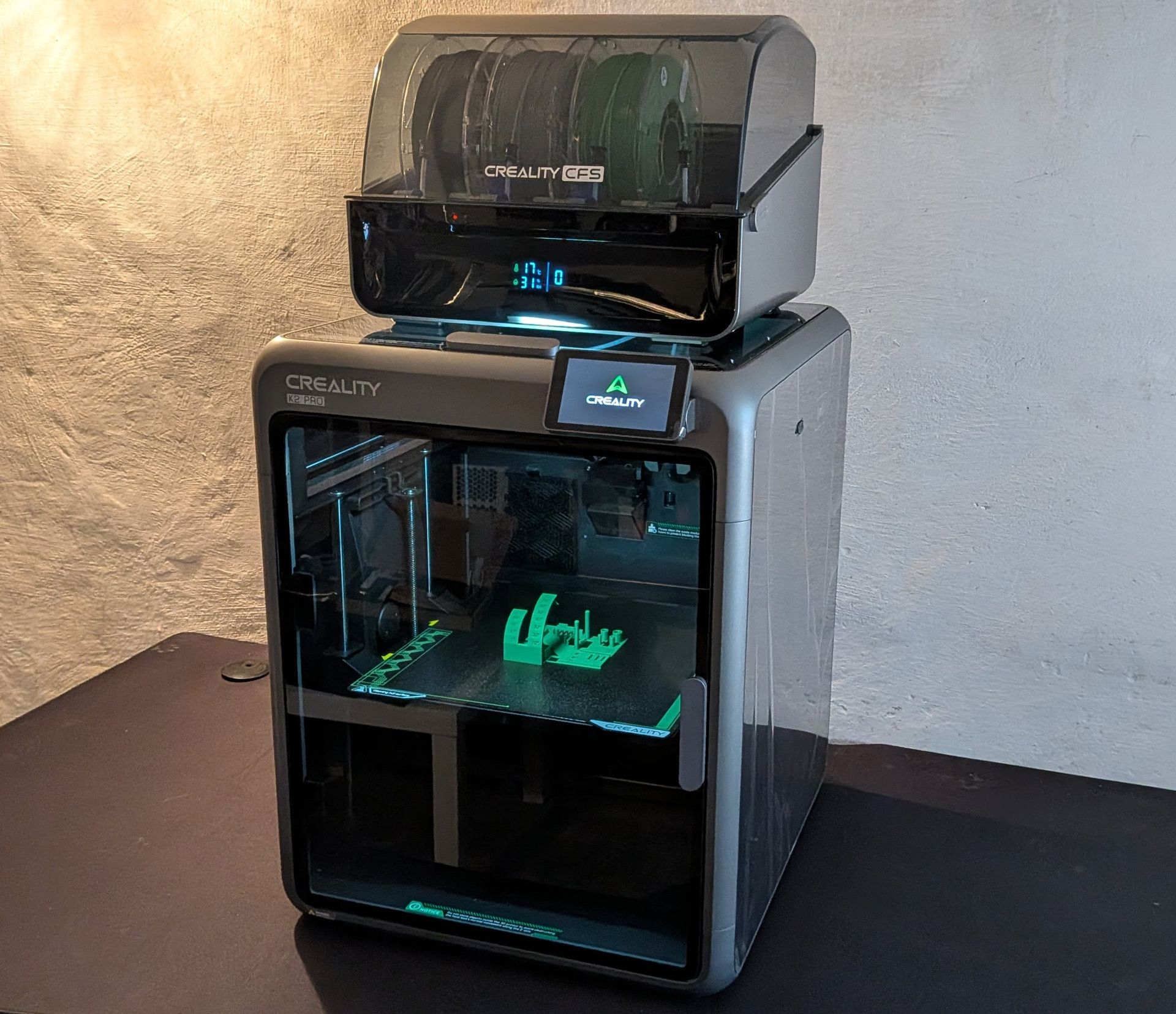
This text appears to be a detailed review or experience log of using a 3D printer, specifically focusing on the Creality K2 Pro (and potentially other related models), alongside testing various filaments and design features.
Here is a summary of the key points:
1. Test Prints and Performance
The author tested various models and print settings to assess the printer’s capabilities:
AIO Tests: Tested prints like the “AIO test by Barcode3D” and the “Califlower by Vector3D.”
Clearance Test: Successfully printed a “Clearance Fidget Spinner,” demonstrating capability in small gaps.
Filament Testing: Used Creality Hyper PLA Green, Black, and White, testing results based on specific settings (0.20mm profile).
2. Project Examples
The author demonstrated the printer’s versatility by printing various objects:
A Pineapple Piggy Bank (Bikini Bottom theme).
Parts for a Modular Playmat and Deck Storage.
A holder made from PETG-CF, which led to modifications resulting in a cooler remix.
An example of multi-color printing using the K2 Pro.
3. Summary and Criticisms (The Reality Check)
The author concludes with a candid assessment of the printer’s features and user experience after two months of use. While generally positive, several significant issues were noted:
Areas for Improvement:
Physical Design Flaws: The CFS flap slams shut if released midway; the glass door has a limited opening angle (approx. 135°); and no door sensor is installed.
Software/Interface Issues: The printer beeps three times upon job completion, and the application sends duplicate notifications. The touchscreen is fixed and cannot be moved.
Adhesion & Calibration: Adhesion for small objects without a brim was mediocre, and calibration took a significant amount of time (17-18 minutes).
Input Handling: Multiple quick inputs (like lowering the bed) were ignored rather than queued.
4. Thermal Performance and Power Consumption
The review details the thermal performance and power draw:
Power Draw: The K2 Pro requires 151 watts for printing, with peak usage hitting 977 watts when heating up simultaneously.
Build Chamber Heating: The build chamber heater struggled to reach target temperatures (e.g., 60°C) when combined with the heated bed, though it did achieve 55°C in 30 minutes of tandem heating.
5. Final Conclusion and Pricing Context
The author finds the printer to offer “everything one can currently expect” from a high-quality 3D printer, noting that flow calibration is now handled by sensors rather than manual adjustment.
In terms of pricing, the author notes that the K2 Pro Combo (asked for around €750 at the time) is competitively priced compared to alternatives like the Bambu Lab H2S.
Credit