Paint runs Doom at 35 fps via Azure CTO project
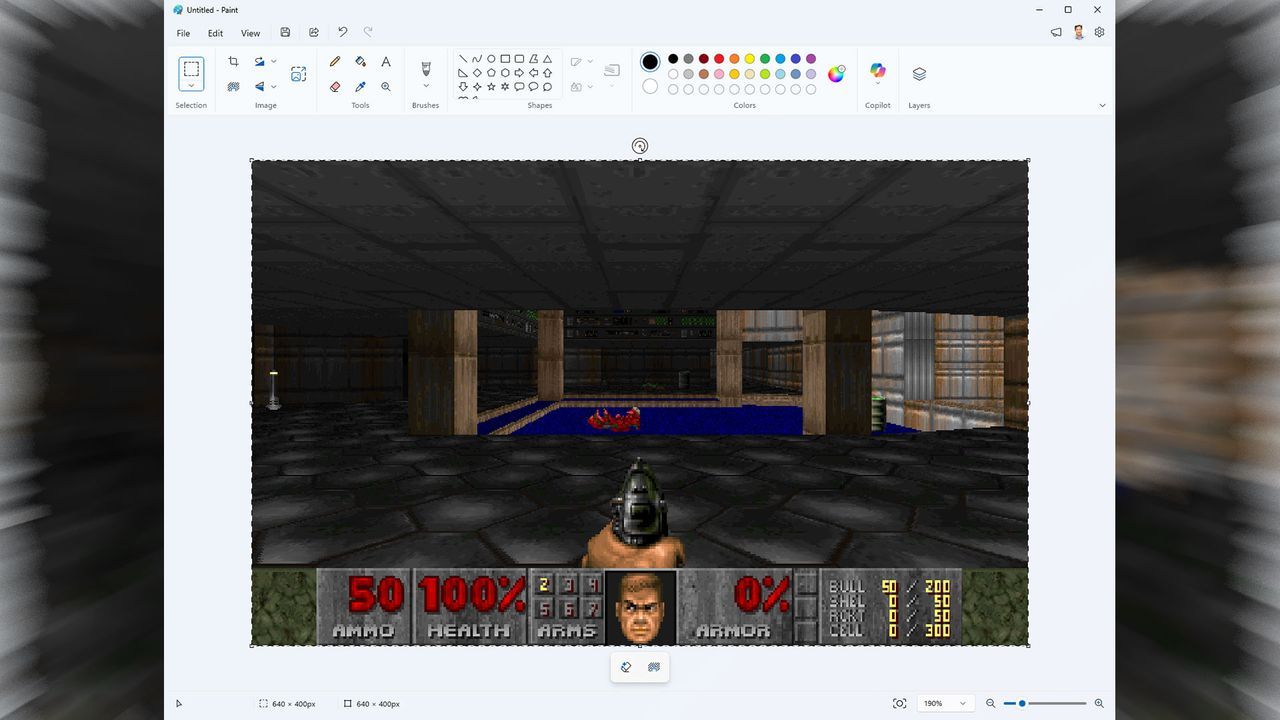
In the world of high-level corporate architecture and massive cloud systems, one figure is known for shaping Windows reliability: Mark Russinovich, the Microsoft Azure CTO. Yet, far from dwelling solely on hyperscale infrastructure, this tech titan has channeled his genius into a project that manages to blend cutting-edge software hacks with retro gaming nostalgia: DoomPaint.
This isn’t just another patch or system update; it’s an ingenious demonstration of how old computing principles can be creatively repurposed. DoomPaint achieves its feat by exploiting a clever trick—the OLE clipboard—to render the infamous shareware game Doom using the ubiquitous Microsoft Paint application as its canvas.
The magic lies in the process. The actual game engine, ViZDoom, handles the heavy lifting of rendering the visuals headlessly. Instead of displaying those frames directly on the screen, DoomPaint intercepts every frame and pastes it onto the Windows clipboard. This stream of image data is then pasted into MS Paint, transforming raw game graphics into a document edit.
While the resulting experience might not be a high-frame-rate spectacle, the setup allows the game to run at a smooth 35 FPS—a remarkable achievement for games rooted in the 1990s PC gaming era. For some, this moderate performance is part of the charm, turning the technical execution into an unexpected piece of retro fun.
The project isn’t just about the output; it’s about the philosophical angle Russinovich introduced. When discussing how the system works, he delivered a wry observation about the layering of computation:
“Paint renders the game but does not compute it. Paint computes nothing. Paint has never computed anything. That’s the joke.”
It’s a lighthearted reminder that while complex systems rely on massive computations, sometimes the most effective solution is a clever system bypass. It highlights how even the most rigorous engineers can find humor and opportunity in the inherent limitations of their tools.
This project, which is openly distributed under the MIT license, serves as a testament to the fact that dedicated coding enthusiasts don’t just work on the next big thing; they continually explore how existing software can be creatively manipulated to yield surprising results. It proves that sometimes, the most profound innovations emerge from playing with the rules of the system itself.
Credit