Tolkien game runs on a toaster free history
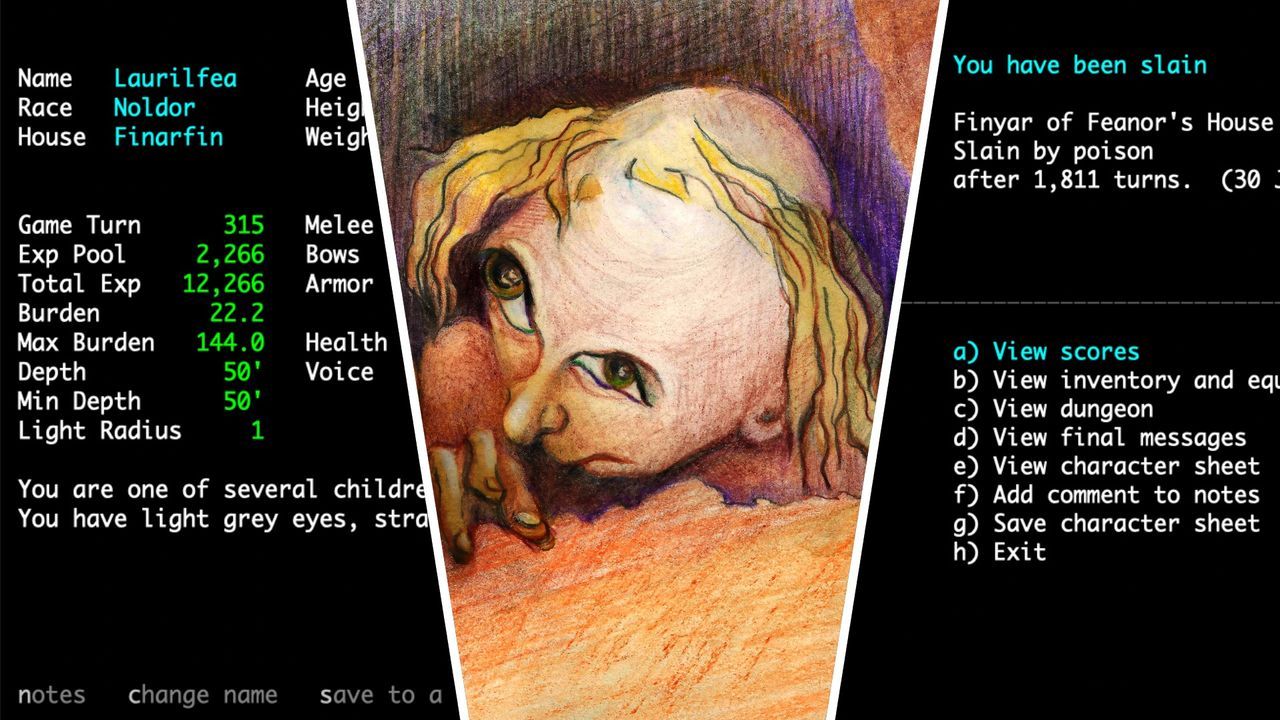
The beauty of open, general-use computing often lies in stumbling across hidden civilizations built within code. You might find a GitHub repository containing a small world that has lived a thousand lives before you ever became aware of it—a community with its own traditions, inside jokes, and deep histories, nurtured by dedicated hands working in their off-hours.
These are the digital worlds born from passion, often existing just outside the mainstream. One such fascinating example is Sil-Q, a free-and-open-source take on the classic Rogue format that boldly transplants action from an anonymous dungeon into the epic landscape of Tolkien’s First Age of Arda.
The story behind Sil-Q is a testament to how digital creations can weave history together. While the game itself debuted in 2017, its lineage stretches back further. It is a continuation of Sil, which released in 2012 and ceased active development in the mid-2010s. Sil’s roots trace back to Angband, a sprawling hodgepodge of fantasy concepts built in the style of Dungeons and Dragons, grounded by Tolkienian mythology.
Angband itself was an influence on titles like Moria, which was in turn influenced by the lore of Moria—a landscape that provided a deep foundation for those who would later explore worlds like 2026 games.
The core concept of Angband involved the quest to slay Morgoth, the first and worst dark lord of the legendarium. However, even in this fantastical setting, the lore demands a certain narrative flexibility: Morgoth was not defeated by simple power leveling, but was banished from Arda. This dynamic, where narrative reality dictates outcomes rather than pure mechanical skill, sets the stage for Sil-Q.
In this unique take, the focus shifts entirely to world fidelity. Instead of relying on typical D&D packages of advantages and disadvantages, players navigate Arda by choosing between lineages—Noldor (cool elves), Sindar (less cool elves), Naugrim (a nod to dwarves), or Edain (men). This choice isn’t about mechanical advantage; it’s a philosophical statement. Men, in this context, are deliberately made less equipped, reflecting the lore that they lack the innate speed, strength, and will that define their kin.
This approach flips traditional game design on its head: the world is the primary driver of mechanics. The goal is not just to win a fight, but to inhabit the reality of Silmarillion. Players roam Morgoth’s dread fortress, picking up mythical weapons and fighting orcs in a setting that feels authentically ancient.
Ultimately, what makes Sil-Q compelling is its commitment to this deep immersion. It proves that balance can be subservient to narrative integrity. If the world demands that mortal men lack inherent advantages, then game design should reflect that reality. For those who crave rich lore and a genuinely unique perspective on action-adventure, diving into Sil-Q is a highly recommended experience.
Credit
