DIY Modder powers games with a Stirling heat engine
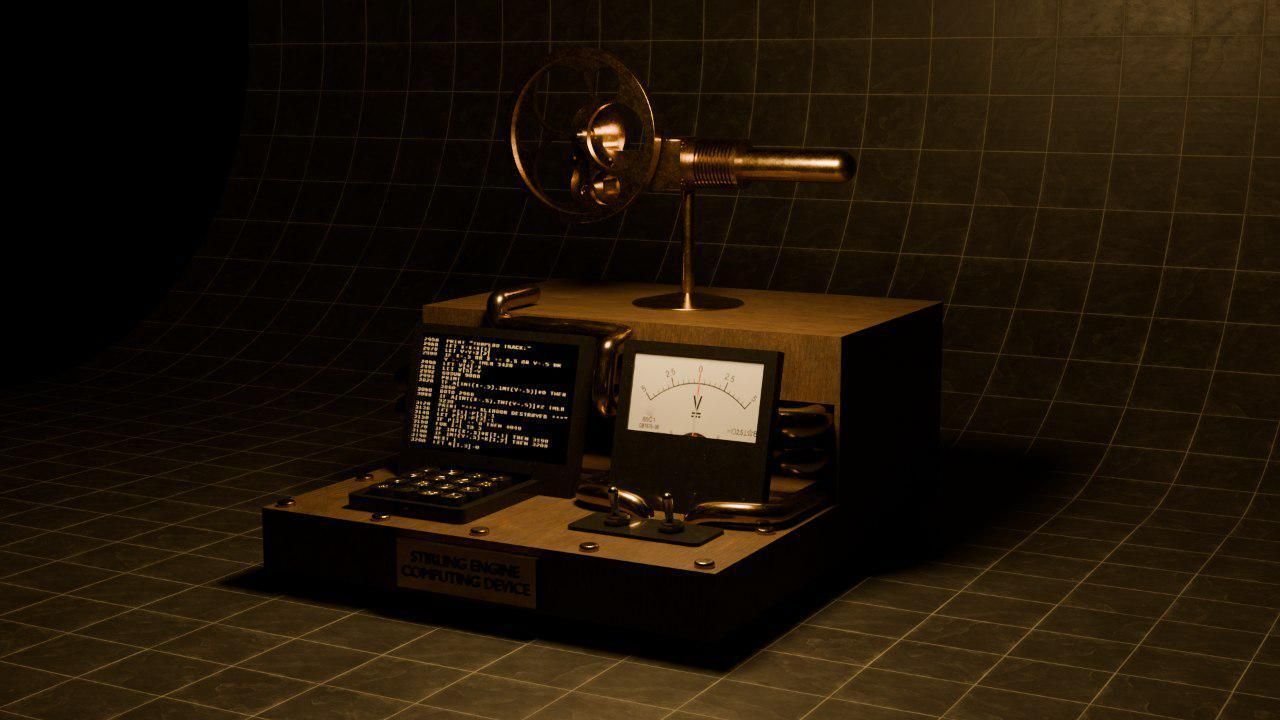
The Steampunk Supercomputer: How a Heat Engine Powers an Off-Grid PC
Forget solar panels and battery packs. In a truly inventive contraption built for the future, one Reddit user has managed to create a completely off-the-grid computing device powered by pure thermal energy. This is not just a quirky gadget; it is a fascinating intersection of 19th-century engineering brilliance and modern microcomputing, all wrapped up in a charmingly rustic, steampunk aesthetic.
At the heart of this unique project is the miniature Stirling engine. Patented back in 1816 by Scottish minister and inventor Robert Stirling, this ingenious machine works on the principle of converting heat directly into mechanical energy. By applying a flame to one end of a sealed cylinder, the resulting temperature difference forces air inside to expand and contract, pushing a piston that spins a flywheel—a mechanism capable of generating usable electricity.
The creator, PickentCode, utilized this historical principle not just for novelty, but as the primary power source for his custom microcomputer. The entire endeavor, from initial concept to final assembly, took about a month. It was a true DIY engineering challenge, blending digital design with physical craftsmanship.
The build process itself was a labor of love. PickentCode conceptualized the device using 3D modeling software like Blender before moving into construction. The outer shell was crafted from wood, and attention to detail defined the aesthetic: a DIY laser engraver was used to etch a portrait of Robert Stirling and his original 1816 engine patent sketch directly onto the wooden panels. For structural elements, custom 3D printing handled the electronic housings and keycaps, while decorative piping was fashioned from repurposed shower tubing and painted gold.
Inside this rustic shell resides a sophisticated modern brain: an ESP32 C3 microcontroller paired with a monochrome OLED display, a 16-key keypad, and the spinning Stirling engine. To keep the system running within its strict power budget of only 150 milliwatts, PickentCode implemented rigorous energy optimizations. Wi-Fi and Bluetooth functionality were completely disabled, screen brightness was minimized, and the CPU frequency was carefully throttled down—down to just 80 MHz or even 10 MHz while the system was idle.
Despite these severe limitations, the resulting machine is fully functional. It runs a custom CHIP-8 virtual machine preloaded with classic gaming ROMs like Tetris, Snake, and Pong. Even more impressively, the setup includes a built-in code editor, allowing users to directly input CHIP-8 opcodes to write and execute their own custom programs on the fly.
The ingenuity displayed here highlights how fundamental thermodynamic principles can be applied in surprising new ways. While modern technology relies on complex power grids, this project proves that even the most advanced computing systems can draw inspiration from historical engineering feats. It serves as a delightful reminder that sometimes, the most powerful innovations are found by looking at the world—and history—in a completely new light.
Buy on Amazon
Credit