
LiquidJet drops Nvidia GPU temps by 10°C boosting performance
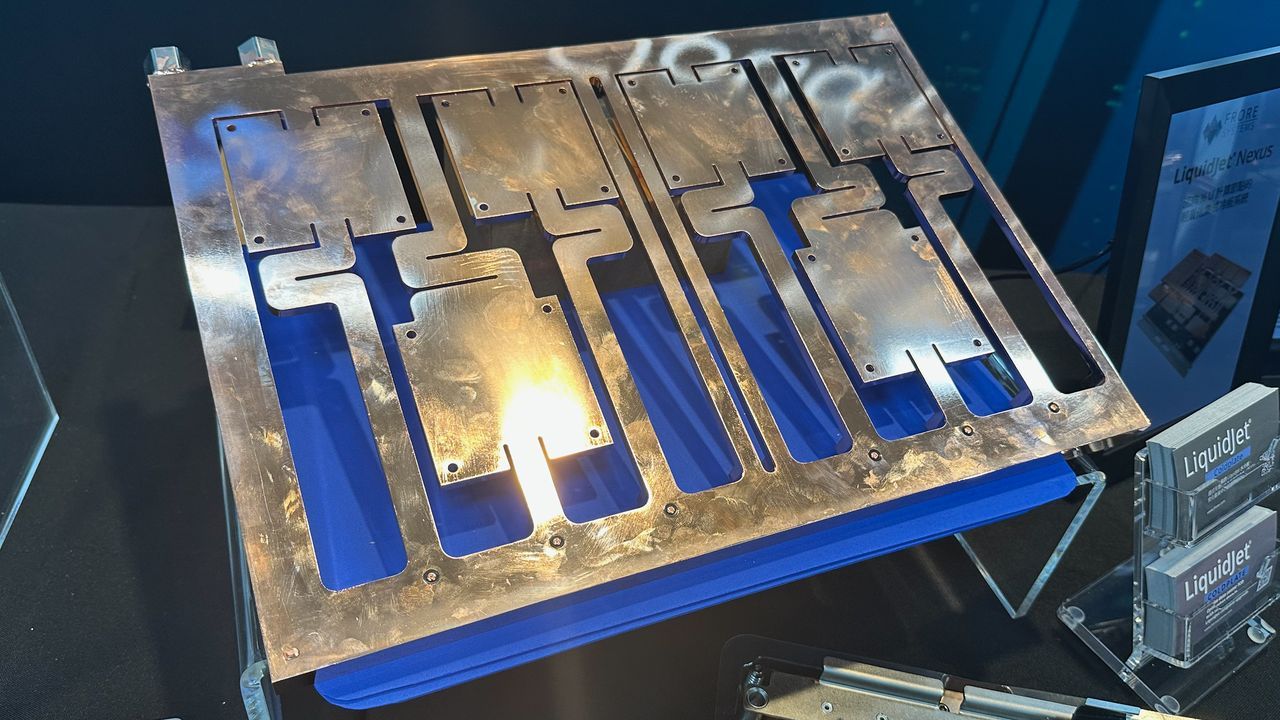
In the hyper-competitive world of artificial intelligence, where performance is measured in tokens and profitability hinges on efficiency, managing heat has stopped being just a technical challenge—it’s become a fundamental economic determinant. The physical limits of cutting-edge AI accelerators like Nvidia’s Rubin GPUs are increasingly defined not by computational power, but by how effectively they can dissipate heat.
Enter Frore Systems, a company pioneering cooling solutions built with semiconductor-grade tools, which appears to hold the key to unlocking this thermal potential. Their recent work suggests that optimizing the entire cooling stack—from packaging and thermal interface materials to coldplates—can dramatically boost token generation per watt.
The stakes are incredibly high. Modern AI accelerators can generate massive amounts of power, with die temperatures easily hitting 95°C or more. While silicon can tolerate high heat, the reality is that excessive temperature introduces serious inefficiencies. As heat rises, leakage current—the silent drain on energy efficiency—rises exponentially. This forces GPUs into dynamic voltage and frequency scaling (DVFS) to protect themselves, ultimately throttling performance and cutting potential token output.
Froke’s analytical thermal models reveal a powerful truth: the better the cooling, the greater the profit. They argue that maximizing performance is no longer about simply avoiding overheating; it’s about utilizing those thermal margins to generate more value. Lowering operating temperatures means less energy wasted, leading directly to higher token generation efficiency.
The mathematical equation governing this relationship is simple: Tj(max) = Tinlet + Q × Rtotal, where thermal resistance (Rtotal) acts as the bottleneck. This resistance is determined by the package, the interface material, and the coldplate design. Every layer that adds resistance reduces overall efficiency.
Froke’s innovation targets this resistance directly. Their LiquidJet coldplate technology uses manufacturing techniques borrowed from semiconductor fabrication—etching and bonding—to create intricate, optimized copper microstructures tailored to specific hotspots on the accelerator. This approach allows for significantly better heat transfer than traditional machining methods.
The results are compelling. For Nvidia Rubin GPUs, Frore’s analysis suggests that LiquidJet technology can reduce junction temperatures by up to 6°C to 12°C. Crucially, this thermal reduction translates into a 10% to 25% improvement in tokens per watt. A mere 10°C drop could boost token generation efficiency by approximately 15%.
Beyond the coldplate, Frore is exploring radical structural changes. They suggest that delidding the GPU package—removing the lid and thermal interface materials—dramatically reduces thermal resistance. In their model, this technique could lower junction temperature by as much as 20°C, potentially increasing tokens per watt by up to 35%. While this approach introduces mechanical reliability concerns that engineers must address, hyperscalers are exploring it to maximize output.
By optimizing thermal resistance and utilizing advanced materials, Frore argues that they not only enhance hardware performance but fundamentally change the economics of data center cooling itself. Their work demonstrates how superior cooling can make large-scale mechanical chilling economically viable by lowering the required chiller efficiency, positioning thermal management as a central pillar of future AI profitability.
Buy on Amazon
Credit