
Playing the simulator to try converting Karl Marx
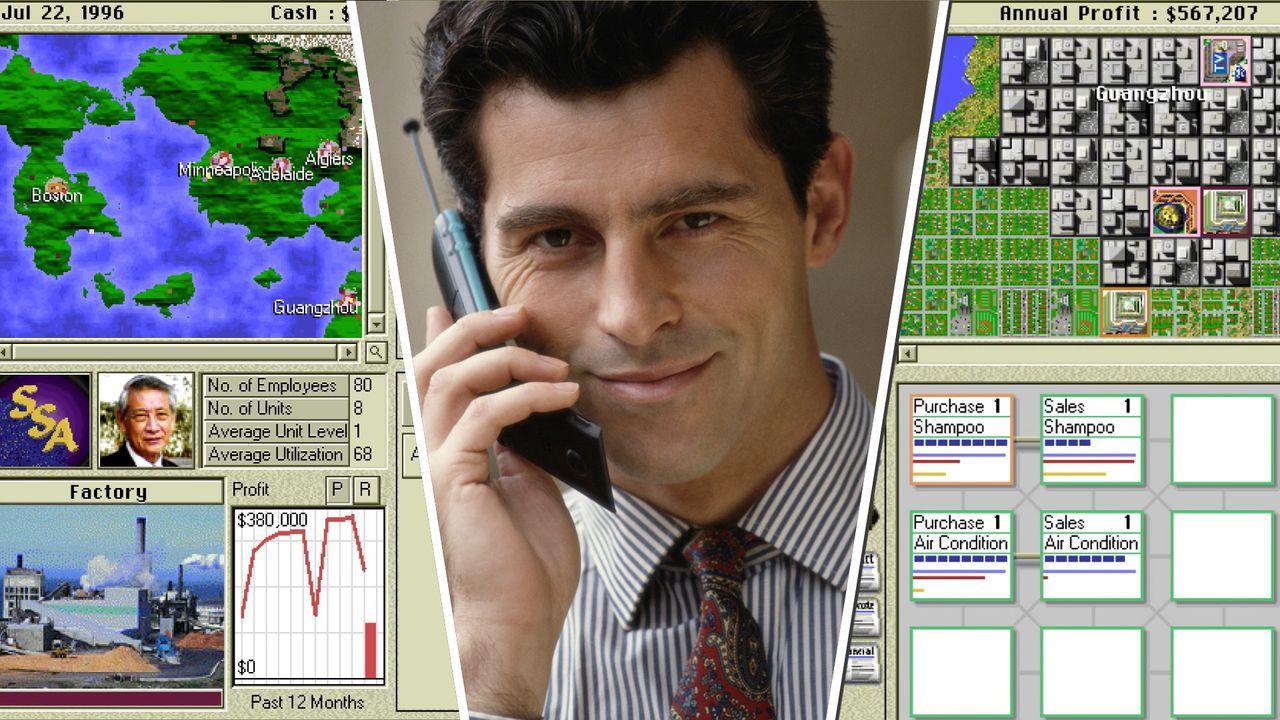
The first reaction to building a business empire was met with mockery. I was told I was mad, a fool, and that my plan—to amass wealth from a single department store selling three products and access to a silica mine—was simply impossible. The advisors saw no wisdom in my schemes, and in retrospect, they were right; we ended up bankrupt.
Yet, the curiosity remained. In 1995, a challenge arrived via PC Gamer, tucked away in a review of Capitalism, asking if this game could convert me. Can it offer a pathway forward? I accepted the challenge from thirty-one years ago, determined to find an answer within its spreadsheets and input/output graphs.
I quickly learned that the game itself was fascinating. Capitalism isn’t real; it’s a procedurally generated pseudo-region on a planet you can spin up with any new game. The only guarantee is that wherever you end up, it looks nothing like our actual world. This realization shifted my approach from mere wishful thinking to hardcore simulation.
My initial attempts at business were pure jazz capitalism. I started by opening a department store in central Jakarta, stocked exclusively with laundry detergent sourced from the nearest seaport. Supply quickly outstripped demand, and I was hemorrhaging money, making negative $80,000 a year. The market wasn’t interested in suds; it was interested in something else entirely.
I decided to dig deeper. I added cookies and leather shoes to the inventory, transforming the store into a true mall selling unrelated goods. This expansion proved costly—I was now making negative $300,000 annually. But as I introduced advertising and partnered with a newspaper instead of television, my fortunes began to swing wildly, ultimately hitting an incredible negative $3,000 before finally pivoting toward massive gain.
The real breakthrough came when I stopped trying to force the market and started manipulating the levers. By focusing on supply chain efficiency and understanding demand for items like air conditioners and jumpers, I found equilibrium. I established a department store in Guangzhou and expertly played with pricing, establishing an artificial balance between supply and demand.
By funneling high-demand goods—like premium shampoo and hot air conditioning units—through my operations, I managed to charge far more than the cost of sourcing them, quickly realizing incredible profits. My journey culminated in building factories, purchasing competitors’ jeans, and mining silica, eventually reaching an annual profit of $12 million.
Do these massive numbers change the fundamental equation? Capitalism doesn’t sing praises for itself or condemn it; it simply reflects a historical moment—the triumphalism following the Cold War. It shows us a world where ideology has faded, and humanity is now focused on concrete accumulation: CPUs, silica, and air conditioning.
Ultimately, the game is impressive because it forces you to account for everything—from climate and environmental concerns to supply chains and market arrangements. It’s not a prophecy for today, but it provides an incredible framework for understanding how value is created. And if you are excited by a good spreadsheet, this simulation is absolutely worth playing.
Buy on Amazon
Credit

