
Snapdragon specs could crush Intel in budget laptops
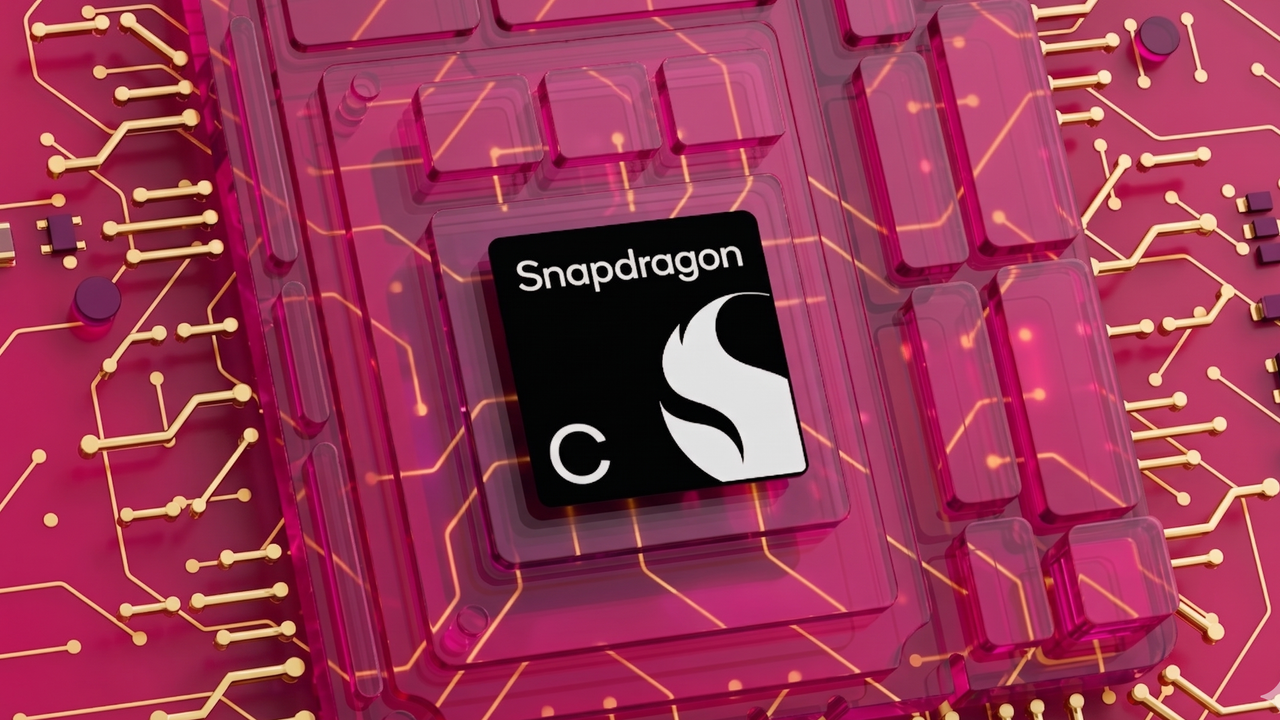
The quest for powerful, portable, and affordable computing just got a significant upgrade. Qualcomm’s new Snapdragon C processors are not just stepping into the market; they are setting the stage for a revolution in budget laptops, aiming to bring all-day battery life and exceptional performance down to an entry point of around $300.
These chips are designed to power everything from budget notebooks to devices vying for the space previously occupied by premium machines. Qualcomm has recently unveiled full specifications, promising a compelling package that stacks up well against competitors like the Intel N250, suggesting a serious contender in the increasingly crowded low-end segment.
The real story behind the Snapdragon C lies not just in raw speed, but in groundbreaking efficiency. In testing scenarios where power conservation matters most—such as streaming video—the Snapdragon chips demonstrate remarkable superiority. They achieved 106% better power efficiency during Netflix playback alone, showcasing an ability to deliver performance without draining the battery.
This focus on efficiency extends across the board. Qualcomm reports that their processors deliver significantly improved endurance for demanding applications like Microsoft Teams and YouTube, with gains of 99% and 86% better efficiency, respectively. Furthermore, they show a notable 39% improvement in power usage for idle applications, meaning these devices can spend less time waiting and more time working.
The technical blueprint reveals a thoughtfully engineered system. The Snapdragon C utilizes the Qualcomm Kryo CPU built on a 6nm process, featuring 8 cores capable of up to 3.0 GHz, paired with Qualcomm Adreno GPUs and a dedicated Hexagon NPU for handling AI tasks. Memory support is robust, utilizing LPDDR5x technology, and connectivity remains cutting-edge with Wi-Fi 6E and Bluetooth 6.0.
While the performance gains are exciting, the software landscape is also evolving rapidly. Windows 11 on ARM has experienced massive improvements in app compatibility, meaning that the previous concerns about running essential applications have largely faded. Microsoft’s Prism emulation updates have further enhanced performance, allowing even non-native apps and games to run more smoothly.
Despite these impressive figures from Qualcomm, the journey toward full validation is ongoing. The claims surrounding speed and efficiency are rooted in specific testing parameters, and independent, real-world benchmarks—especially when laptops are actively plugged into power—are still needed to confirm the full competitive advantage against Intel. As with any groundbreaking technology, while the initial data is highly bullish, hands-on experiences will be the ultimate measure of how these new chips truly perform on the road.
We are watching an exciting shift where power efficiency and compact design lead the way, promising a future for budget computing that is both fast and remarkably sustainable.
Buy on Amazon
Credit