
The ‘1968 Corvette yellow’ Ethernet cable secret
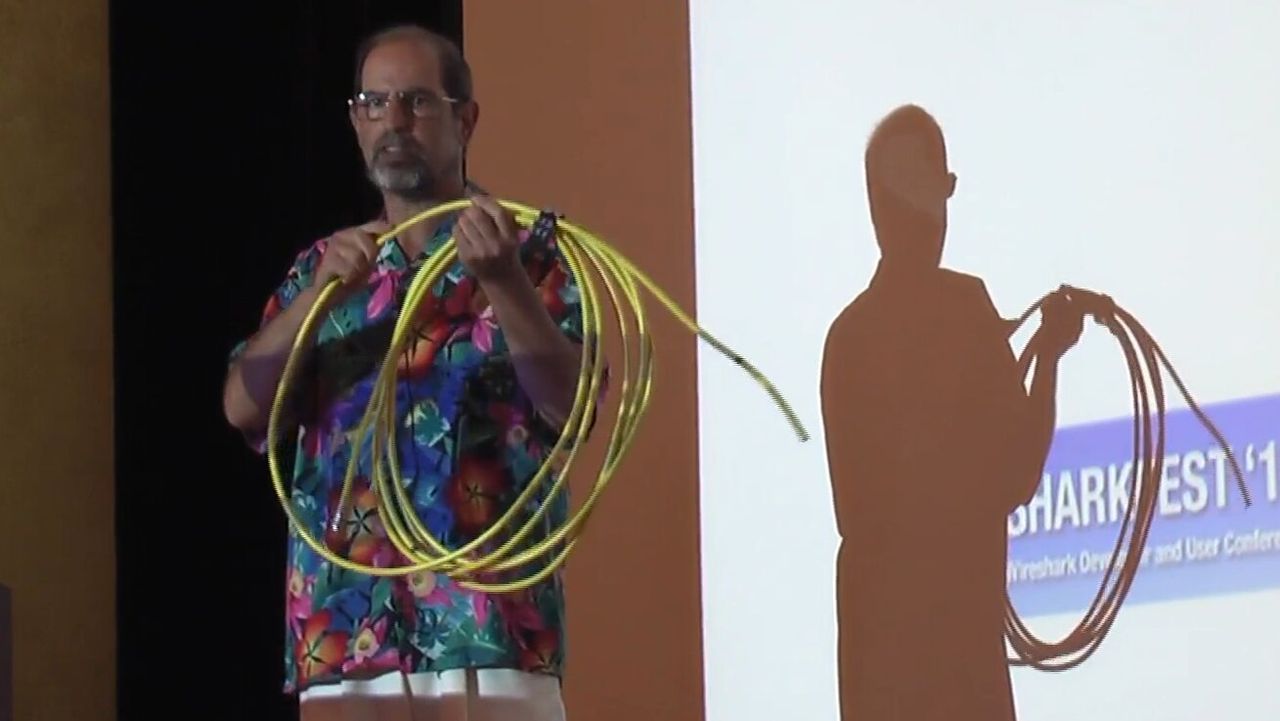
I’ve owned an astonishing number of ethernet cables throughout my life, each sporting a unique shade—black, blue, white, grey, yellow, green, brown, and red. If you asked me which color was most common outside of the standard black and white pairing, I’d probably settle on blue. Yet, when we look back at the dawn of networking in the 1970s, the first ethernet cables were chosen to be a uniform shade of yellow for very specific, practical reasons.
The decision wasn’t just about aesthetics; it was deeply rooted in both personal preference and early installation logistics. One of the architects of the ethernet specification, Rich Seifert, championed the color because he simply loved it. In a presentation on the history of networking, Seifert proudly displayed an original cable, noting that it was precisely the shade of 1968 Corvette yellow—a tone enthusiasts often refer to as “Safari yellow.”
But there was a more critical engineering motivation behind this bright choice. At the time, ethernet utilized bulkier coaxial cable and required specialized tools, such as a vampire tap to make physical contact with the shielding. The designers were acutely aware of potential installation errors, especially concerning power cables.
Seifert expressed a genuine concern that installers might accidentally attach a transceiver to a power line instead of an ethernet line. Since these cables would be strung through ceilings and taps needed to be drilled into the structure, ensuring absolute visual distinction was paramount. Making the cable a highly distinct shade helped prevent catastrophic mistakes involving power wiring. In short, the bright yellow served as an unmistakable visual warning.
The specifications for early ethernet were surprisingly advanced, supporting a 10 megabit per second capacity that far exceeded the networking demands of the era. Even more striking is the contrast between then-current technology and today’s microchip engineering. While those early controllers required massive circuit boards running at about 60 watts of power—costing thousands of dollars—we now have computing power in our pockets.
Today, a device like a Raspberry Pi 5, complete with its ethernet controller, operates on a mere 27 watt power supply. This evolution beautifully illustrates how quickly technology can refine its systems, moving from bulky, visually marked cables designed to prevent installation errors to sleek, efficient digital pathways that harness minimal energy. The story of the ethernet cable, therefore, is as much a tale of practical engineering and visual diplomacy as it is a piece of networking history.
Buy on Amazon
Credit

