Twitch CPO squirms admitting everyone hates new AI feature
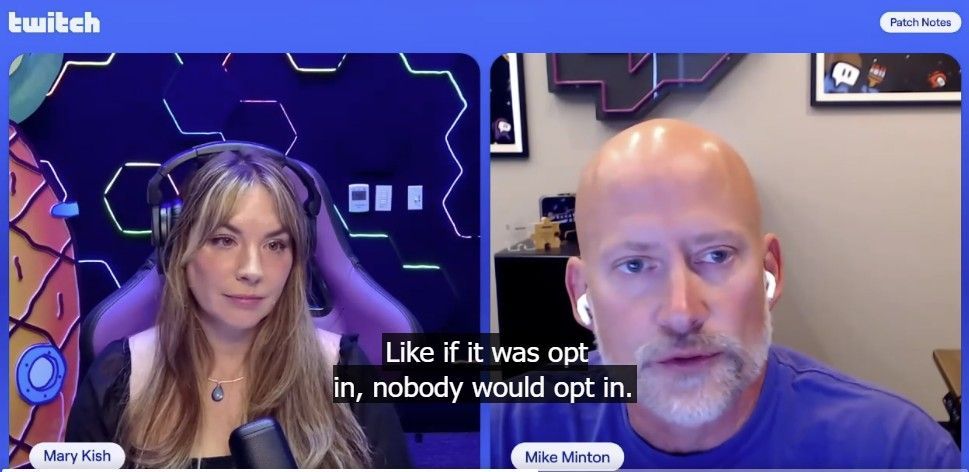
The world of video streaming is currently grappling with a seismic shift, not just due to new content trends, but because major platforms are being forced to confront the uncomfortable reality of artificial intelligence training. Twitch, one of the dominant forces in the gaming universe, has recently faced a sharp backlash for its method of forcibly opting users into this process, raising serious questions about creator rights and data usage.
This controversy isn’t just about a policy change; it touches on the fundamental tension between platform monetization, user experience, and the burgeoning dominance of AI. The underlying friction stems from how companies like Amazon, which owns Twitch, attempt to monetize vast amounts of user-generated content in a video streaming landscape increasingly dominated by Google and YouTube.
The specific issue revolves around AI training. By default, users on Twitch have been enrolled in a system where their likeness, voice, and interactions are used to train Amazon‘s generative AI models. This move, widely viewed as a unilateral decision, ignited outrage among the community.
When confronted with the criticism, Twitch leadership offered a response that seemed to prioritize expediency over user choice. Chief Product Officer Mike Minton acknowledged the anger but stated that they do not care about the dissent, focusing instead on a technical rebuttal: “Why is not opt-in?” He suggested that if users were allowed to opt-in, nobody would participate, implying that the system should operate by default.
Despite this stance, Twitch has provided a mechanism for users to reclaim some control. Patrons of the platform can actively choose to exit the process by navigating to settings, security and privacy, where they can toggle off the feature labeled “training for generative AI.”
This maneuver places Twitch in a unique position when compared to its competitors. While other giants like YouTube automatically utilize creator content for training purposes (such as Gemini’s video training), Google limits this use by only allowing users to opt out of “third-party” training. Twitch, by contrast, has offered a specific toggle, even if the initial implementation was deemed coercive.
As the tech ecosystem grapples with the rapidly evolving, often chaotic world of AI, it is fascinating to observe where these issues manifest. If anything, the gaming and streaming sphere may prove to be an arena where this development leads to more complex, and perhaps even more absurd, outcomes in the near term.
Credit