28 GPUs warp reality: Oldest House and warped Manhattan city
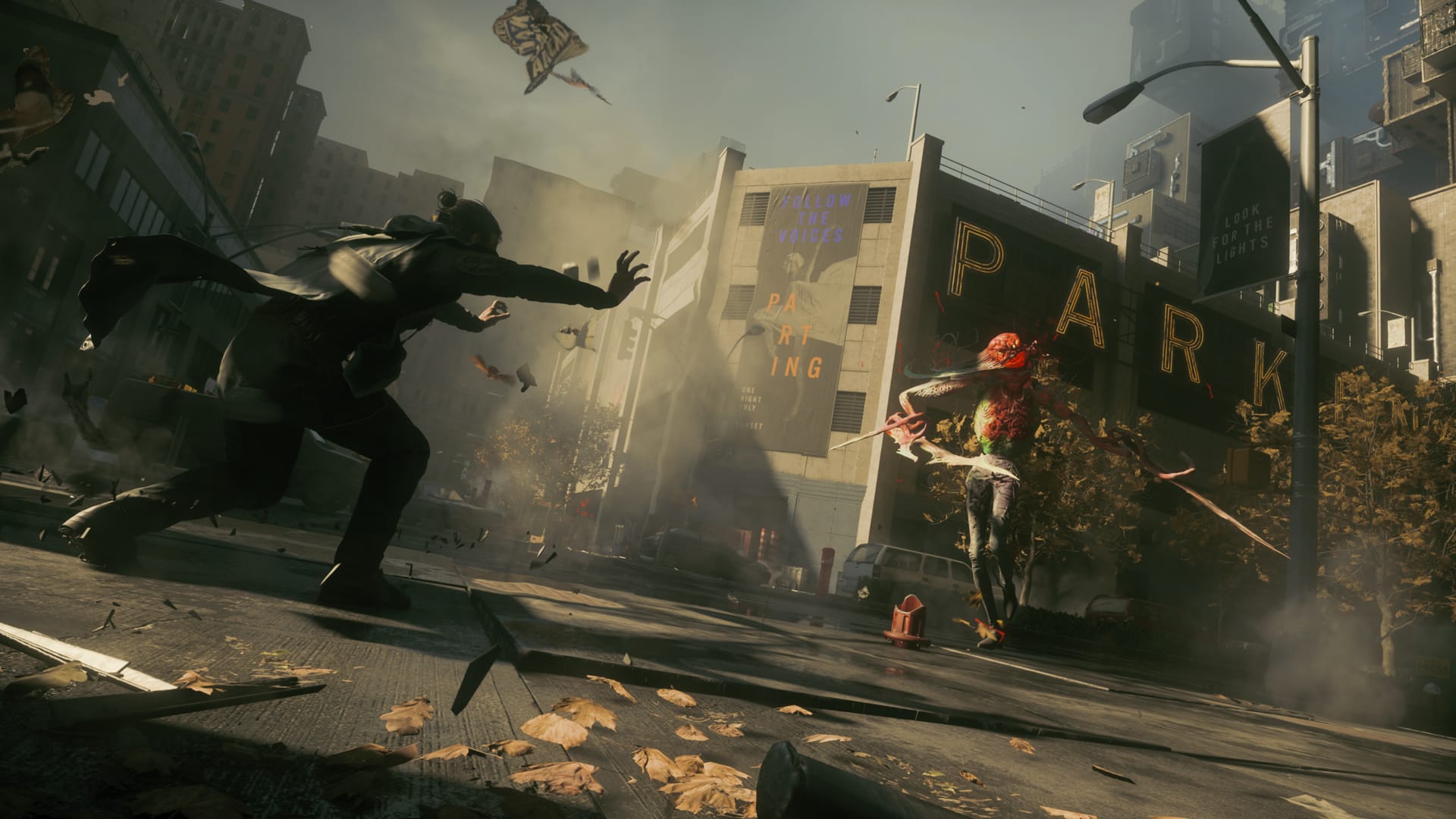
The journey into the fractured world of Control Resonant is more than just a sibling adventure; it’s a profound technical exhibition. Following the intense, paranormal battles of its predecessor, this sequel plunges players back into the twisted, Hiss-corrupted landscape of Manhattan, setting a new bar for visual fidelity while tackling some of the most demanding rendering techniques in modern gaming.
The game throws ray tracing and path tracing into the spotlight, aiming to transform the cityscape into a hyper-realistic environment. Path tracing doesn’t just create shadows; it models how light interacts with surfaces, delivering shadows that are crisp and accurate, and reflections that truly mimic the reality of water and glass. When activated, the visual environment shifts from merely rendered to genuinely luminous, demonstrating the incredible power of Nvidia’s RTX Mega Geometry technology.
But graphical wizardry is only half the story. While the environmental splendor is stunning, the fidelity of the characters sometimes lags behind the environmental magic. The facial modeling of characters like Dylan and Zoe, while engaging, occasionally reveals a noticeable gap when compared to the advanced environmental quality, prompting a reflection on what future visual standards demand from developers.
At the heart of the performance and polish lies DLSS 4.5. This suite of technologies—including Super Resolution, Ray Reconstruction, and Multi Frame Generation—is designed to make high-end ray tracing accessible across a wider range of hardware. It allows players to chase spectacular visuals without sacrificing frame rate, a capability that is particularly seamless and effective on Nvidia hardware.
When it comes to pure performance, the demands of Control Resonant are serious. At native resolutions, achieving smooth gameplay requires powerful graphics cards. For 1080p Ultra settings, you need a strong contender like an RTX 4070 or better to aim for a stable 60 FPS. Moving to 4K introduces even greater hurdles, demanding the most powerful offerings available to manage the visual feast.
The performance landscape shifts dramatically when ray tracing is enabled. While rasterization demands baseline power, turning on RT pushes those requirements further. To truly enjoy the dynamic lighting and reflections, players are often forced to rely on upscaling and frame generation to maintain playability. This is where the synergy of DLSS truly shines, offering a path to achieving spectacular results across various hardware configurations.
The nuances of implementation are where the true technical debate lies. While AMD offers options like FSR 4.x upscaling and Anti-Lag, the overall experience when combining path tracing with frame generation—especially when dealing with latency—reveals a significant divide. Nvidia’s integration of DLSS 4.5 with technologies like Reflex provides a more cohesive and reliable path to achieving smooth, low-latency ray-traced gameplay.
Ultimately, Control Resonant proves that while the spectacle of path tracing is breathtaking, the practical realization of that spectacle depends heavily on the underlying technology. For those seeking the most cohesive and cutting-edge experience in ray-traced gaming, the Nvidia ecosystem, with its robust DLSS 4.5 stack, provides the most accessible and rewarding path forward.
Credit