54 Steam games released look eerily similar
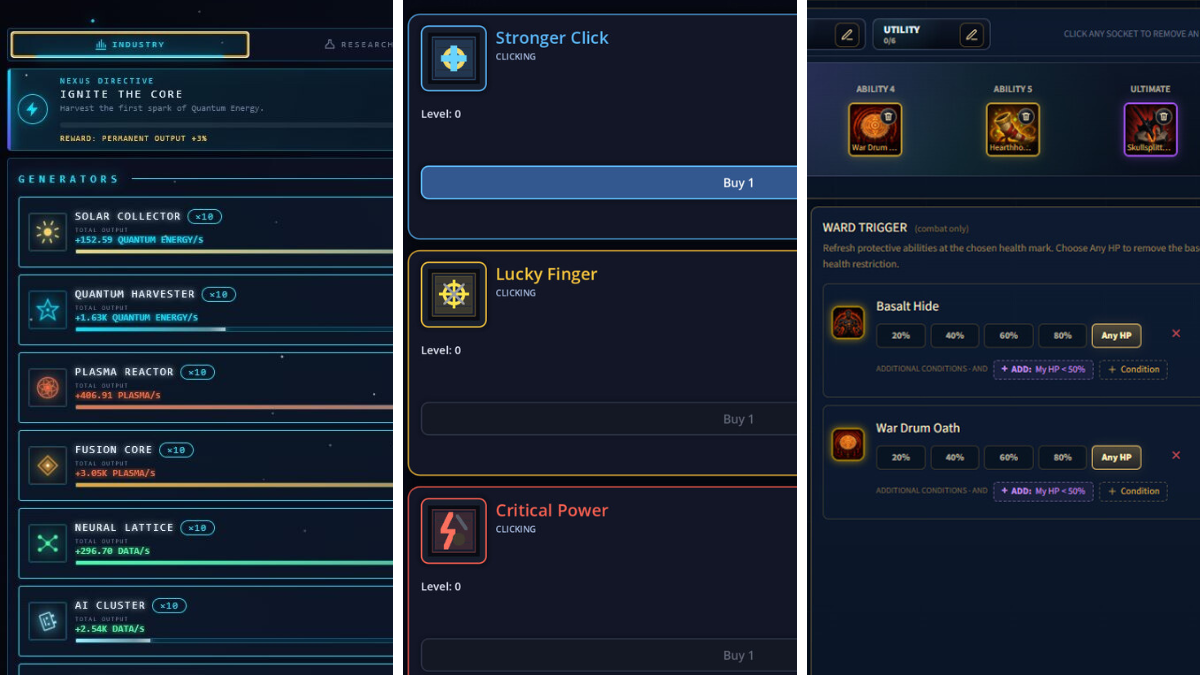
When Cookie Clicker and Candy Box first appeared in 2013, they were mostly dismissed as a joke, or perhaps an amusing parody of classic RPG gameplay. Yet, something peculiar happened: these simple clickers became an unexpected fixation. Not only did the original creators become obsessed, but a vast segment of the internet, across Twitter, Reddit, and various forums, confessed to becoming addicted to the simple loop of watching numbers increase.
This trend was born from a curious lineage. Cookie Clicker owed a debt to Ian Bogost’s satirical work, Cow Clicker, which provided a deliberate, if absurdist, reflection on the act of clicking. But unlike the satire, Cookie Clicker presented its loop with complete, transparent meaninglessness: click a cookie, watch the numbers climb, invest those numbers to accelerate the process. It was fundamentally stupid, and that simplicity proved incredibly compelling.
More than a decade later, the world of incremental games, or idlers, has exploded onto Steam. These games, focused on slow, steady progress rather than intense action, have amassed a massive following. Last week alone, 54 games with the tag “idler” were released, joining a total of 4,314 games bearing that tag on the platform.
While not all of these new idlers reach the heights of genre heavyweights like Bongo Cat or Banana, they have managed to rise above the deluge of simple, AI-generated content. Among the recent releases, titles like Next Reign: Kingdom feature handmade pixel art and strategic elements, while Zad Archery stands out with a distinctive, if generic, art style that has garnered nearly 700 positive reviews.
A striking pattern emerges when examining the user interfaces of these newly popular titles. They share a strange, almost uncanny similarity—a preference for a specific shade of dark blue, and layouts that feel equally uninspired. This visual homogeneity leads many to wonder: what is driving this mass-produced aesthetic?
A closer look at the game’s disclosures reveals another layer of the story. Many of these games openly admit to utilizing generative AI for components, images, and even translations. Titles such as Vespera states that it uses “AI generated images and other AI made components,” while Nexus: Quantum Industries notes that some assets were created using AI. This suggests that the trend is less about genuine creative innovation and more about leveraging AI to quickly flood the market with aesthetically similar, easily generated content.
The proliferation of these games is reflected in the statistics: the number of games tagged as idlers on Steam has spiked dramatically. In 2020, there were 100; in 2024, there were 647; and by this year, the count has reached 1,811. This exponential growth, supported by the rapid adoption of generative AI tools, creates a scenario that feels almost implausibly silly: Steam is being flooded with thousands of mindless, numbers-going-up games. It is perhaps the perfect manifestation of brainrot.
If we had been told in 2013 that this was the inevitable trajectory of the idler genre, we might not have believed it. But the evidence suggests that the combination of simple mechanics, visual conformity, and the power of AI has created a cycle that is rapidly spiraling out of control. It is the inevitability of the click, amplified by the algorithm.
Buy on Amazon
Credit