AMD calls CUDA a non-event Nvidia tech no longer matters
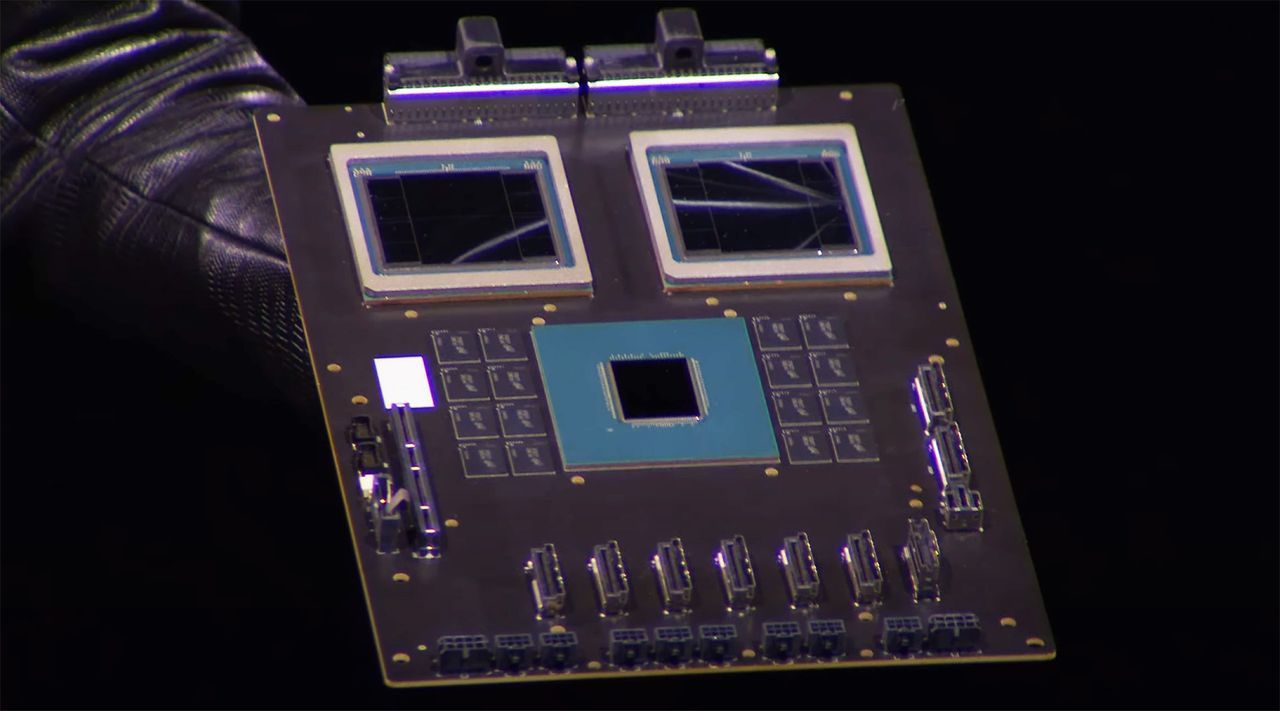
The CUDA Crucible: Is Nvidia‘s AI Monopoly Built on Software or Silicon?
Nvidia remains the undisputed heavyweight champion of the artificial intelligence hardware world. This dominance isn’t just about superior silicon; it is deeply rooted in a powerful software ecosystem called CUDA. For years, this proprietary platform has cemented Nvidia‘s hold, creating an almost insurmountable advantage that many industry observers believe forms a potent economic moat.
But as the AI race intensifies, a compelling debate is brewing among hardware rivals, suggesting that the walls protecting Nvidia’s lead might be less about the code and more about the physical reality of computing. AMD, a formidable challenger in the data center space, is quietly arguing that the reliance on CUDA may be becoming an outdated barrier to entry for future innovation.
In a recent pre-briefing on Advancing AI, AMD’s corporate VP and GM of its data centre GPU business group, Andrew Dieckman, put this theory into sharp focus. He suggested that while Nvidia dominates the market, the narrative around CUDA is shifting. Dieckman noted that he has almost no conversations with customers about CUDA anymore, pointing out that most users are now operating at higher levels of abstraction, using various serving frameworks instead of being locked into a single programming model.
“I used to talk to our customers about CUDA a fair bit,” Dieckman explained. “I have almost zero conversations with our customers about CUDA at this point in time. It’s a non-event, certainly for our major… Like, everyone’s programming at higher levels of abstraction. They’re using different serving frameworks.”
This perspective challenges the conventional wisdom that CUDA is the indispensable link between hardware and AI compute. If developers are able to focus on the results rather than the underlying framework mechanics, the necessity of proprietary tools diminishes.
Furthermore, Dieckman posits a more exciting future scenario: the true advantage may soon come not from the software moat, but from the capability of the models themselves. He suggested that the efficacy of advanced AI agents will be the next major factor, capable of optimizing systems on non-Nvidia platforms. “And the other thing that’s really accelerated [CUDA] not really being the ‘moat’ that some people still think it is, is the efficacy of the AI agents, the models themselves, to assist our customers optimising to the AMD platform. That’s a 2026 phenomenon.”
This implies that as AI systems become more sophisticated at self-optimization, they could bypass reliance on legacy software chains and favor platforms offering superior raw performance. If this trend materializes, it opens the door for other companies, like AMD with its ROCm platform, to capture a significant share of the market by offering cheaper, equally effective alternatives.
The future of AI hardware might not be dictated solely by the software libraries stitched onto the silicon, but by open-ended optimization. As we move toward systems where powerful AI agents manage complexity, the competition will pivot from owning the operating system to owning the most efficient architecture, regardless of which abstraction layer is used.
Buy on Amazon
Credit