Apple reveals the first Mac Pro 20 years ago
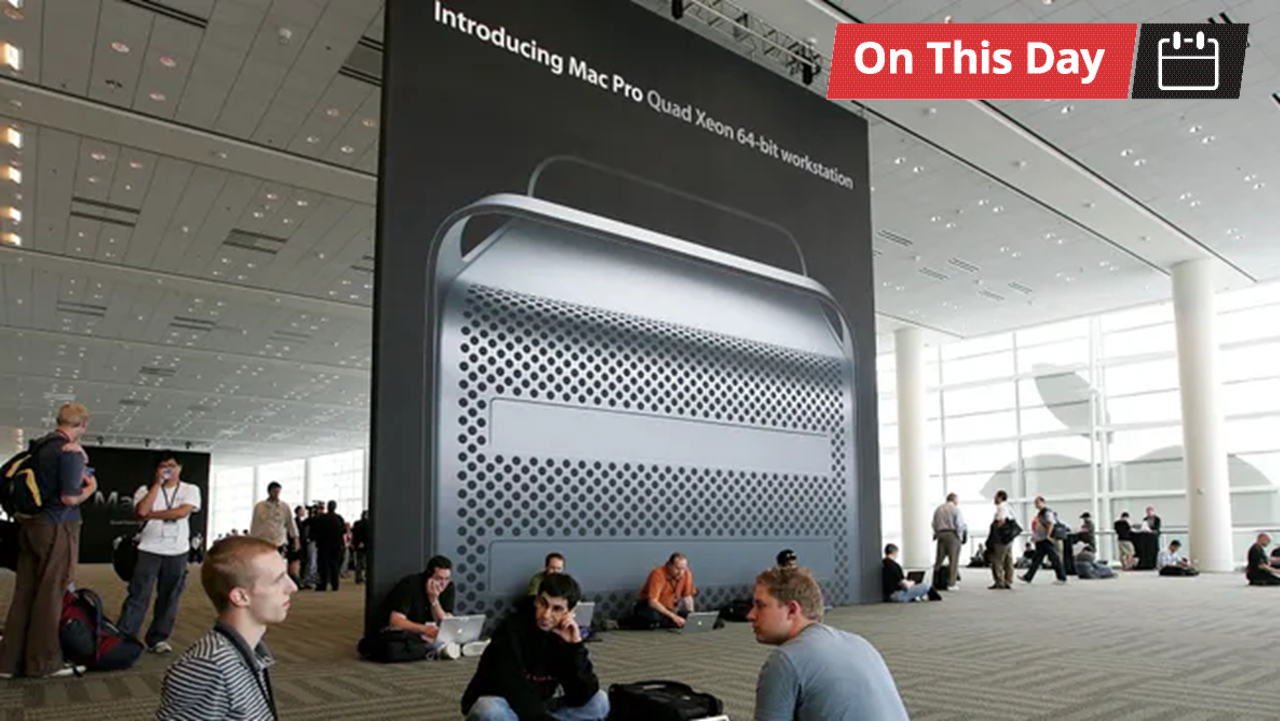
Twenty years ago today, a monumental shift occurred in the world of computing. At Apple’s WWDC stage, Steve Jobs unveiled not just a new product, but a revolutionary architecture that signaled the end of an era: the introduction of the first Mac Pro desktop computer.
This launch was more than just hardware; it was a declaration of intent. It marked Apple’s successful transition from the venerable PowerPC architecture to the more powerful Intel x86 lineage for its professional workstations. While earlier Intel-powered models existed, the Mac Pro represented the ultimate evolution, replacing the mighty PowerMac G5 tower with a machine built for unprecedented performance.
The excitement surrounding this new workstation was fueled by staggering performance claims. Apple asserted that the Mac Pro could deliver up to twice the performance of its PowerMac G5 ancestor. This promise wasn’t just marketing fluff; it was backed by serious silicon and processing power designed to handle professional demands.
Under the hood, this first generation Mac Pro was packed with cutting-edge components. It featured dual-core Intel Xeon processors capable of running up to 3.0 GHz. These CPUs were paired with powerful graphics solutions, including the Nvidia GeForce 7300 GT and the Quadro FX 4500, offering substantial graphical horsepower.
The internal specifications reflected a commitment to high-end capability. The system utilized 1GB of DDR2-667 memory, expandable up to 16GB, and included 250GB of hard drive space that could be expanded across four bays. It was equipped with extensive connectivity, including multiple FireWire ports, Gigabit Ethernet, and various USB and audio interfaces.
Apple successfully navigated this transition quickly, completing the shift to Intel processors in a remarkable seven months. This swift adoption demonstrated a clear vision for the future of Apple’s hardware strategy, placing performance and versatility at the forefront.
This pioneering workstation laid the groundwork for what followed, setting a new standard for professional computing on the Mac platform. Though that specific desktop model has since been succeeded by newer innovations like the Mac Studio, the legacy of the Mac Pro remains a powerful testament to Apple’s relentless pursuit of technological advancement.
Buy on Amazon
Credit