Auction winner unearths Y2K retro PC with UV PSU
In the world of modern computing, PC cases have largely settled into a philosophy of subdued, minimal design. Corporate boardrooms favor understated aesthetics, leaving many wondering where the personality went. But sometimes, the most fascinating design statements are found outside the mainstream—in the forgotten corners of storage unit auctions.
One such treasure was recently unearthed by a keen scavenger who found a trove of vintage computing gear. This lucky find included not just a collection of hardware, but a truly unique centerpiece: a power supply that screams Y2K nostalgia and a case that refuses to whisper.
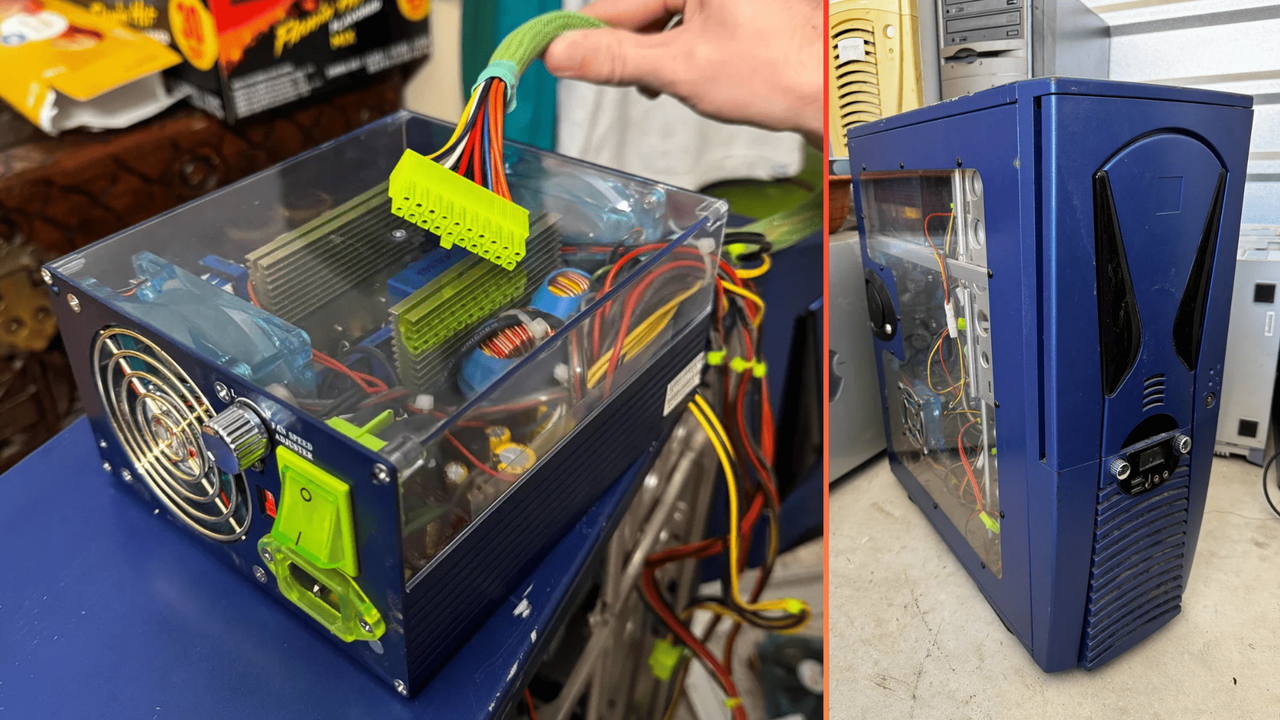
The star of the find was an Apevia X-Superalien case, a relic from an era that embraced harsh curves and angles. Crafted entirely from aluminum, this case is a visual punch, featuring five external 5.25″ drive bays and a front I/O panel packed with USB, audio jacks, and Firewire ports, all housed beneath an upside-down mushroom shape.
What made this case truly captivating was its transparency. The side panel allowed a clear view of the era-appropriate components nestled inside, including the power supply itself. This setup offered a glimpse into a time when hardware wasn’t just functional; it was designed to be seen.
Inside the case, the power supply stood out. It was an Apevia ATX-AS500W, featuring an acrylic top and a metallic bottom. The internal components were color-coated with blue LEDs and neon green accents that were even UV-reactive, causing the cables to glow in the dark. It was a striking piece of retro industrial design.
However, this aesthetic brilliance comes with a technical caveat. The power supply, though visually stunning, presents a mixed review from the community. Because it was sold under various brands, tracking its exact specifications is a challenge. It is sometimes referenced by the name Iceberg Power, but the actual unit is a rebranded YoungYear YP-AB, built by Sun Pro.
Some community feedback suggests this older unit is best appreciated as a decorative piece rather than a high-efficiency powerhouse, noting that its efficiency puts it out of contention for serious retro revival builds. Yet, even with its functional limitations, the case itself remains perfectly fine, and many enthusiasts have posted their own sleeper builds using similar chassis.
This discovery taps into a larger trend: the growing interest in chasing nostalgia. While the market is filled with sleek, modern designs, there is a palpable desire for bold aesthetics. This shift is fueling a resurgence in retro computing, where enthusiasts are not just chasing historical accuracy but are intentionally building systems that offer a unique, vibrant personality.
The story of the Apevia X-Superalien and its components serves as a perfect reminder that history is not just stored in archives; it is waiting to be rediscovered and reimagined, proving that the most compelling technology often lies in the bold, overlooked designs of the past.
Buy on Amazon
Credit