BCI for mastery Black Myth Wukong combat
Translating the mysteries of the human mind into actionable digital commands is no longer confined to the realm of science fiction. A new wave of reality is emerging, where the electrical whispers of our brains are being harnessed to control devices, promising a future where interaction is purely intentional.
This cutting-edge field, known as brain-computer interfaces (BCI), has made its debut on the global stage at major technology conferences, demonstrating that interfacing thought with technology is rapidly moving from theoretical concept to tangible application. At the World Artificial Intelligence Conference in Shanghai, attendees were treated to demonstrations showcasing how neural signals can be decoded and converted into real-time inputs.
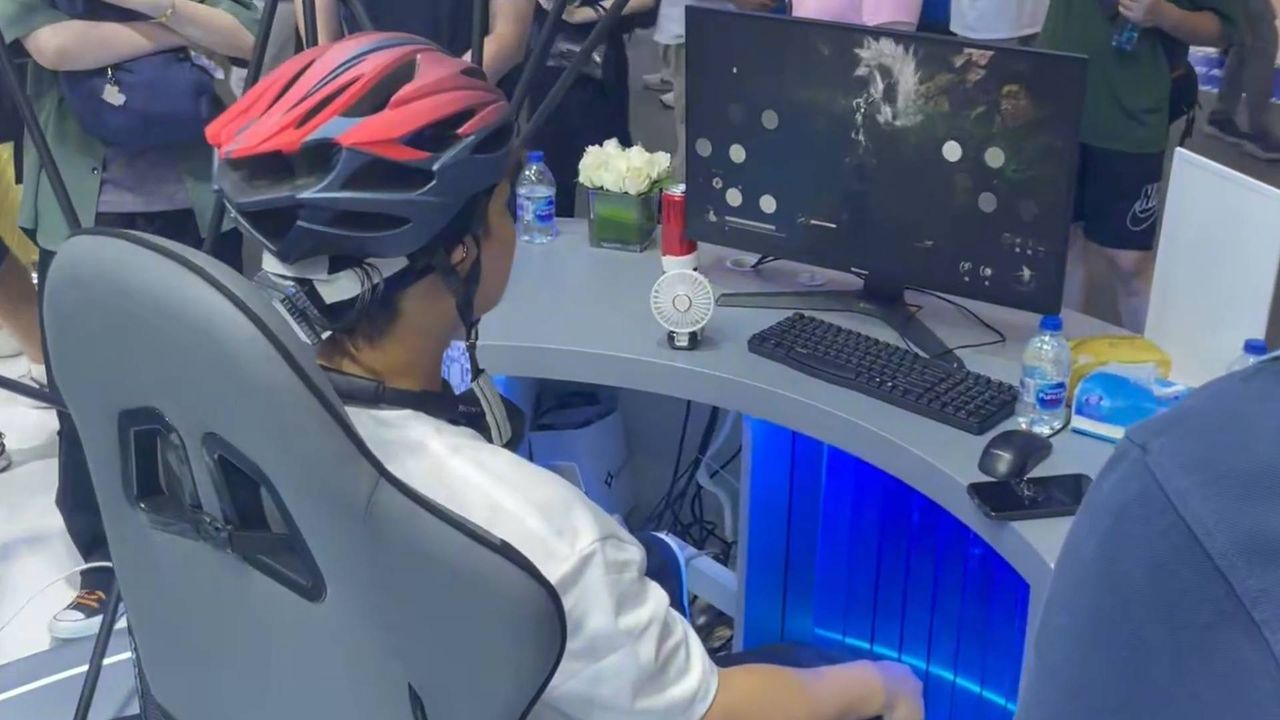
One of the most exciting applications showcased involved gaming. Imagine controlling a complex game like Black Myth: Wukong using nothing more than brain waves. Researchers demonstrated a non-invasive system that can translate intentions directly into device commands, with calibration taking only about five minutes per gamer.
The method used bypasses the need for users to focus on specific visual stimuli—unlike previous setups that required imagining complex movements. Instead, the technology leverages Steady-State Visual Evoked Potentials (SSVEP). This involves projecting various on-screen targets flashing at different frequencies, allowing the brain to generate unique EEG signals in response. These signals are detected by a headset and translated into precise in-game controls.
Beyond entertainment, the utility of BCI extends into crucial medical applications. The ability to monitor and decode neural activity offers profound potential for health technology. Related systems are already being utilized for early warning detection of epileptic seizures, monitoring anesthesia levels, and developing new methods for sleep-related applications.
The versatility of BCI is further highlighted by advancements in robotics. At the same conference, BrainCo demonstrated a similar non-invasive approach that allows users to remotely control robotic limbs and humanoid robots. The process involves an EEG headset picking up brain signals, AI algorithms decoding these intentions into motor commands, and the entire operation completing in under 200 milliseconds—a feat of speed that shatters previous latency barriers.
While the potential is immense, challenges remain. For seamless real-time gaming, minimizing latency is critical. Even a two-millisecond delay can hinder fast, reflexive movements, prompting ongoing research into optimizing these interfaces for complex, dynamic interactions. The journey from decoding a thought to controlling a machine is far from over, but the steps being taken promise an increasingly interactive and intuitive future.
Buy on Amazon
Credit
