Big Walk Co-op Puzzle Action Classic
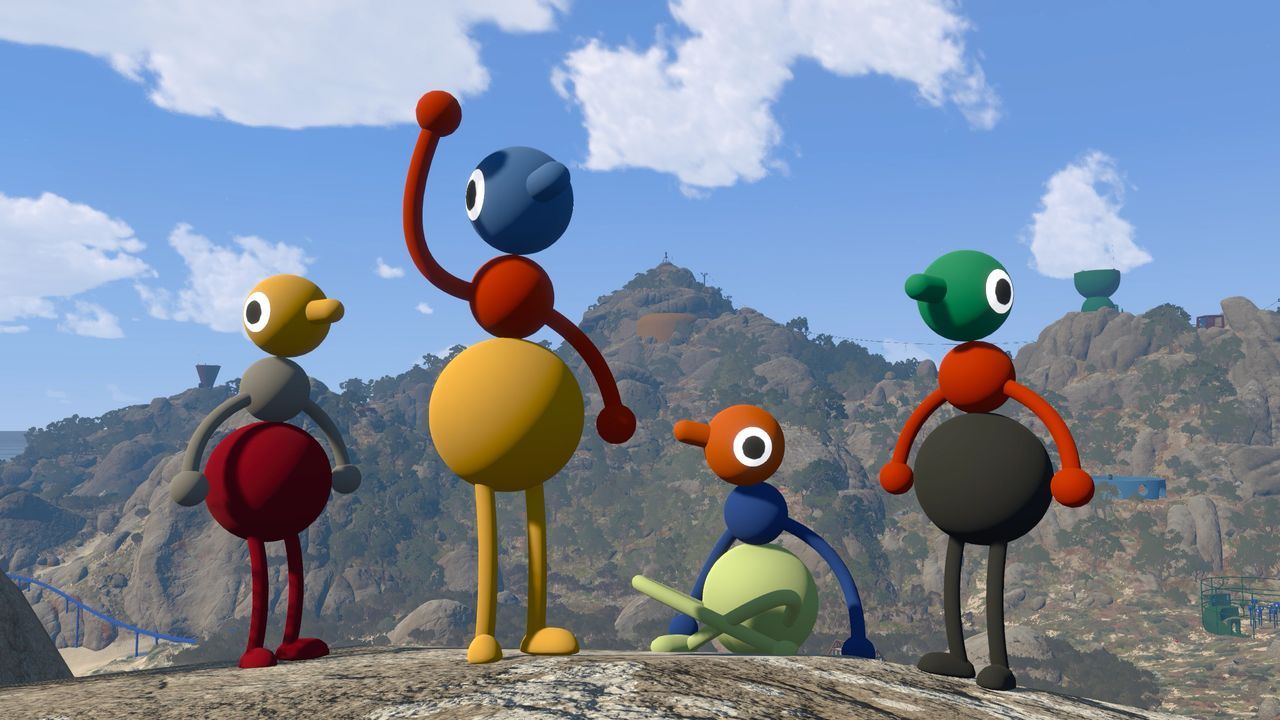
In the world of cooperative puzzle-adventure games, true mastery isn’t just about finding the right sequence; it’s about mastering the art of unspoken communication. Enter Big Walk, a game that throws down a hilarious, and often frustrating, gauntlet, forcing players to rely on gestures, timing, and sheer desperation when the voice chat is strictly forbidden.
Big Walk invites up to twelve players to explore a mysterious island, solving intricate puzzles to collect essential items, including those sought-after red rubber Kong dog toys. But the real challenge lies not in the geometry of the puzzles, but in the necessity of coordinating a team that is separated by soundproof glass or a mile of open air. Since players are restricted from using traditional voice chat, they must become masters of non-verbal cues—and that is where the chaos begins.
The game hinges on the idea that communication is the biggest puzzle piece all along. When a player needs to convey a complex thought, like, “I made a mistake and you actually had the right piece all along!”, traditional dialogue simply won’t cut it. Players quickly resort to exaggerated arm flailing, frantic pointing, and desperate physical theater, often leading to comical misunderstandings and panicked moments of error.
This need for creative signaling is woven into the very fabric of the gameplay. Many puzzles require players to decode symbol matches or complex spatial arrangements. While some puzzles offer straightforward solutions, others demand that a team devise a unique, non-mechanical language to share vital information, turning simple matching exercises into intense communication trials.
The atmosphere of Big Walk amplifies this tension. As players venture into the game’s dark, nighttime exploration, the isolation heightens the need for reliable communication. When players venture off alone and fall into a pit, the fear of being completely cut off—unable to call for help—is palpable. The thrill of being reunited, however, is equally intense, requiring a synchronized, if slightly chaotic, display of signals.
The game masterfully uses auditory and visual cues to build suspense. One memorable sequence involved coordinating musical loops through physical movement, where players had to sync their arm waggles to a rhythm to successfully match speakers to booths. It felt less like a puzzle and more like a bizarre, synchronized dance—a truly unique approach to cooperative problem-solving.
Ultimately, the adventure culminates in an excellent conclusion that rewards the commitment of the group. While the exploration has an edge, with dark terrain and limited voice range, the true edge is the reliance on each other. If you are looking for a co-op experience that demands teamwork, communication, and a healthy dose of improvisation, Big Walk is a compelling adventure.
If you decide to dive into the mysterious island, be warned: success depends entirely on your crew’s willingness to commit to a unified, albeit physically expressive, language. It’s a game that proves sometimes, the most important puzzle piece isn’t the solution, but the shared, unspoken understanding between friends.
Buy on Amazon
Credit
