Cerebras triples AI performance with wafer-scale Nexus architecture
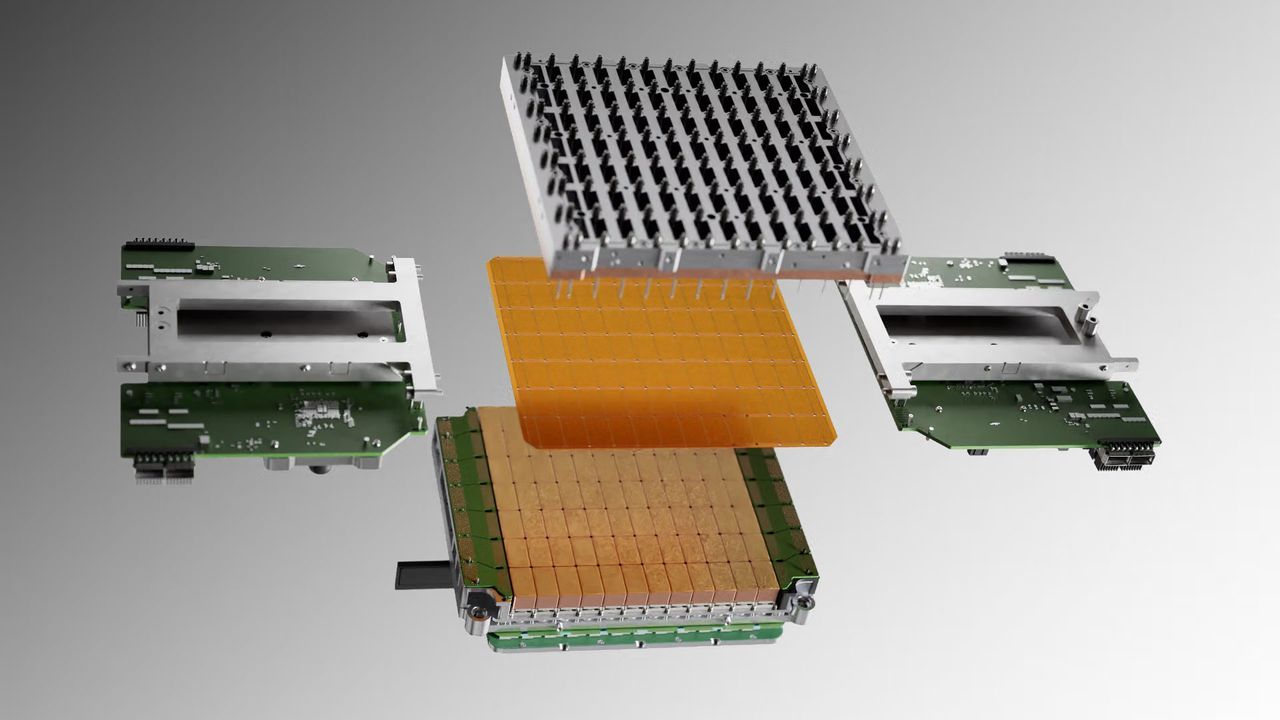
Cerebras Unlocks the Next Frontier in AI with Wafer-Scale Revolution
The relentless demand for hyper-fast AI inference—think services like OpenAI’s ChatGPT-5.6 Sol Ultrafast tier—is pushing the physical limits of computing. To meet this challenge, companies are not just chasing faster chips; they are fundamentally rethinking how silicon can be organized. At the forefront of this architectural shift is Cerebras, which has carved out a powerful niche in the AI model serving space by pioneering wafer-scale engines (WSEs).
Cerebras’ approach involves integrating massive coherent processors onto a single, enormous slice of silicon—a feat that redefines industry standards. However, scaling this approach faces a critical hurdle: AI models require exponentially more memory, not just for the model itself, but also for the ever-lengthening context stored in large Key-Value (KV) caches during each inference session. This creates a tension, especially on wafer-scale designs where area is already completely utilized by logic and memory. Adding more necessary resources becomes a spatial puzzle.
Traditional GPU makers have tackled memory pressures by stacking High Bandwidth Memory (HBM) higher and increasing the amount of memory per accelerator. But for wafer-scale systems, where the logic and memory occupy 100% of the silicon area, adding new components demands sacrifices. Cerebras recognized that to continue scaling its business amid soaring wafer demand, a radical shift in design was necessary.
The answer lies in vertical integration. Cerebras is moving toward stacked designs, particularly with its CS-6 system, planning to attempt the 3D stacking of DRAM directly on top of its logic and SRAM wafers. This ambitious move aims to maintain its performance lead while dramatically reducing the overall area required for the chip, potentially allowing the company to produce significantly more WSEs.
Simultaneously, Cerebras is optimizing its current platform with innovative system design. The CS-4 rack-scale system incorporates a unique Nexus design, which transforms the way compute infrastructure is managed. This design packages power delivery, networking, and liquid cooling infrastructure into self-contained “backpacks.” This modularity allows future wafer-scale engines to be swapped in without replacing the entire rack, offering unprecedented flexibility.
The power efficiency gained through the Nexus design is a game-changer. By connecting the wafer-scale engines directly to the power busbar, Cerebras minimizes power losses—a problem often associated with placing power circuitry on separate substrates. This efficiency boost allows the WSEs to deliver twice the power and up to twice the performance of previous generations, directly translating into enhanced clock speeds.
Scaling out the system is another focus. Instead of relying on conventional Ethernet bottlenecks for scale-out, Cerebras utilizes a wafer-to-wafer interconnect. This direct connection allows CS-4 systems to communicate with each other at a bandwidth of 2.4 Tb/s per wafer, providing a clean, high-speed pathway for model activations. This method bypasses the limitations of traditional networking, proving that specialized interconnects can be more effective than general-purpose networking when dealing with massive AI data flow.
Looking ahead, the CS-4 architecture sets the stage for the next generation. The company anticipates that future WSEs will enable unprecedented token throughput, aiming for up to 10,000 tokens per second per user for smaller models, and 5,000 tokens per second for large frontier models. As AI agents grow more demanding, Cerebras’ focus on specialized, high-bandwidth accelerators positions it to exploit this crucial niche, ensuring that the future of high-speed, intelligent computation remains firmly in the hands of innovative silicon design.
Buy on Amazon
Credit
