Codex Micro RGB Macropod controls AI coding agents
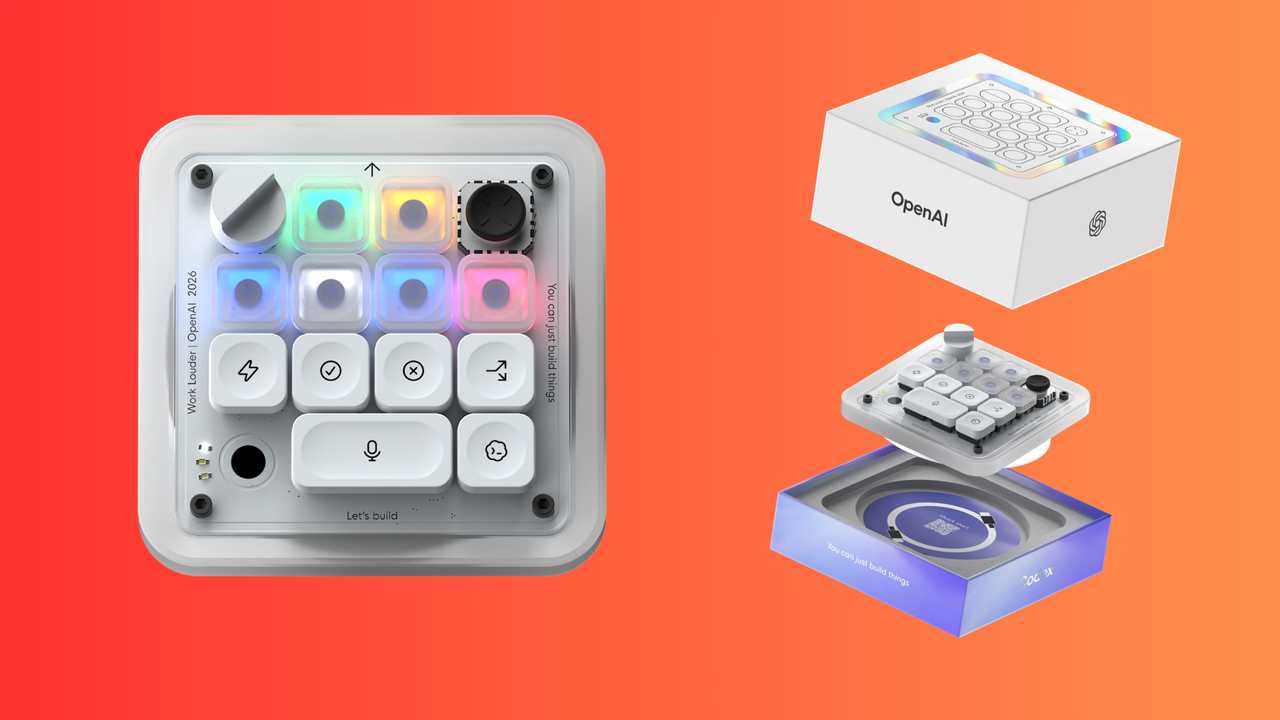
The line between software and hardware just got a whole lot blurrier. OpenAI has officially entered the physical realm, dropping its very first product: the Codex Micro, a device that attempts to bridge the gap between complex AI coding agents and tactile human interaction.
This isn’t just another keyboard; it’s positioned as a glorified macropad designed specifically for interacting with the Codex agentic coding platform. Built in partnership with luxury keyboard company Work Louder, the Codex Micro is rooted on Work Louder’s established Creator Micro 2 platform, bringing an AI-driven experience into the realm of physical mechanics for a hefty $230.
Aesthetically, the device embraces a futuristic, translucent look. The body is constructed from CNC’d aluminum with polycarbonate accents, giving it a frosted white appearance that hints at the complex processing happening inside. It features thirteen mechanical keys, plus an integrated rotary encoder, a joystick, and a capacitive touch sensor arranged across its surface.
The design prioritizes visual feedback. The translucent keycaps and the entire perimeter of the device utilize RGB lighting to communicate information instantly. This is where the true genius lies: the LEDs don’t just illuminate; they act as a live diagnostic system for the AI agents working on code.
The lighting system provides immediate, dynamic status updates. For instance, blue signals that an agent is actively thinking, green indicates an unread chat, and red flashes denote an error or blockage. This allows developers to instantly gauge the operational state of their AI assistants without needing to constantly consult a screen.
Beyond the visual cues, interaction is streamlined through physical controls. A joystick in the top-right corner lets users launch common Codex workflows—like reviewing a pull request or debugging an error—while a customizable radial menu offers endless options for specialized commands.
Adding another layer of fine control is a rotary encoder, allowing users to adjust parameters in real-time, whether it’s dialing into the reasoning level of the AI or simply adjusting volume. Furthermore, the device comes equipped with thirty-two unique command keys that can be swapped out, letting power users tailor the layout precisely to their coding flow.
While the deep integration with Codex is certainly impressive and useful for certain developers, the $230 price tag invites scrutiny. Given that much of the customization required is achievable through existing third-party keypads, the question remains whether the Codex Micro offers enough unique functionality to justify its premium positioning.
Despite any market skepticism regarding its price point, the device does successfully prove a fascinating concept: integrating highly sophisticated, abstract AI capabilities with tangible, responsive physical hardware. It is a compelling step toward making complex data center and AI operations feel as immediate and tactile as they are intelligent.
Buy on Amazon
Credit