Cross-platform Task Manager runs on Mac and Linux
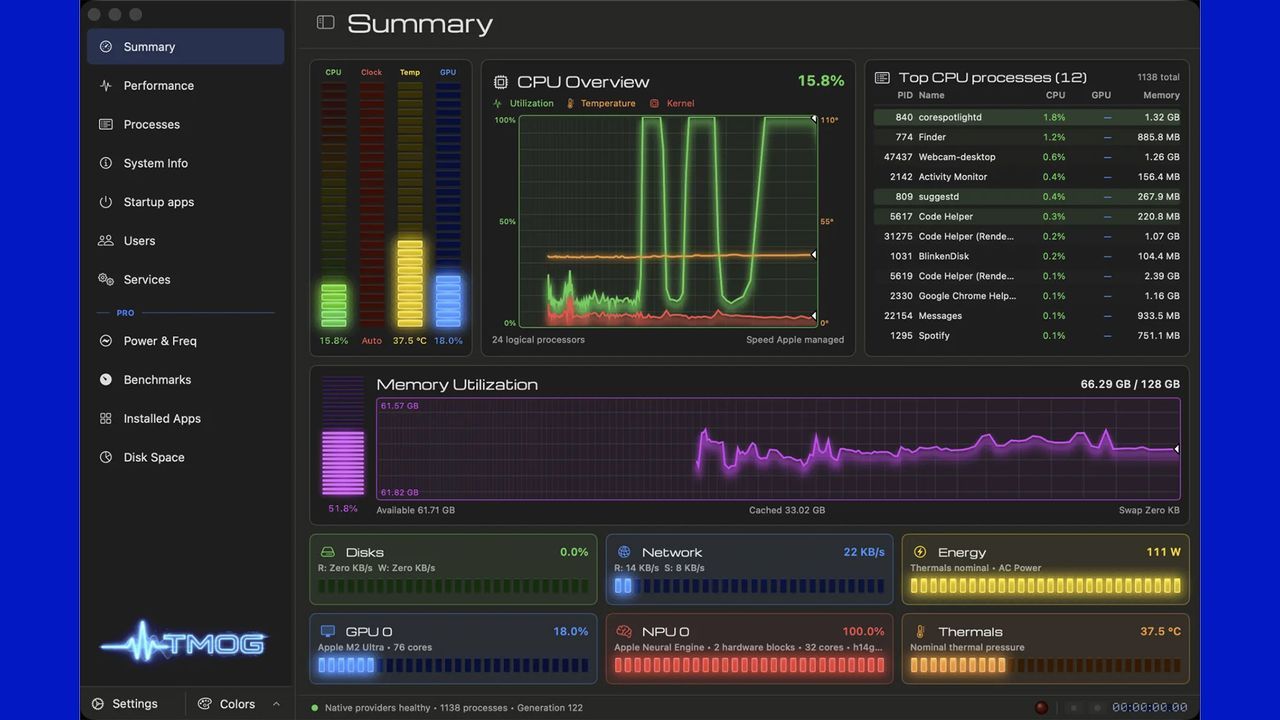
In a world increasingly reliant on complex artificial intelligence, some developers are finding new ways to harness the power of machine learning not just for code, but for creative reinvention. Legendary Windows developer Dave W. Plummer is one such pioneer, blurring the lines between traditional software engineering and the emergent art of “vibe coding.”
Plummer recently unveiled his latest creation: Task Manager OG, or TMOG. This isn’t just another operating system tweak; it’s a deep dive into the history of system management, inspired by the original 80KB Task Manager that debuted in Windows NT 4.0 back in 1996. The goal was to breathe new life into a foundational piece of computing history.
But how did TMOG come to be? The process was less about traditional line-by-line coding and more about feeding an idea to an advanced AI. Plummer reportedly constructed a detailed 107-page specification and fed it to Claude Code”>Claude Code, prompting the AI to vibe-code the new interface.
The result was a system that doesn’t just exist on Windows; it thrives natively across major operating systems, including macOS and Linux. This cross-platform compatibility signals that TMOG is less about proprietary software and more about a universal vision for system efficiency.
The inspiration for the project seems to stem from a deeper philosophical argument: the ability to redefine how operating systems interact with users. Plummer noted that the genesis of the idea involved questioning the limitations of modern software design, suggesting that the original Task Manager holds secrets to true efficiency.
The development timeline was surprisingly accelerated by real-life events. While developing TMOG, Plummer found himself with unexpected free time while waiting at the hospital. This downtime, coupled with access to powerful hardware like a MacBook Air M5, provided the perfect incubation period for the project.
This unexpected break allowed him to focus on refining the vision. TMOG introduced compelling visual enhancements, such as the ability to animate elements at 60 Hz instead of once per second, alongside numerous visual customization options and intriguing retro-flavored presets.
The initial versions of TMOG were functional, a testament to the power of AI-assisted development. The developer then shifted focus to fine-tuning, addressing the subtle imperfections that inevitably arise when merging AI-generated concepts with precise engineering demands. Community feedback on the beta versions has been overwhelmingly positive, highlighting the system’s responsiveness and new capabilities.
Currently, TMOG is rolling out as beta version 0.1.1 across all supported platforms, continuing its journey as a testament to how code, creativity, and cutting-edge AI can converge to bring a classic piece of software into the modern era.
Buy on Amazon
Credit