Customs supervisor steals $105K in CPUs, swaps hardware and cashes out on Newegg
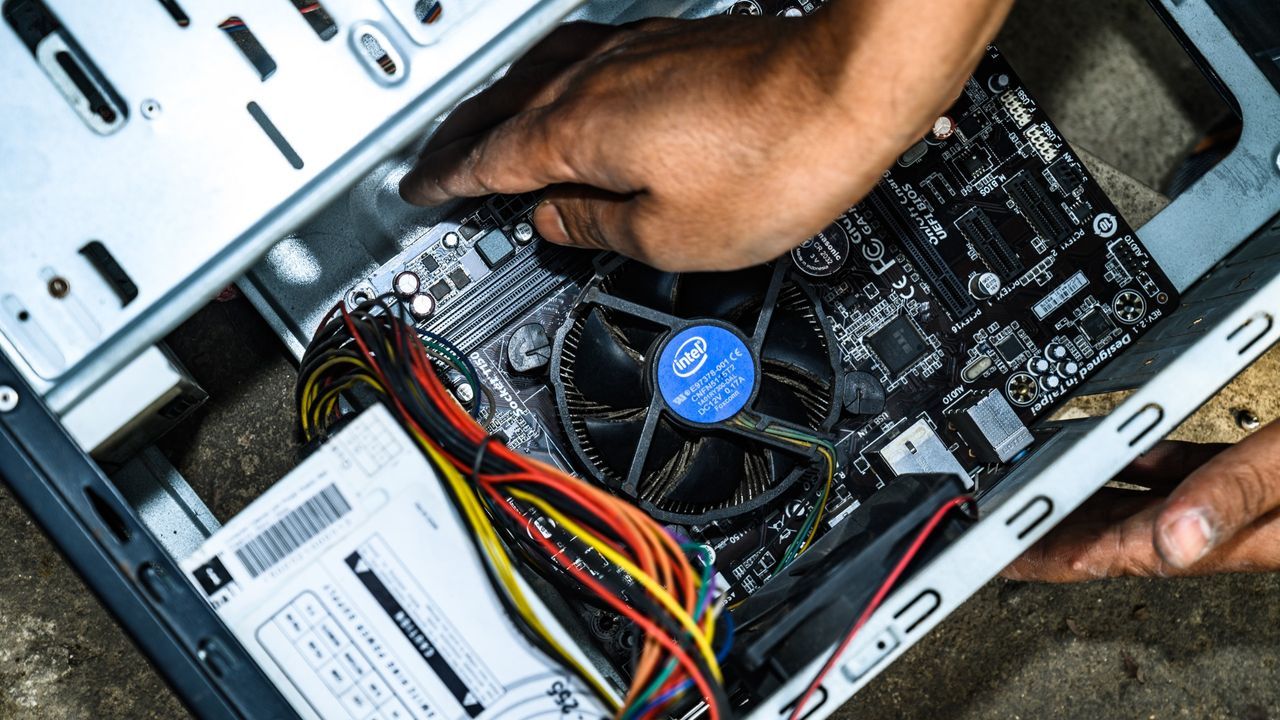
The intersection of border security and high-tech theft has led to a surprising investigation into a scheme that highlights the vulnerability of government assets and the ingenuity of those who seek to exploit them. Federal authorities have recently arrested and charged Terry “Jiajia” Liu, a Customs and Border Protection supervisor in Maine, for the theft and deliberate damage of government property.
Liu allegedly targeted at least 46 Department of Homeland Security computers across three Maine border facilities. The operation wasn’t just about taking equipment; it involved a sophisticated manipulation of high-end components. Liu systematically stole valuable hardware, including Intel 14th Generation Raptor Lake Refresh processors, memory modules, and hard drives.
The criminal didn’t stop at simple theft. In a calculated move, Liu replaced the stolen parts with inferior, substandard hardware. The goal was not just to acquire the components but to undermine the integrity of the systems themselves. Investigators discovered that while the systems were running on newer processors, they were populated with parts that significantly degraded performance, sometimes utilizing older or lower-grade Pentium chips, and featuring reduced memory and storage capacity.
The physical evidence of the tampering was captured on hidden surveillance cameras, which documented Liu engaging in the swap during the midnight shift. Recordings showed the perpetrator using tools to remove thermal paste and install replacement chips, while other footage captured the removal of memory modules and their subsequent storage.
The sheer scale of the hardware alteration was striking: investigators found that thirty-nine computers had their processors swapped, six machines had memory modules exchanged, and eight systems had hard drives changed. This extensive modification demonstrated a deep understanding of system architecture, albeit for illicit purposes.
Rather than attempting to liquidate the stolen processors on the open market, Liu employed an equally clever method for disposal. He utilized Newegg’s Trade-In program, sending thirteen emails to an official CBP address containing shipping labels and trade-in receipts for the processors matching the missing components.
This method allowed Liu to cash in his stolen assets, trading the high-performance chips for store credit, with transactions showing the exchange of Core i7 Raptor Lake Refresh chips over a fourteen-month period.
When questioned, Liu initially claimed his motivation was benign—a desire to improve computer performance and reduce repair times. However, the forensic evidence revealed a different truth: the modifications resulted in tangible performance degradation, indicating a clear intent to sabotage the functionality of the government equipment.
The financial fallout from the scheme is substantial. Restoring the stolen hardware is estimated to cost approximately $20,460. Furthermore, a full replacement of all 46 compromised computers with equivalent, functional hardware is estimated to run into the $105,800 range, not including the significant labor costs required to configure each system for official government use.
Buy on Amazon
Credit
