Developer makes a GBA password cracker thirty million times slower
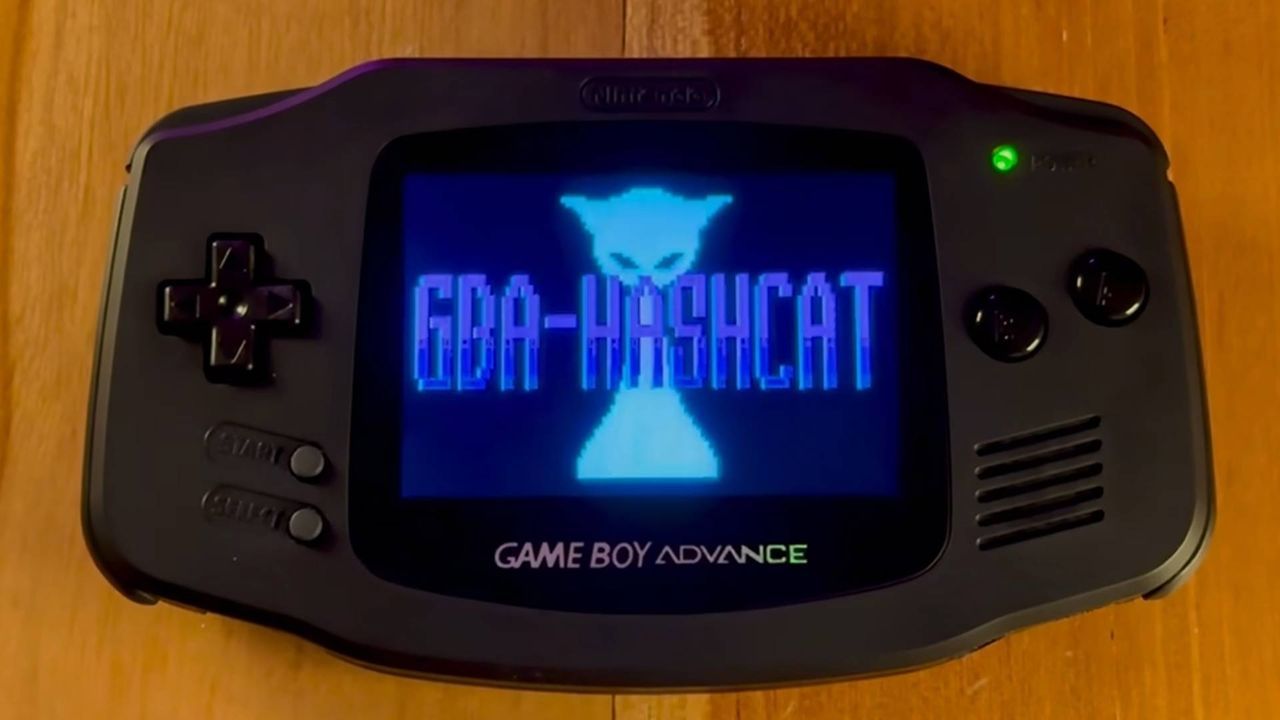
The Password Cracking Game: Porting Hacking Tools to the GameBoy Advance
In the world of cybersecurity, speed and raw processing power often define success. But what happens when you take the most sophisticated password recovery utilities and shrink them down to fit a handheld console? A security engineer has taken this exact challenge on, successfully “porting” one of the most renowned cracking tools onto the venerable GameBoy Advance (GBA).
The result is a project dubbed GBA-Hashcat. While it carries the spirit of its powerful predecessor, Hashcat—known for being among the fastest password recovery utilities in existence—the resulting application reveals an interesting reality: adapting high-speed cracking techniques to retro gaming hardware involves some serious speed bumps.
The performance disparity is stark. The GBA, with its modest 16.78 MHz ARM7TDMI chip, operates at a pace that puts it lightyears behind modern cracking rigs. One developer noted that achieving the equivalent of thirty million times faster hashing would take approximately one second on a powerful GPU-accelerated rig. This means that while the GBA can technically perform password checks, running a lengthy operation could amount to days, if not weeks.
Yet, this slow pace doesn’t dampen the creative spirit. It sparks an imagination, leading some to dream up heist movies where criminals use repurposed gaming hardware to crack open digital vaults—a perfect blend of high-tech security and retro mischief.
Under the hood, GBA-Hashcat works by generating the SHA-256 hash of each line of input and comparing it against a fixed target hash. It is a fundamentally streamlined version of the original utility, focusing on checking one specific word list and one type of hash algorithm. Despite its simplicity, the developer has humorously dubbed the project both “The greatest password cracking of all time” and his “dumbest app of all time.”
The journey didn’t end there. To boost performance for users still looking to tackle hashing challenges, the engineer found a clever solution. By implementing the tool using LUA—the subset of Lua commonly used in World of Warcraft addons—they managed to implement significant speed gains directly within the game environment, allowing users to crack hashes right in-game.
This development highlights a broader trend: developers are constantly finding ways to inject life into forgotten technology. It’s not just the GBA that has seen this kind of resurgence. Recently, other developers have been bringing fresh energy to older consoles, shrinking down classics like the Game Boy Color into smart watch form factors and building E-Ink emulators with ‘actually playable’ refresh rates. The lesson is clear: there is immense potential and creative freedom waiting within yesteryear’s gaming hardware.
Buy on Amazon
Credit
