DIY AI Desktop from Laptop Parts Crippled by DRAM Hack
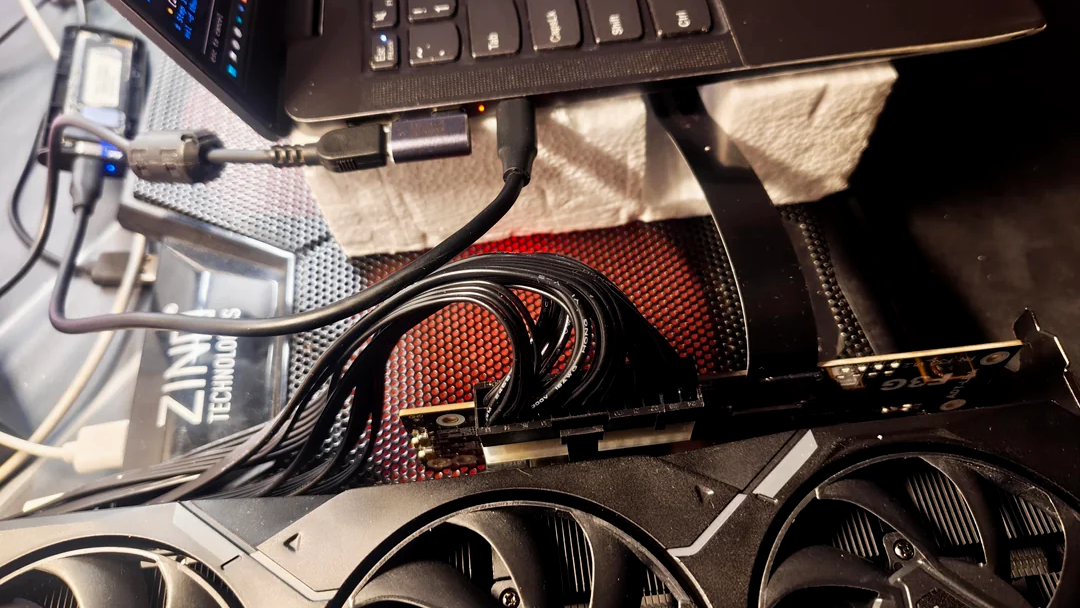
The quest to run massive language models locally often demands a spectacular amount of hardware, and lately, tech enthusiast Panic has been on an epic journey to achieve the impossible. A month ago, Panic decided to tackle this challenge by acquiring a powerful Radeon 7900 XT with 20 GB of VRAM, a significant milestone for local LLM experimentation in India.
The initial plan was ambitious: to house this powerhouse in a Lenovo M910Q desktop. However, the dream quickly hit a snag. The machine simply would not cooperate with the necessary modifications, forcing Panic to pivot. The goal remained the same—LLM computation—but the platform needed a radical overhaul.
Instead of settling for a desktop, Panic turned to a laptop, opting for a Lenovo Yoga machine. This required some serious surgery on the hardware. Armed with an ADT-Link PCIe external cable connector, a DeepCool PL750D power supply, and some creative panel removal, Panic essentially transformed the laptop into a makeshift PCIe development board. It was a high-wire act of ingenuity, turning a consumer device into a specialized computing platform.
Once the hardware was wired, the real technical hurdles began. A primary concern was managing the VRAM; while the 7900 XT was working beautifully with Furmark, dedicating resources to the display framebuffer(s) began eating into the precious VRAM needed for the LLMs. This meant the integrated graphics silicon had to step aside, creating a fascinating tension between visual output and computational necessity.
The true bottleneck, however, wasn’t the GPU power, but the system’s memory. When attempting to load large models like Qwen 35B A3B and GLM-4.7 Flash with a demanding 128K-token context window, the laptop’s limited DRAM proved to be woefully inadequate. The system quickly exhausted its available memory and began using swap space, grinding performance to a frustrating halt.
The result was a scenario where the GPU, despite its massive capabilities, spent much of the time idling, occasionally bursting into activity. It highlighted a crucial lesson: having massive VRAM is only half the battle; the surrounding memory architecture dictates the entire performance equation.
In the end, while the DIY project was visually striking and technically adventurous, the ultimate solution involved a return to practicality. Panic realized that the most sensible solution for housing this kind of intensive workload was to purchase a standard, older office tower. It proved that sometimes, the most sensible solution is the one that avoids unnecessary modifications and lets the ambition run without wrestling with hardware limitations.
Buy on Amazon
Credit
