DLSS 5 on AMD GPUs: My RX 9070 XT is suffering
The Great Cross-Platform Hack: Bringing DLSS Neural Rendering to AMD GPUs
In the ongoing battle for graphical innovation, the line between competing hardware manufacturers is increasingly blurred. Recently, a clever hack has emerged, allowing users to experiment with high-end features designed by Nvidia on AMD GPUs. This isn’t official, but it demonstrates a fascinating willingness to push the boundaries of what graphics cards can do.
The secret lies in community-driven modding. Through the release of homebrew applications on platforms like Github, users have managed to pull necessary components, such as DLSS 5 files, and create methods to run features like Neural Rendering on Radeon GPUs. This community effort allows enthusiasts to bypass official limitations and explore potential functionality.
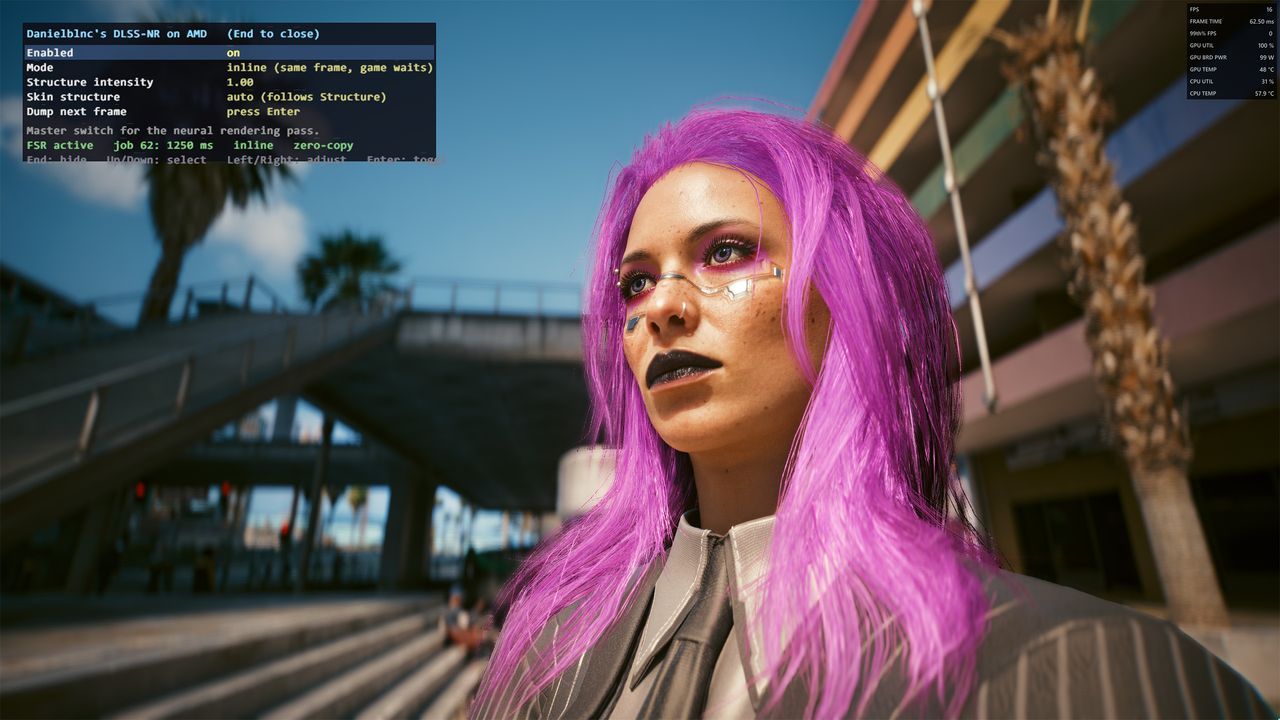
One user successfully tested this approach on a Radeon RX 9070 XT in a demanding title like Cyberpunk 2077. The process involved downloading specific files, configuring them within the game directory, and dealing with the often-tricky steps of driver rollback and file verification to get the system to cooperate.
While the initial setup presented technical hurdles—including issues with Windows flagging the files as potential viruses—the payoff was worth the effort. Once successfully implemented, the feature became accessible, proving that software ingenuity can sometimes bridge hardware gaps.
However, the experiment quickly revealed a stark difference in performance. DLSS 5, while powerful, is a substantial resource hog, even on Nvidia hardware, noted for a massive performance hit. When attempting to run Neural Rendering on the AMD system, the results were markedly different. While the feature appeared functional, the frame rates were notably poor, highlighting the inherent performance gap.
The disparity is rooted in the underlying architecture. Nvidia‘s RTX series utilizes dedicated hardware, such as Tensor Cores, specifically designed for the intense matrix calculations required by DLSS features. AMD’s RDNA 4 architecture, while impressive, lacks this level of dedicated silicon for these calculations, leading to significantly reduced performance when attempting the same functions.
Despite the limitations, some progress is being made. Community testing suggests that the performance of Neural Rendering on AMD chips has seen a modest increase since the software’s first release, with some users noting a twelve percent improvement. Nevertheless, analysts suggest that a hard hardware limit remains, meaning full, seamless integration of DLSS Neural Rendering into the AMD lineup is still likely on the horizon.
Buy on Amazon
Credit
