DLSS 5 rebrands to ‘Neural Rendering’ in NBA 2K27 graphics
When new technology hits the gaming scene, the names and labels often matter just as much as the raw performance. Nvidia’s rollout of DLSS 5, the latest iteration of its AI-powered image technology, perfectly illustrates this tension. It’s a story less about the graphics and more about the marketing gymnastics required to introduce a game-changing feature.
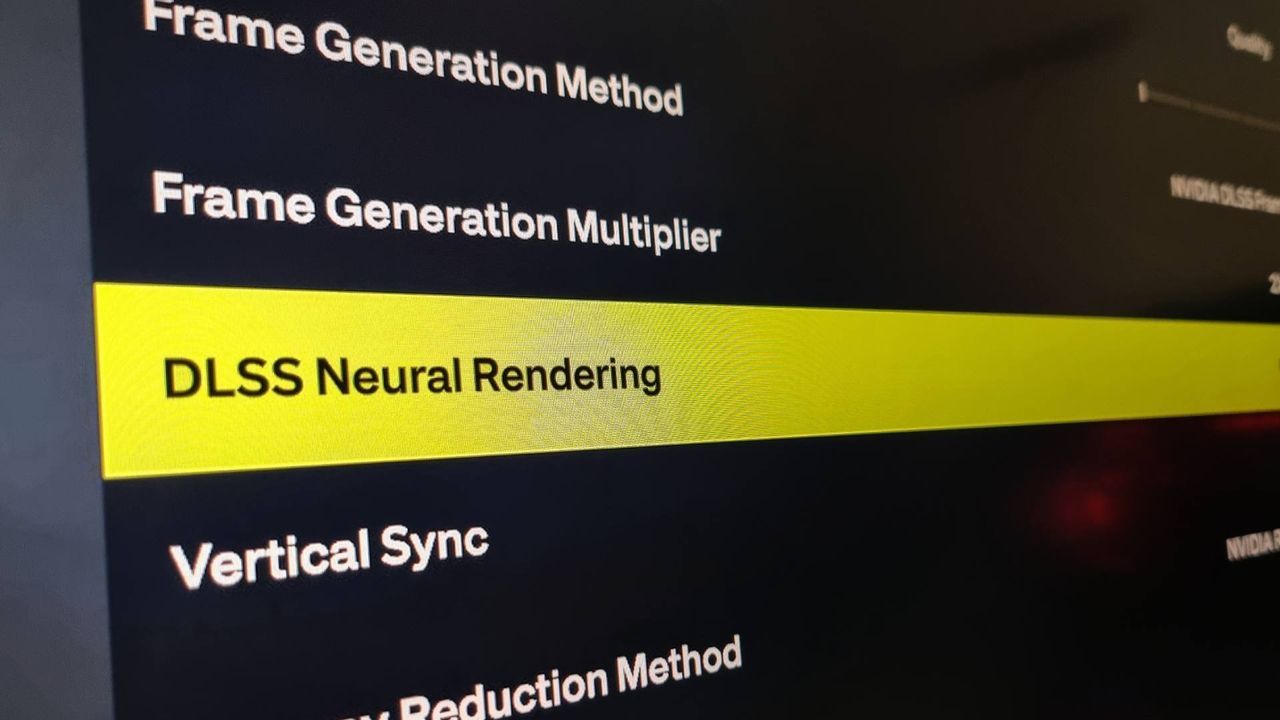
Take, for example, the experience in games like NBA 2K27. If you dive into the settings, you won’t find a flashy banner naming the technology as DLSS 5. Instead, it quietly appears as an on/off toggle under the title DLSS Neural Rendering. This subtle shift in nomenclature reveals a deeper frustration: the tech is being presented as a feature, but its true nature—AI image alteration—is deliberately tucked away.
While the underlying technology has been steadily improving, with previous updates focusing on niceties like Ray Reconstruction, the introduction of DLSS 5 feels like a seismic shift. Nvidia’s choice to bundle the powerful AI image alteration capability under the familiar DLSS umbrella raised immediate eyebrows. It felt like a hurried move, suggesting that AI image generation was simply the inevitable future, demanding immediate adoption.
The real drama unfolds when you look at the performance impact. DLSS 5 has the potential to slash performance by up to 73% on high-end hardware, such as an RTX 5080 in demanding titles. This massive performance gain is impressive, but it also highlights the computational weight of the new AI. It transforms the conversation from simple upscaling to complex optimization, forcing gamers to grapple with the trade-offs between visual fidelity and raw speed.
This heavy performance demand is compounded by the fact that the technology is still subject to personal taste. While developers have the tools to implement AI effects—even allowing players to tweak sliders, as seen in some modding environments—the resulting imagery is ultimately subjective. We can see impressive results, but there is certainly no single standard for what constitutes “beautiful” or “correct” in rendered graphics.
The confusion around the naming itself shows that even when technical details are clarified, the public response remains divided. Separating the upscaling technology from the AI processing, as a simple on/off switch allows, offers a practical solution. It allows users to engage with the performance boost without necessarily signing up for the full immersion into AI-generated aesthetics.
Ultimately, the controversy surrounding DLSS 5 boils down to transparency and context. By choosing to brand the feature as an optional, toggle-based neural rendering system, the industry takes a crucial step toward acknowledging the technology’s complexity. It suggests that the focus should remain on iterative, controlled improvements, rather than presenting a massive, singular AI leap as the entire story.
Buy on Amazon
Credit