Drone vs Drone boat battle kills Russian MBeK with 12.7mm turret
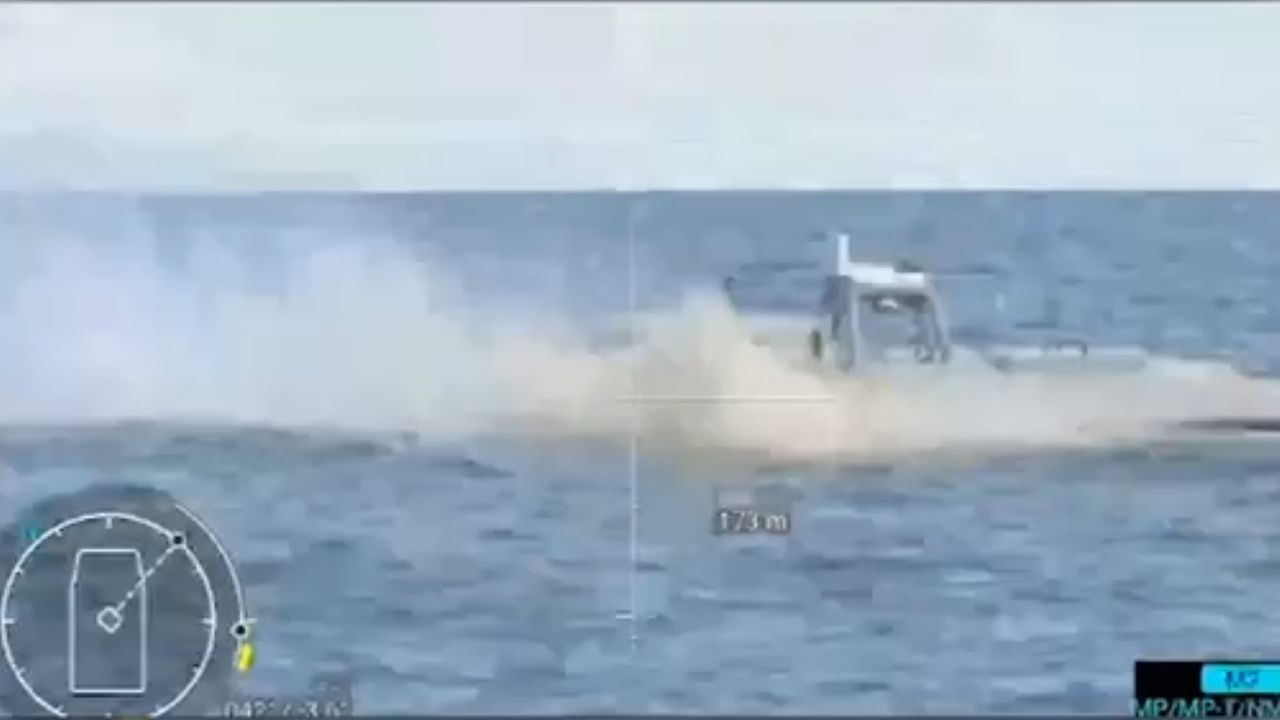
The battlefield is shifting, and the age of naval warfare is being redefined by autonomous technology. Ukraine’s Navy recently claimed a landmark victory, asserting dominance in what many are calling the first-ever battle of unmanned naval boats.
At the heart of this triumph is the Sargan 3000, a multi-purpose unmanned surface vehicle (USV) that has proven to be a formidable asset in modern conflict. In a dramatic display of maritime superiority, the Sargan 3000 was filmed destroying a Russian MBeK in the Black Sea, marking a significant step forward for autonomous naval warfare.
The video shared by the official Ukrainian Navy Telegram channel showcased the drone in action, targeting the enemy vessel and firing multiple rounds from its 12.7mm Protector RWS automatic turret. The spectacle was further enhanced by the visible smoke and the presence of surrounding flying drones, lending an epic feel to this unmanned duel.
The performance of the Sargan 3000 is backed by impressive specifications. This versatile platform is capable of operating with a combat radius of nearly 1,000 miles (1,600 km) and can carry a payload of up to 990 pounds (450kg). With a top speed of around 50 knots, the USV demonstrates remarkable agility and range.
This is not an isolated incident. The Sargan 3000 has already established itself as a proven weapon. Prior to this latest headline, the same unmanned system was responsible for sinking a Russian FSB border patrol ship, the Izumrud, off the coast of Gelendzhik in mid-July, demonstrating its effectiveness in maritime operations.
What makes the Sargan 3000 so revolutionary is its multi-payload flexibility. Images and operator statements confirm that the drone can be quickly adapted for various missions, featuring variants equipped with FPV drone carriers, transport containers, and remote weapon stations, allowing it to transition seamlessly from reconnaissance to direct attack.
The rapid development of this technology is reshaping global defense strategies. While Ukraine showcases its advancements, other nations are also keenly pursuing similar innovations. The United States and the United Kingdom are actively developing their own sea drone technologies, focusing on applications such as protecting vital undersea cables and pipelines through automated surveillance.
This ongoing race for unmanned maritime technology signals a future where sophisticated, autonomous systems will play a central role in safeguarding global infrastructure and defining the contours of future naval engagements.
Buy on Amazon
Credit