Ex-Sega engineer creates realistic CRT with TV screen tapping
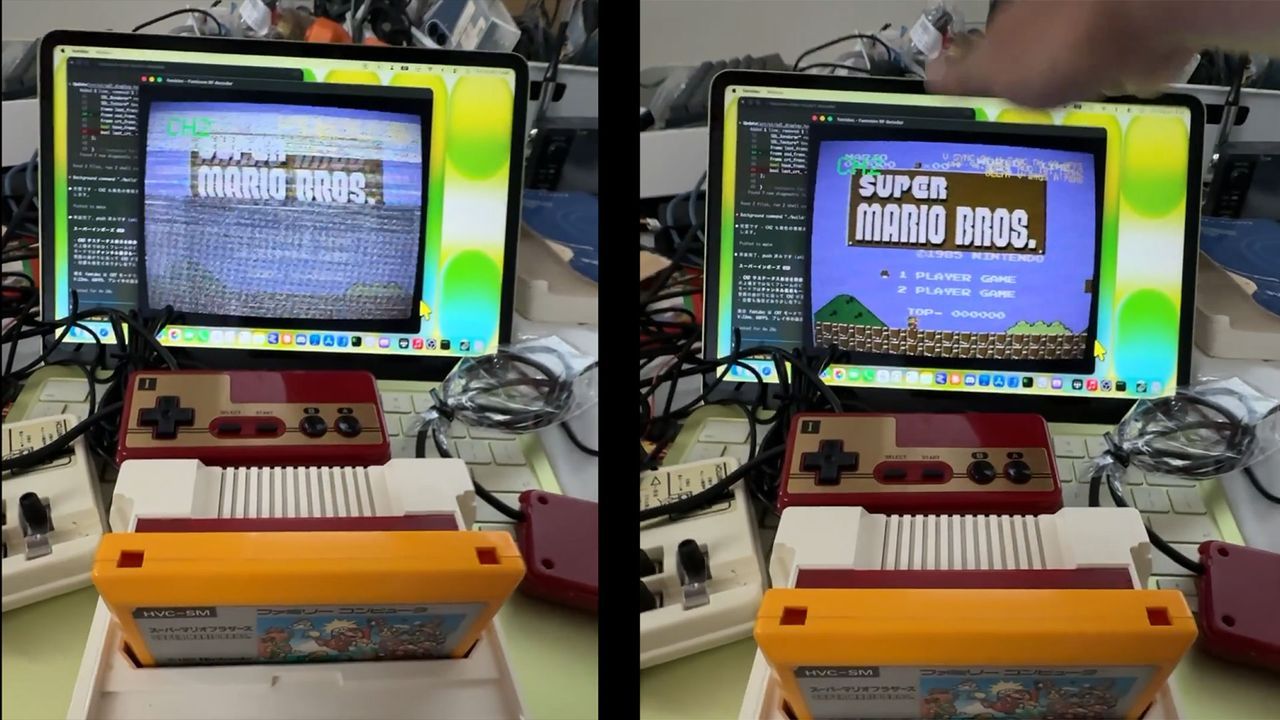
Forget polished graphics and high-refresh OLEDs for a moment. Deep in the world of retro computing, a developer has unveiled a project that bridges analog nostalgia with modern interactivity, essentially teaching a piece of software how to behave like a beautifully damaged old television set.
The ingenuity behind this demonstration comes from GOROman, an ex-Sega and ex-Facebook software engineer who is tackling the notoriously difficult task of retro emulation. His work involves creating sophisticated CRT emulators for macOS that solve performance headaches by incorporating novel input methods, such as screen tapping.
But the true magic lies in how he handles the signal itself. GOROman’s project leverages a fascinating hack: using the famicom-rf-hackrf-decoder software alongside a HackRF One device to capture and decode the VHF RF output from an original Nintendo NES.
This setup allows the console’s RF-modulated video signals to be piped directly into modern LCD screens. However, simply receiving the signal isn’t enough. The Famicom’s output is inherently non-broadcast-compliant—it operates in a quirky analog space that requires complex processing to mimic real-world television behavior.
To achieve this realism, the decoder software must effectively act as the “brain” of an analog TV, locking in image stability and color while managing quirks like drifts, wobbles, and color burst instability. This process involves running several background processes to simulate the physics of older broadcast technology in real time.
Initially, GOROman’s early demonstrations explored this by manipulating the VHF frequency—exaggeratingly shifting the signal to create a humorous effect that resembled a ‘damaged TV.’ It was an eye-catching, slightly chaotic preview of pushing the boundaries of retro display.
Now, the focus has shifted from frequency manipulation to physical interaction. The latest update explores how percussive maintenance—a simple tap on the monitor—can be integrated into the experience. Some speculate that this feedback might draw from sensors, perhaps even the angle of an Apple MacBook’s lid sensor, to simulate the subtle creaks and vibrations of old hardware.
The goal is to move beyond passive viewing and introduce a tangible element of physical interaction, turning screen tapping into a functional tool for managing the simulated retro experience. This commitment to blending complex signal decoding with playful user input shows how far software engineering can push sensory simulation when reviving classic technology.
Buy on Amazon
Credit