Finalmouse clicks are faster than Logitech and Razer
The Click Revolution: How a New Mouse Is Rewriting the Rules of Gaming Latency
In the relentless pursuit of milliseconds, the world of gaming peripherals is constantly searching for the next leap in performance. Recently, a challenger has entered the arena, promising to redefine the speed of interaction with hardware. Enter the Finalmouse Starlight X, a hybrid mechanical-optical mouse that isn’t just about aesthetics—it’s about shattering the boundaries of click latency.
At the heart of this technological shift is an entirely new TMR DS analogue click architecture. This innovation isn’t just a subtle tweak; it aims to completely overhaul how a mouse registers a click, pushing it to achieve speeds previously thought unattainable in consumer electronics. The results, according to testing, place the Starlight X at the forefront of click performance among gaming mice.
The claims are staggering. The Starlight X reportedly achieves the fastest click latency measured across any gaming mouse tested, even surpassing established competitors like the Logitech G Pro X2 Superstrike. Furthermore, the mouse set a new benchmark for button input, achieving the lowest button-input latency ever measured in a consumer electronic device.
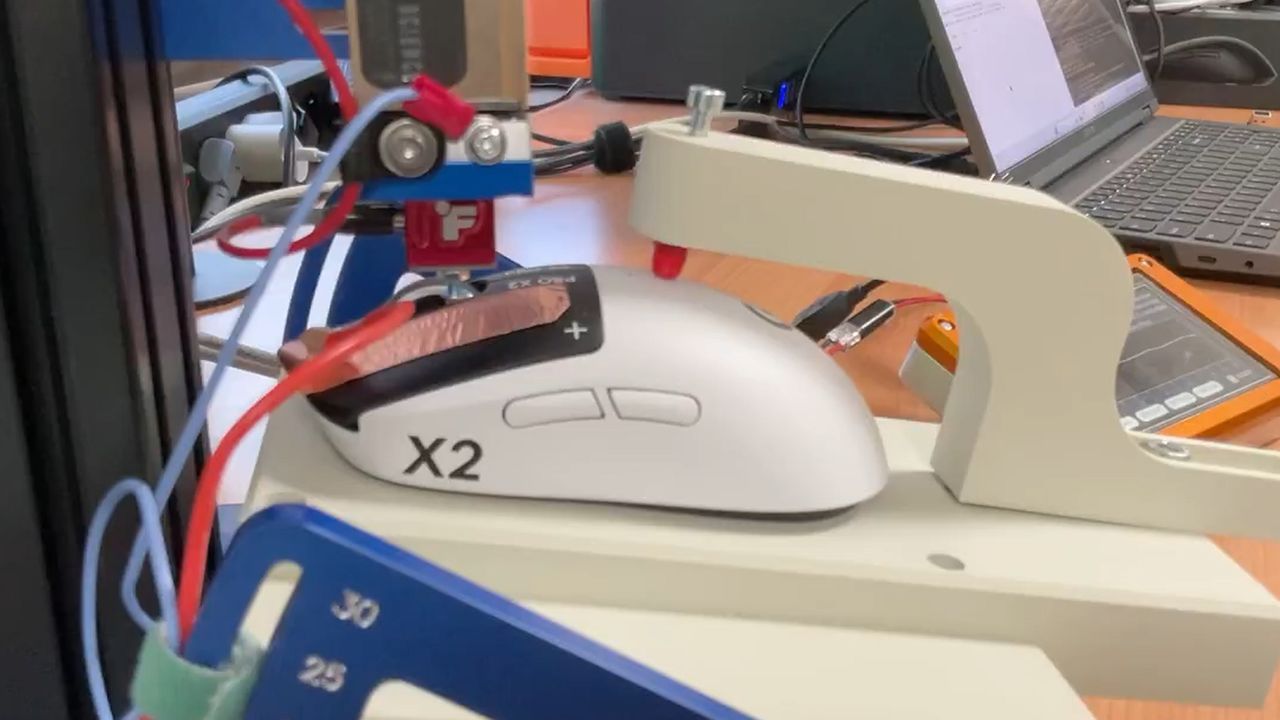
How did they measure such an incredible speed? Finalmouse employed a sophisticated methodology, combining their proprietary XLat tester with custom machinery and copper tape to accurately model the end-to-end latency of a human click. This process allowed them to measure the time from the moment a human presses a button to the signal arriving at the host system.
When put side-by-side with industry standards, the data speaks for itself. The Starlight X registered a remarkable 2 ms latency, significantly faster than traditional mechanical switches. When compared to other high-performance mice, the Starlight X showed clear advantages. For instance, when testing against the Razer Viper V4 Pro and the Endgame Gear OP1 8K V2, the Starlight X demonstrated superior performance in terms of measured click timing.
While the Starlight X is objectively faster, the discussion quickly moves from raw numbers to practical application. Although the mouse’s measured speed is impressive, the real-world benefit hinges on the actuation level. Some observers note that achieving the theoretical minimum latency requires an extremely low actuation point. For users who prefer a more comfortable, traditional actuation level, the difference between the analogue and mechanical scores appears to be relatively small—often just a few milliseconds. This suggests that while the technology offers a theoretical edge, the incremental benefit for most users may be nuanced.
Ultimately, the story of the Starlight X is one of pushing the limits of what’s possible. It showcases how a fusion of analogue technology and precise engineering is redefining the physical limits of response time. Whether this revolution translates into everyday experience or remains a benchmark for the cutting edge of hardware is yet to be seen, but one thing is clear: the race for faster, smarter input is well underway.
Buy on Amazon
Credit