FLiPP photolithography boosts OLED brightness and lifespan 1.6x and 2.4x
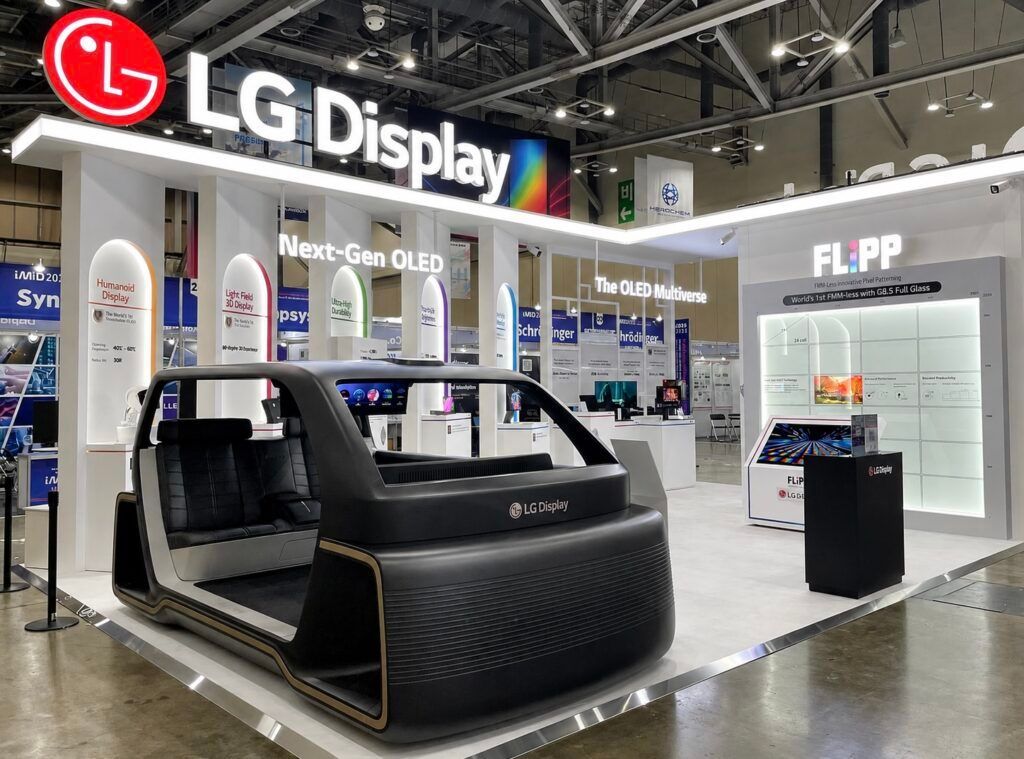
The future of display technology just got a serious upgrade. LG Display has unveiled a revolutionary manufacturing process called FLiPP, which promises to redefine how Organic Light Emitting Diode (OLED) panels are made, potentially ushering in an era of brighter, more efficient, and cheaper screens.
FLiPP stands for FMM-less Innovative Pixel Patterning. At its heart, this innovation eliminates the need for Fine Metal Masks (FMMs)—the heavy, precision-crafted stencils traditionally required to deposit organic LEDs onto glass substrates. By ditching these masks, LG is leveraging advanced photolithography to vaporize unnecessary material, achieving a remarkable breakthrough in panel fabrication.
What does this mean for the end user? The fundamental change lies in how the subpixels are arranged. Instead of having a mask take up precious space, FLiPP increases the total surface area of the subpixels by allowing them to spread out much closer together. This improves the panel’s aperture ratio by up to 55%. This physical rearrangement translates directly into stunning results: panels that are up to 1.6 times brighter, boast longer lifespans, and dramatically reduce power consumption by 13%.
The problem with traditional mask-based methods was that FMMs were cumbersome, heavy, and often caused uniformity issues. Furthermore, the manufacturing process resulted in significant material waste, with only about 30% of OLED material making it through the stencil process. FLiPP bypasses these constraints entirely, allowing for greater flexibility in creating panels ranging from 1 to 100 inches across a broad spectrum of devices.
The process itself is highly sophisticated, borrowing techniques from semiconductor manufacturing. It involves using UV light to react with a photoresist layer, precisely shaping the organic material before a chemical bath dissolves the unwanted areas. This method is incredibly efficient; for producing laptop-sized panels, LG estimates that FLiPP utilizes 64% more of the motherglass, slashing waste and driving down production costs.
Beyond efficiency, FLiPP opens up exciting possibilities for display quality. By combining this maskless technique with RGB OLED technology, companies could achieve exceptional color volume and gamut coverage—areas that have traditionally been challenging for OLED displays. This unlocks panels with unprecedented color depth.
While FLiPP is a game-changer, the maskless movement is already gaining momentum. Other innovators are exploring similar maskless methods; for instance, Japan Display Inc.’s eLEAP is a pioneer in maskless OLED photolithography, and China’s Visionox is developing its own version. The competition is heating up, with alternative approaches like inkjet printing also showing significant promise in the OLED world.
LG is not waiting around; they are rolling out the innovation. The company plans to invest $2.15 billion, or 3 trillion Won, to initiate the production of FLiPP technology by late 2027, starting with laptops and monitors. This technology is set to transform the screens we use every day, with the ultimate goal of expanding applications to smartwatches and ultra-large televisions.
Buy on Amazon
Credit