Fruit fly plays Doom Mario64 and Beat Saber thanks to brain mapping
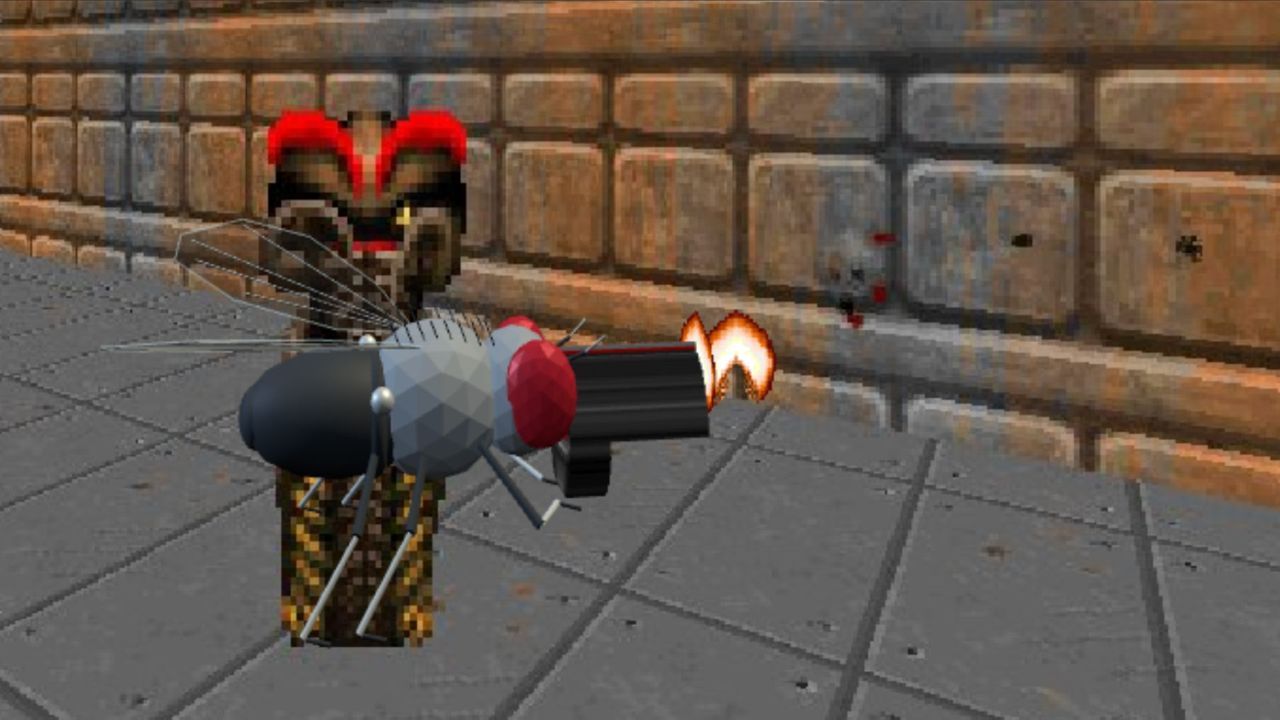
Imagine a world where a three-day-old fruit fly isn’t just buzzing around a petri dish, but is actively navigating the digital landscape of video games. This isn’t science fiction; it’s the reality unfolding in the world of neuroscience and artificial intelligence.
Recently, Google announced a monumental achievement in mapping the complexities of the mind: they successfully created a three-dimensional neural map of an adult male fruit fly. By leveraging AI to combine millions of two-dimensional images, researchers reconstructed over 166,000 individual neurons. This foundational map, they say, is a major milestone in neuroscience, offering a new way to accelerate our understanding of how the brain works.
But the mapping was just the beginning. The real fun started when engineers and modders decided to put these digital brains to work. Within days of the announcement, software engineers jumped in, training the fly’s neural activity to react to external stimuli.
One of the most immediate tests involved classic gaming. A software engineer trained the fruit fly to play the game Doom. The process involved mapping sensory neuron activity directly to game controls, and using damage signals to trigger reinforcement mechanisms in dopamine cells. The results were fascinating, even if the fly’s performance wasn’t exactly flawless.
The experiments didn’t stop there. Modders quickly pivoted, exploring other cognitive tasks. Using Reinforcement Learning, some innovators managed to teach the fly to play rhythm games like Beat Saber. This method focused on teaching the fly to learn from input and reduce its reliance on external signals, allowing it to react to musical notes in a more responsive way.
Further explorations continued, with some researchers running the digital fly brain through the world of Super Mario 64. This demonstrated the incredible versatility of the neural map, showing how complex spatial reasoning can be translated into biological activity.
The synergy between detailed biological mapping and computational training is pushing the boundaries of what we know about consciousness and intelligence. As groups continue to refine these techniques—comparing male and female brain scans, and integrating advanced AI tools—the question becomes: how long until we can replicate the intricacies of the human mind?
Buy on Amazon
Credit