Futuristic laser zaps mosquitoes in action like air defense ($1000 cost
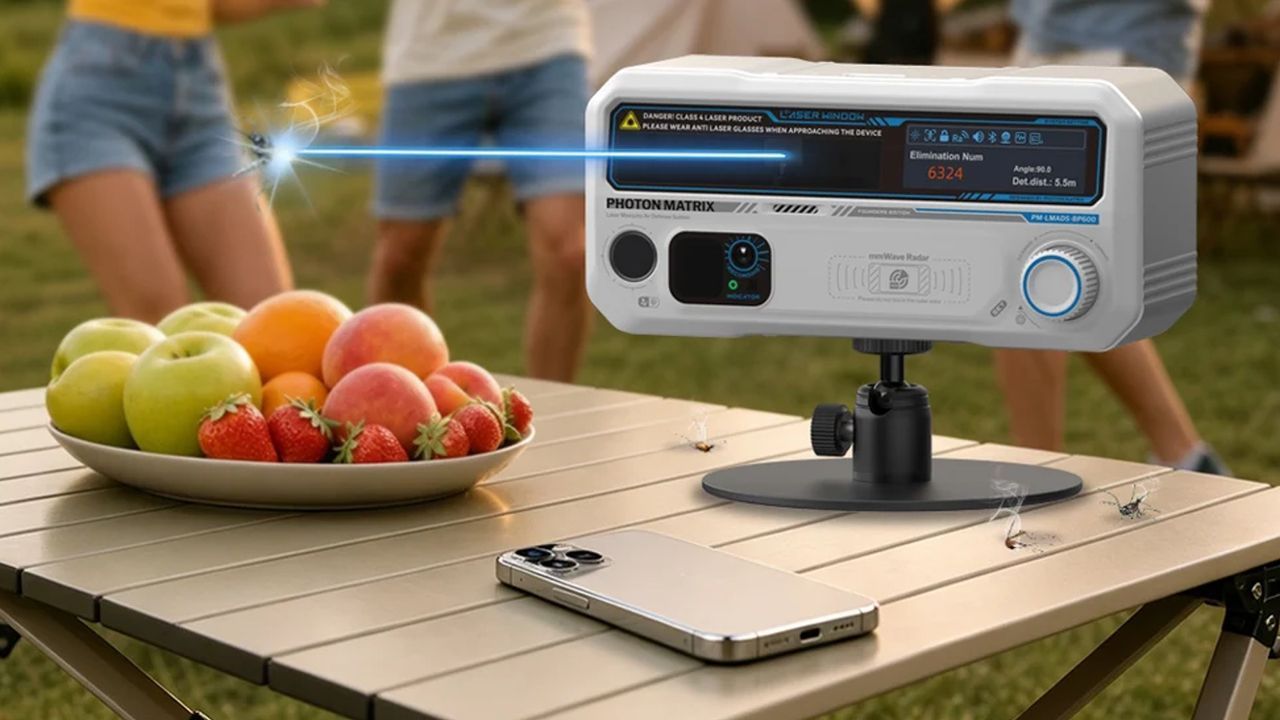
Laser Defense: How the Photon Matrix is Preparing for an Insect-Free Future
For centuries, humanity has wrestled with the persistent nuisance of mosquitoes, a biological vector responsible for carrying numerous diseases and impacting public health globally. While traditional methods rely on chemical pesticides that pose risks to human and animal well-being, a revolutionary new approach is emerging: a high-tech solution that promises an air defense system for pests.
Enter the Photon Matrix, an innovative device that has successfully navigated the often-tricky path from crowdfunding concept to mass production. This system harnesses advanced optics and artificial intelligence to offer a targeted, non-chemical method of mosquito eradication, signaling a potential game-changer for residential and public health management.
The core innovation lies in the technology itself. The Photon Matrix utilizes a sophisticated combination of LiDAR, mmWave radar, and an AI vision module to detect targets with incredible precision. Instead of broad-spectrum chemical spraying, the device employs a precisely calibrated laser beam to neutralize pests. This system is designed to identify targets between 2mm and 20mm in size, moving at speeds up to three and a half feet per second (one meter per second), allowing it to safely engage mosquitoes within a six-meter kill zone across a 90-degree scanning plane.
The promise of this technology extends beyond mere pest control; it focuses on safety and efficiency. The system is not only highly effective in testing environments but has also passed stringent safety certifications, ensuring that the laser operates safely near humans, pets, and birds. This focus on non-chemical intervention offers a significant advantage, providing targeted defense without introducing noxious chemicals into the environment.
The Photon Matrix is now available for consumers to purchase directly from its website in two versions: an infrared laser option for home use, priced at $988, and a blue laser version optimized for industrial deployment, costing $1,088. This accessibility moves this technology from the realm of research straight into practical application.
While the potential impact is immense, the technology landscape is evolving rapidly. Other concepts, such as autonomous micro-drones designed for insect patrol, exist in prototype form. However, these drone solutions often face challenges related to noise and practicality for fixed deployments. The Photon Matrix stands out by offering a stable, focused, and demonstrably safer method for achieving effective pest eradication where it is deployed.
By combining advanced laser physics with artificial intelligence, the Photon Matrix is positioning itself not just as a gadget, but as a viable step toward creating healthier living spaces through intelligent, targeted environmental defense.
Buy on Amazon
Credit