Goodram PX700 SSD Review High-end performance on a budget
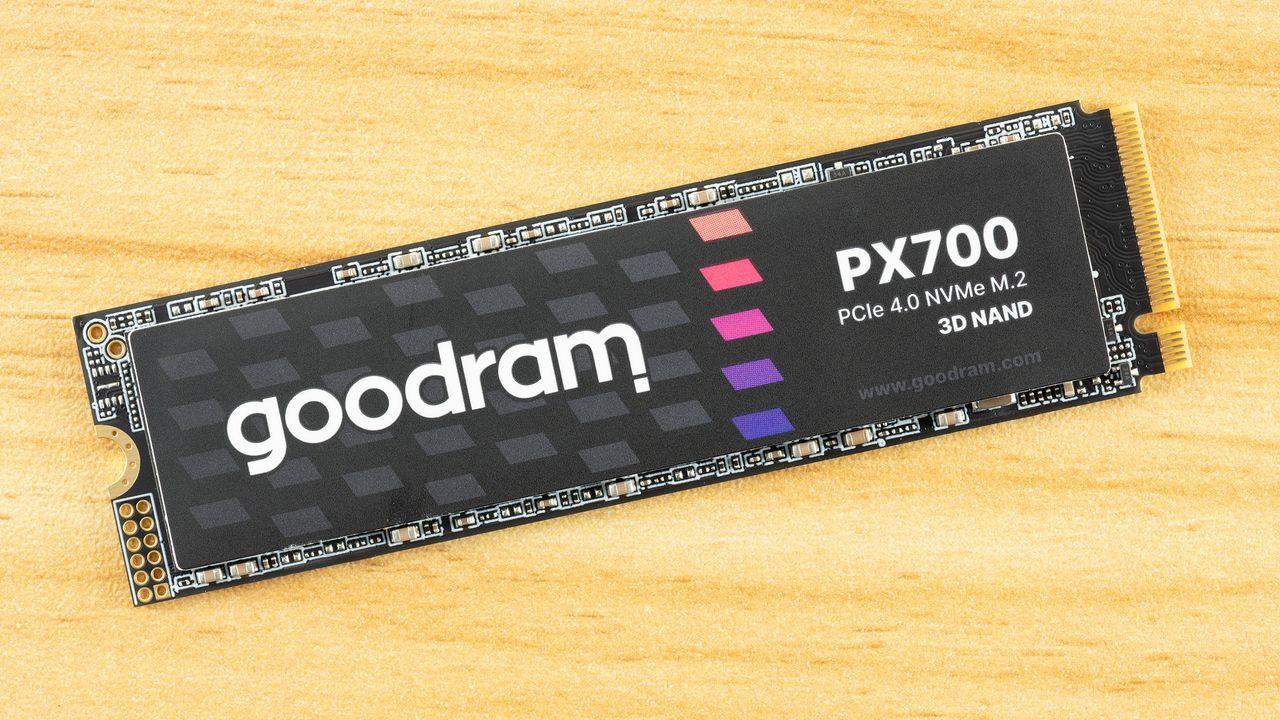
This text is a detailed review of the Goodram PX700 SSD, focusing not just on peak transfer speeds, but on real-world performance, the impact of flash technology (QLC vs. TLC), caching mechanisms, power efficiency, and thermal management.
Here is a structured analysis of the key points:
—
1. Real-World Workload Testing (DiskBench Methodology)
The review emphasizes that true performance testing goes beyond simple sequential read speeds. The authors stress the importance of simulating real-world workloads that include:
Mixed File Sizes: Testing large files (fast) alongside many small files (slow, common in manual backups).
On-Drive Copying: Ruling out external factors that can skew results.
System Caching: Acknowledging that operating system caching can provide misleading metrics.
The goal is to assess how the drive handles the often-overlooked performance bottleneck of sustained write performance under heavy load.
2. Performance Metrics (Reads vs. Writes)
Read Performance (Strengths)
The PX700 is identified as the fastest drive on the list for reads and is competitive for copying.
In synthetic testing (ATTO and CrystalDiskMark), the read performance is steady and generally aligns with excellent drives.
Random 4KB read performance is also solid, making the drive feel responsive for game and application loading times.
Write Performance (The Caveat)
The review identifies a significant trade-off in sustained write performance, particularly when the drive is heavily loaded.
The drive utilizes a write cache (pSLC mode) to absorb incoming data quickly.
Sustained performance suffers when the cache is saturated, forcing the data to spill into the native TLC or QLC flash. This “folding” process results in slower, post-cache speeds (e.g., 163 MB/s).
This performance gap is expected due to the underlying flash technology.
3. Flash Technology and Caching (pSLC vs. QLC/TLC)
The core technical finding relates to how the drive manages data storage:
pSLC Caching: The PX700 starts by writing in a fast, single-bit SLC mode (pSLC), achieving high initial speeds (5.8 GB/s).
QLC Implication: The data analysis suggests the drive is likely using QLC (4-bit) flash. This technology trades density for speed. For example, a 2TB drive might only have a 500GB cache, as 4-bit QLC flash operating in 1-bit pSLC mode effectively trades four times the capacity for performance.
Conclusion on Performance: While the initial experience feels premium, the sustained write performance is slower because the drive must handle the lower-performance native flash capacity. The review concludes this performance gap is expected for a high-capacity QLC drive with a large cache.
4. Power Consumption and Thermal Management
The review measures power efficiency using the Quarch HD Programmable Power Module and monitors temperature:
Efficiency: The PX700 performs very well in power testing, tying for second place with the FA200. It demonstrates excellent performance-per-watt efficiency.
Thermal Performance: The drive runs cool, peaking at 61°C, which is well within acceptable limits. The use of the “graphene label” appears to aid in cooling, which is beneficial for drives with multiple flash packages.
5. Overall Verdict
The Goodram PX700 is positioned as a premium-feeling, high-value budget SSD.
Pros:
Excellent Read Speeds: Top-tier performance for general use, games, and application loading.
Good Efficiency: Highly power-efficient, suitable for laptop and HTPC use.
Thermal Management: Runs cool and requires no dedicated heatsink.
Value: Offers performance that rivals higher-end drives without the premium cost.
Cons:
Sustained Write Performance: Write speeds are noticeably slower and less consistent than peak advertised speeds when the cache is stressed, which is an expected trade-off for the QLC technology used.
Final Recommendation:
The drive is more than good enough for the vast majority of users (gaming, general computing, HTPC). The primary concern for users is the price; if the price can be matched with competitors, the PX700 offers stellar performance and reliability.
Buy on Amazon
Credit