Gravis Ultrasound clone Beavis remake with full PCB schematics
Bringing Back the Legends: An Open-Source Journey to Recreating the Gravis Ultrasound
The world of retro computing enthusiasts has a hunger for authenticity, and lately, that desire has found a fascinating new outlet in the realm of open-source hardware. A dedicated developer has recently unveiled a project that promises to resurrect one of the most legendary components of PC history: the Gravis Ultrasound ISA sound card.
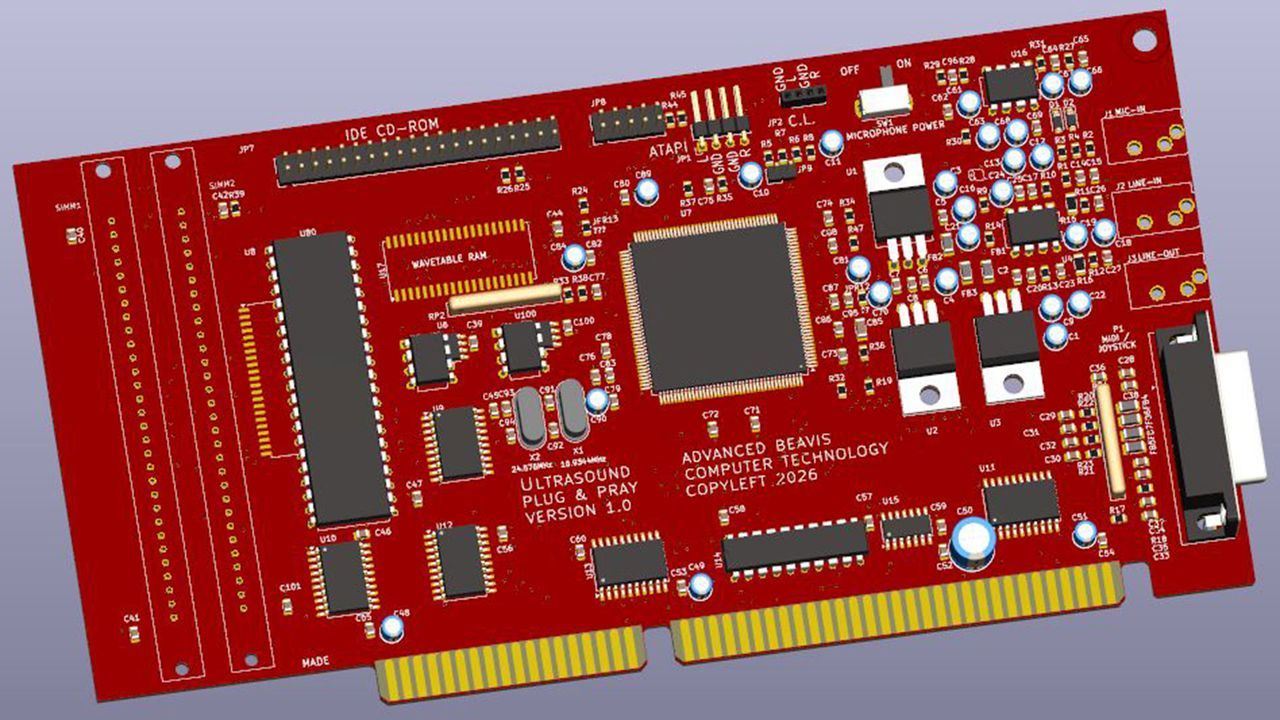
Dubbed the Beavis Ultrasound PnP ISA Sound Card Replica, this effort isn’t just another functional approximation. It’s a deep dive into the complexities of vintage hardware, providing enthusiasts with nearly everything needed to build a faithful reproduction from the ground up. The project, shared on GitHub, offers an astonishing level of detail, including complete KiCad schematics, PCB layouts, sample ROM files, and even reverse-engineered GAL logic that allows for transparent and reproducible design.
What sets this new iteration apart is its commitment to hardware fidelity. Unlike many existing clones that rely on emulation or microcontrollers, the Beavis Ultrasound project aims for a true hardware-level reproduction. This means it meticulously handles complex features, such as the IDE connectivity found in original Gravis Ultrasound (GUS) PnP cards, without resorting to shortcuts.
The heart of this authenticity lies in the reverse-engineered logic gates and source code provided by the developer. This approach ensures that enthusiasts aren’t just getting a functional approximation; they are gaining access to the actual design principles, allowing for true understanding and potential modification of the hardware’s operation.
It is important to note that this project focuses on reproducing the more complex GUS PnP architecture rather than simpler models like GUS Classic or MAX. This attention to complexity ensures that those seeking a deep, authentic experience are catered to.
Of course, achieving true hardware replication comes with a specific challenge. To complete a functioning Beavis Ultrasound build and hear that marvelous vintage sound, builders will need to source an older AMD AM78C201 InterWave chip. This requirement underscores the project’s appeal: it demands effort, dedication, and a genuine appreciation for vintage component sourcing.
Furthermore, because this is a raw hardware-level project—not a tested commercial product—developers are instructing interested parties to build the board at their own risk. This places the responsibility squarely on the hands of the builder, embracing the true spirit of DIY engineering.
While the Beavis Ultrasound offers a compelling path for purists, the open-source hardware movement continues to offer numerous creative solutions. For those looking for alternative DIY paths into GUS compatibility, projects like PicoGUS leverage modern microcontrollers, such as the Raspberry Pi Pico (RP2040), to handle audio playback in software, sidestepping the need for specialized vintage components.
Ultimately, whether you choose the deeply authentic hardware route or the flexible software-based approach, the quest to resurrect and reinterpret the magic of vintage sound cards remains a thrilling adventure for the open-source community.
Buy on Amazon
Credit