Hack Intel FPS 60% faster with Hypertune auto overclocking
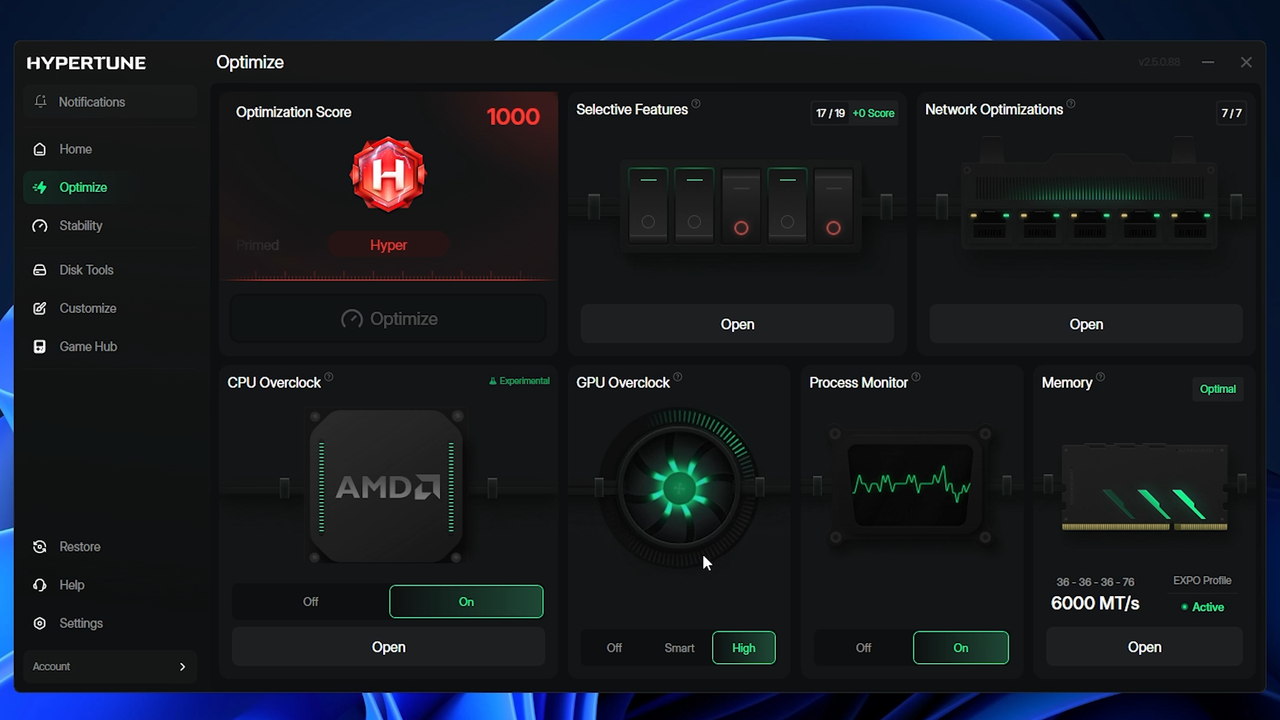
In the high-stakes world of PC gaming, where every frame counts and every millisecond matters, new tools constantly emerge promising to unlock peak performance. Enter Hypertune, a platform that has thrown down a gauntlet, claiming to revolutionize gaming performance through automated engineering. Developed in partnership with Intel and built upon the Extreme Tuning Utility (XTU) SDK, this technology promises users the ability to push their hardware to its absolute limits.
The initial buzz was electric: Hypertune boasted the potential to boost frame rates by up to 60%. This staggering figure positioned the tool as the ultimate shortcut for gamers seeking maximum graphical fidelity. Beyond the headline claim, the platform offers comprehensive automated tuning, encompassing CPU and GPU overclocking, custom Windows feature adjustments, network optimization, and fine-tuned game-specific settings.
What makes Hypertune different is its approach. Rather than relying on generalized profiles, the platform is designed to evaluate each supported system individually before applying any optimization. This rigorous, tailored approach was refined through collaboration with famed overclocker SkatterBencher (Pieter Plaisier), ensuring the results were grounded in genuine tuning expertise.
But does the magic live up to the hype? While automated tuning is powerful, the reality of performance gains often proves more nuanced. Testing has shown that while significant improvements are possible on specific hardware, the magnitude of the boost is rarely the advertised 60%. This often depends heavily on the specific components and the game being played.
For instance, internal benchmarks highlighted varied results across different systems. On one test involving a Core Ultra 9 285K and an RTX 5090, the team observed impressive gains, including an 18.9% improvement in Homeworld 3″>Homeworld 3 and a 28.2% uplift in Tomb Raider”>Tomb Raider. Conversely, on another setup featuring a Core i7-14700K and an RTX 3080, the boosts were more modest, reaching up to 9.8% in Rainbow Six Siege”>Rainbow Six Siege and 4.3% in Marvel Rivals.
These findings suggest that certain titles, particularly those CPU-intensive games like Homeworld 3, can be highly sensitive to CPU tuning, leading to substantial gains. However, in other scenarios, performance improvements often come more directly from optimizing in-game settings rather than hardware manipulation. For example, in Rainbow Six Siege, the vast majority of performance increases were driven by the platform’s ability to adjust in-game settings through its Game Hub, rather than pure overclocking.
The developer, Austin Copeland, emphasized that the tool is not solely for hardware enthusiasts. His vision was to create a utility for users who might not be intimately familiar with complex settings, aiming to provide a simple path to performance. This focus speaks to a broader goal: democratizing optimization for a wider audience.
Hypertune operates through Intel‘s XTU SDK, ensuring that all optimizations are non-destructive and fully reversible. Crucially, the software is designed to be safe for use alongside popular anti-cheat systems, including Riot Vanguard and BattlEye.
While there are numerous free optimization tools available, Hypertune opts for a subscription model, priced at $9.99 per month or $59.99 per year. For those who demand hands-on expertise, the company also offers an expert tuning service for $80, where a technician remotely handles the optimization.
Ultimately, Hypertune is a robust tool that serves as an excellent starting point. While the promise of massive, effortless frame rate increases is tempting, the true power lies in understanding that optimizing a system requires a blend of knowing your hardware and knowing the specific demands of the game. For those looking to master their machine, diving into the basics of individual CPU and GPU overclocking remains the most powerful tool of all.
Buy on Amazon
Credit
