Half Price Power: AMD BC-250 unlocks Steam Machine performance on PS5 APU
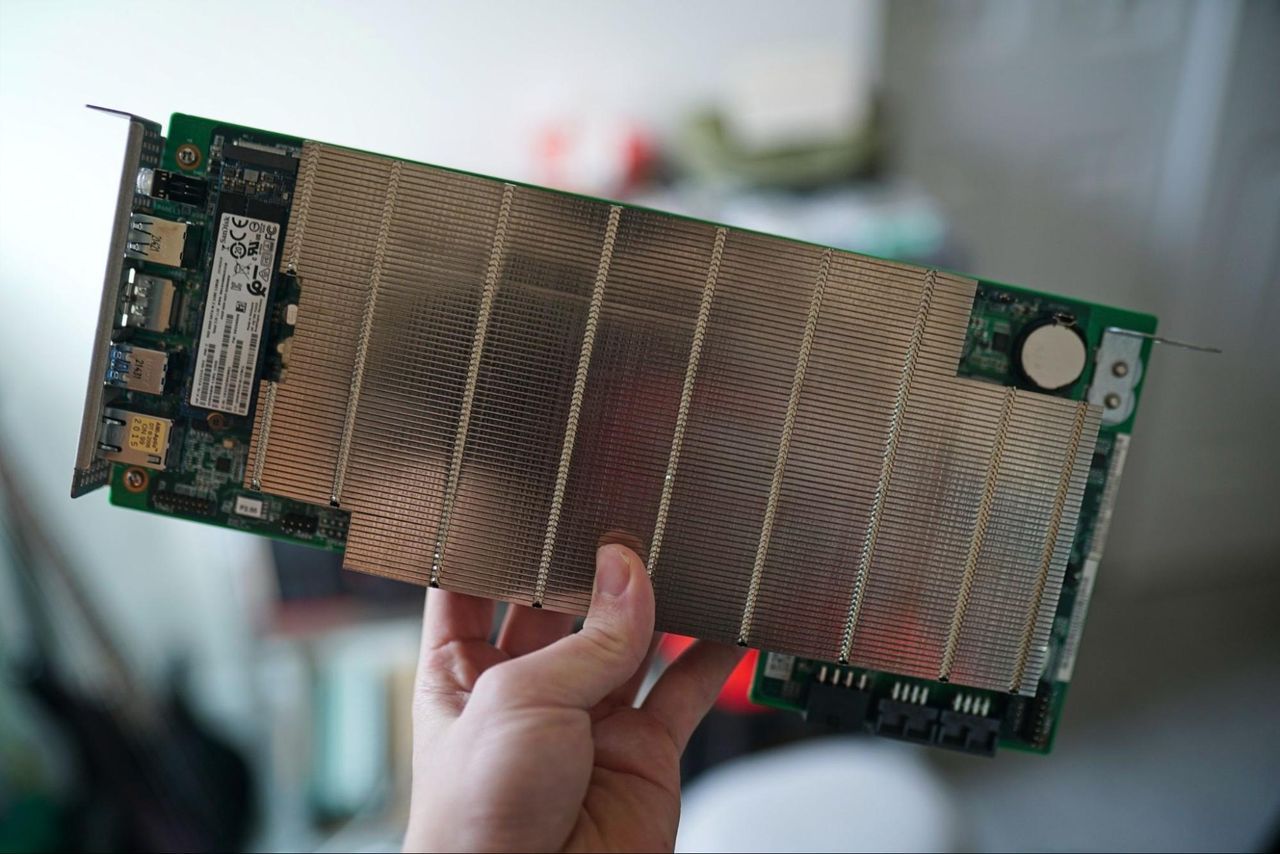
This article discusses the experience of optimizing and testing a system based on the BC-250 hardware, focusing heavily on the trade-offs between different Linux distributions and the inherent performance limitations of the hardware itself.
Here are the main points of the text:
1. OS Choice: Bazzite vs. CachyOS
The author reflects on switching from Bazzite (an immutable, Fedora Atomic-based distro) to CachyOS (a rolling Arch-based distro).
Bazzite: Offers guardrails and convenience but makes applying low-level kernel changes difficult.
CachyOS: Is more hands-on, making it easier to apply specific optimizations and patches. It provides better access for modifying components like the kernel or enabling necessary fixes.
2. Performance Optimization and Benchmarks
The author uses the switch in OS as a context to measure performance gains:
Gaming Gains: CachyOS provided measurable FPS improvements in games like Forza Horizon 6 (e.g., moving from 61 FPS to 72 FPS at 4K) and Cyberpunk 2077.
CPU Bottleneck: The core issue highlighted is the CPU limitation of the BC-250 (aging Zen 2 architecture with a severe clock speed limit of 3.5 GHz). This bottleneck becomes extremely obvious in CPU-intensive games like Forza Horizon 6, where the GPU’s power is insufficient to overcome the CPU restriction, even at 4K resolution.
VRAM Limitation: The system has only 16 GB of GDDR6 memory, which causes severe limitations when attempting high-resolution textures (like 4K in Spider-Man 2) or using demanding features like frame generation, leading to crashes if settings are pushed too far.
3. Hardware Limitations and Quirks
The testing revealed significant limitations with the BC-250:
Thermal Throttling: The GPU/CPU struggles to sustain performance over long periods under stress (as seen in Furmark tests), suggesting that current cooling solutions limit long-term performance.
Compatibility Issues: Running a community-developed software stack on unofficial hardware introduces unexpected bugs and compatibility problems with overlays, drivers, and external devices (e.g., Wi-Fi adapters).
4. Conclusion and Future Steps
The author concludes that while the BC-250 offers compelling performance for the price, its real potential is constrained by the CPU architecture and memory limits. The next steps for the project involve:
Cooling Optimization: Digging deeper into thermal management to push the GPU overclock further.
Core Count Exploration: Investigating ways (like CU tinkering) to achieve better performance by unlocking or utilizing more CPU cores.
Credit