Hands-on with this compact case planning my first ITX build
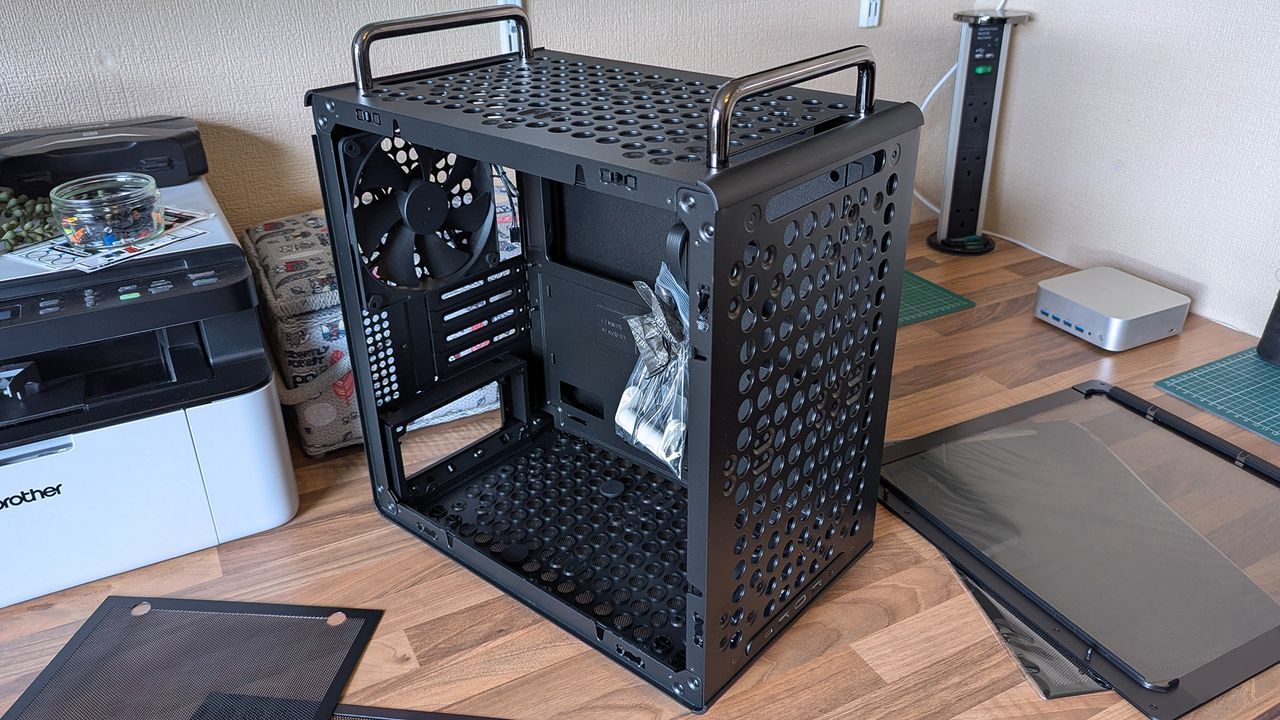
Desktop gaming PCs often suffer from an unfortunate reputation: they are huge. But what if you could shrink the beast? When the Cooler Master Qube 340 case dropped, it immediately presented a compelling challenge—a quest into the twisted world of cable management and extreme compactness. For those confident enough to dive in, a compact build isn’t just an exercise; it’s a path to a space-saving monster rig.
The allure is undeniable. The Qube 340 arrived promising a portable solution, and for those prioritizing aesthetics and airflow above all else, the case delivered on its promise of a truly minimalist design. Priced attractively at $54.99, it positions itself as an incredibly affordable gateway into the realm of mini ITX setups.
What sets this compact contender apart is its commitment to thermal performance. The Qube 340 is absolutely covered in holes, designed with airflow as its central philosophy. It supports multiple fan configurations, offering options like 2x 120mm or 2x 140mm intake/exhaust setups, allowing builders to tailor the cooling precisely to their needs.
Modularity is another major win. The case provides support for both Mini-ITX and Micro-ATX motherboards, giving enthusiasts flexibility in component selection. Furthermore, attention to detail extends to the front panel, which is entirely removable. This feature is perfect for routing cables and optimizing the layout, giving the user control over where those vital connections end up.
The design also boasts practical features that enhance usability. The removable handles are a game-changer, allowing users to set up the desktop and easily move it when needed—a fantastic feature for those who desire a truly portable workstation rather than a permanent fixture under the desk.
However, as with any minimalist case, there are details worth examining. While the exterior shell feels sturdy with its robust carry handles and rubberized feet, an inspection reveals that some of the internal metal components, particularly around the motherboard tray, are somewhat thin and show a degree of flexibility. Similarly, the removable drive trays and the glass side panel, while functional, are held in place by minimal hardware. This raises a minor flag regarding long-term structural rigidity if you plan on aggressive modifications.
Despite these material reservations, those concerns are largely tempered by the case’s value proposition. Considering that this is an incredibly budget-friendly option for achieving a compact, highly ventilated footprint, the trade-off seems worthwhile. If your goal is to build a portable mini ITX gaming PC where airflow and space efficiency reign supreme, the Qube 340 provides an exceptional starting point.
Ultimately, this case shines brightest when paired with a builder who values flexibility. It’s not for the absolute novice tackling their very first compact build, but for the adventurous enthusiast ready to tackle the challenge of creating a highly functional, portable system that looks as good as it performs.
Buy on Amazon
Credit