Hidden surveillance implants in global routers firmware
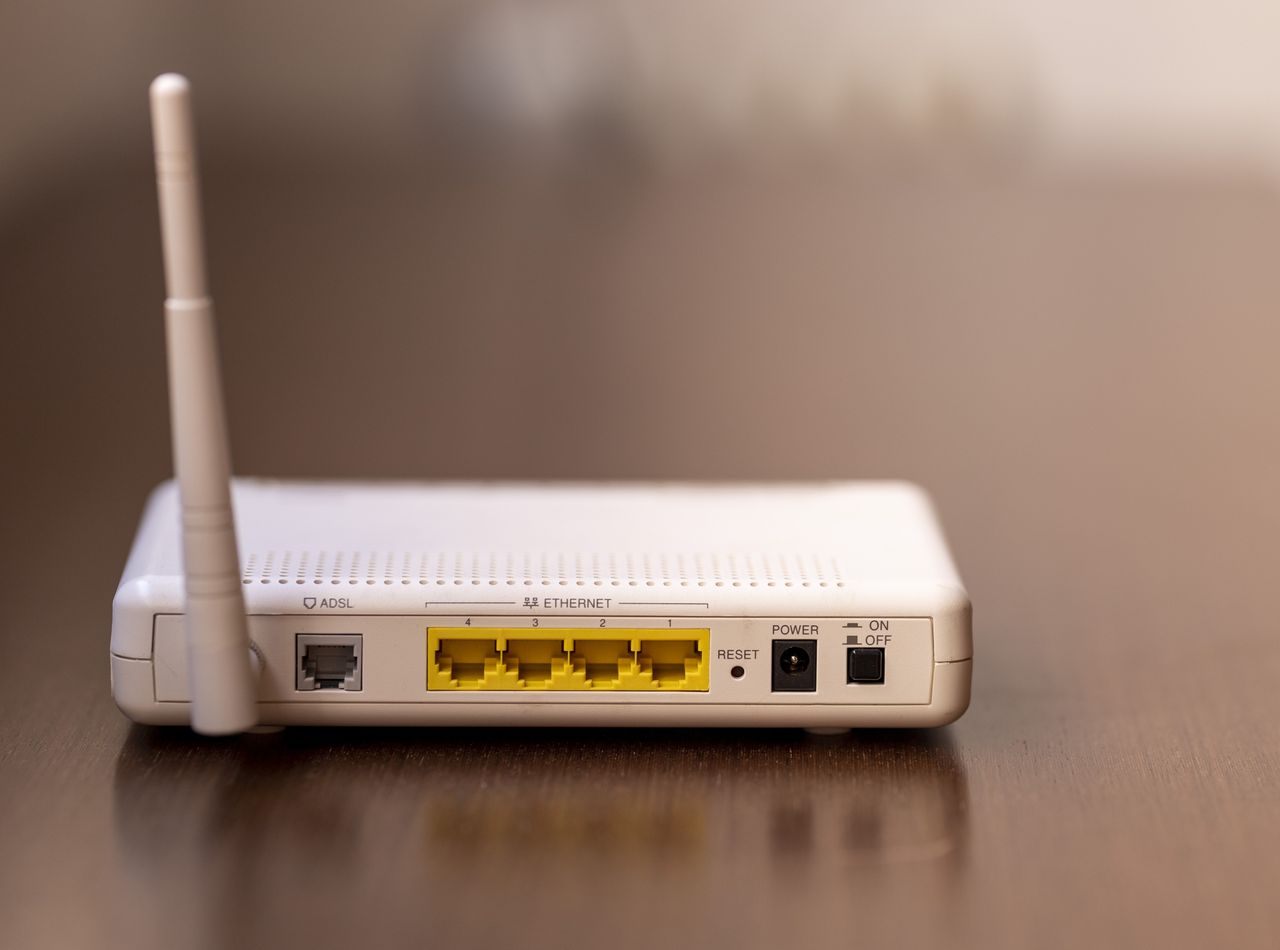
The Hidden Infrastructure: Unmasking Deep Backdoors in Global Router Hardware
Security researchers have uncovered a deeply troubling reality hidden within the very hardware that powers countless home and enterprise networks. A team of investigators discovered three distinct, sophisticated backdoor-like implants embedded directly into the firmware of routers manufactured by Shenzhen Zhibotong Electronics, known simply as ZBT. Since ZBT hardware is sold globally under a bewildering array of rebrands, the true origin of these systems often goes unnoticed, making the security landscape far more complex than it seems.
The investigation began with a single router model, the Zbtlink AX3000, where researchers found an implant they dubbed ENDLESSDOORS. This system acts as a remote-control mechanism, automatically connecting to a command-and-control server and capable of executing arbitrary commands as the root user. It cleverly masks itself by impersonating a normal Linux kernel process, specifically kworker, ensuring it evades simple detection.
ENDLESSDOORS is more than just a glitch; it’s a fully functional remote access system. Commands received from the hidden server are passed directly to a root shell, allowing remote operators to seize complete control of the router. The vulnerability is critical: if an attacker can hijack the connection to this command server, they gain full administrative control over the device. This exploit was officially assigned the CVE-2026-66747, carrying a severe CVSS score of 9.3.
The unsettling nature of these findings extends beyond the primary backdoor. Further examination revealed two additional, equally malicious implants: DARKLANTERN and SPEAKINGSTONE. These secondary mechanisms utilize different methods to establish communication with the hidden infrastructure, demonstrating a multi-layered surveillance architecture.
DARKLANTERN operates by listening for external commands. It functions as the infosrvd service, opening a listener on the wide area network via UDP port 9992. Attackers can easily force the router to reveal sensitive identifying information—such as model numbers, firmware versions, and MAC addresses—by sending a simple 19-byte probe, all without requiring any authentication.
SPEAKINGSTONE proves even more concerning. This implant operates by periodically sending device fingerprints to ZBT’s command-and-control infrastructure over UDP port 10000 using a custom protocol dubbed zbtProtocol. Crucially, SPEAKINGSTONE is far more powerful than a simple remote shell. It allows remote operators to execute arbitrary commands, steal WAN PPPoE credentials, rewrite DNS hijack lists, and even establish reverse SSH tunnels, effectively turning the router into a sophisticated surveillance tool.
The scope of the problem is staggering. Researchers tracked these implants across 20 ZBT models and found exposed instances of DARKLANTERN in 22 countries and 16 different router models. The data suggests that these systems are not accidental flaws but deliberate, factory-installed mechanisms. Furthermore, a backup command server domain was embedded within the malware, which researchers promptly registered, allowing them to monitor the infected devices.
The resulting surveillance footprint is immense. By August 21st, 392 unique devices had connected to the monitoring sinkhole. Most alarmingly, the majority of these devices were located in China, predominantly utilizing China Mobile’s network. This deployment is described by researchers as a form of domestic Chinese surveillance technology, pointing toward large-scale carrier deployment rather than random consumer infections.
While ZBT’s commercial success lies in manufacturing routers for various OEMs, the hardware is frequently sold under numerous independent brands. The challenge lies in the difficulty of identifying the true origin of the firmware. The stark takeaway for users is that simply noticing the ZBT brand on the box is insufficient. These vulnerabilities are installed at the factory, meaning installing a new firmware version will not restore security. For anyone using networking hardware from an obscure OEM, the reality is that the entity that wrote the firmware may not share your values regarding freedom or privacy.
Buy on Amazon
Credit