Huang vows to deliver giant Vera Rubin amounts
When you’re building the future of artificial intelligence, speed is everything. But in the high-stakes world of advanced semiconductor manufacturing, sometimes the greatest hurdle isn’t the silicon—it’s the sheer physics and engineering complexity of connecting those chips.
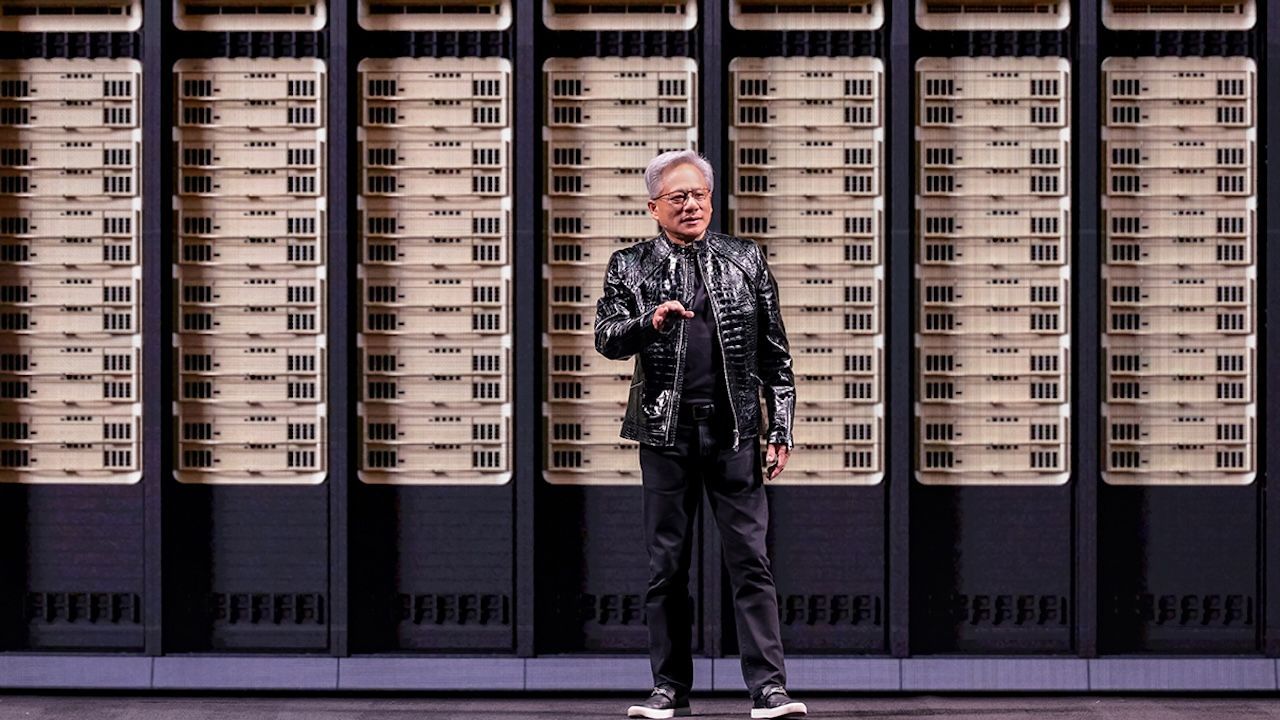
Nvidia CEO Jensen Huang recently addressed swirling rumors about delays in their next-generation AI platform, the Vera Rubin. Instead of dodging the tough questions, Huang offered a dose of confidence, declaring that production volumes for these new platforms are simply giant, confirming that the company remains firmly on track.
The core message is clear: the Vera Rubin platform is already in production, with samples being delivered to customers. This statement serves as a powerful reassurance to investors and the industry that Nvidia is not only executing but is poised for record-setting quarters ahead.
However, the full story of this journey involves navigating some seriously intricate architectural challenges behind the scenes. While the macro-picture looks smooth, whispers circulated about potential delays concerning the Kyber NVL144 rack-scale solution—a system designed to link 144 AI GPUs using sophisticated copper interconnects.
The snag wasn’t with the chips themselves, but with the physical infrastructure required. Creating the necessary PCB midplane to handle these high-speed electrical links between components proved to be a formidable manufacturing challenge that pushed timelines.
This complexity led to exploring alternative designs, such as a dual-rack setup or different optical interconnects. The idea of utilizing cutting-edge co-packaged optics (CPO) for solutions like the NVL576 configuration also faced delays due to ongoing supply and manufacturing hurdles associated with these advanced technologies.
Ultimately, this engineering puzzle meant that the path to a fully realized, massive scale-up system required careful recalibration. The rumored setbacks suggest Nvidia might focus on 72-way scale-up systems until perhaps 2028, allowing competitors like AMD and Google to rapidly deploy highly competitive, scalable acceleration platforms in the interim.
Despite these engineering twists, the resilience of Nvidia’s roadmap remains apparent. The ability to pivot and maintain a trajectory toward revolutionary AI hardware demonstrates that while the path is complex, innovation will always find a way forward.
Buy on Amazon
Credit