Hybrid bonding stacks memory directly to processor for edge AI
The Invisible Race: How PieceMakers is Redefining AI Memory Beyond HBM
In the hyper-competitive world of artificial intelligence hardware, the quest for the perfect memory architecture is defining the next generation of computing. While giants like Nvidia push the boundaries of GPU processing, a smaller, focused player is carving out a unique niche: PieceMakers, a company betting that the future of AI memory lies not in stacked HBM, but in a completely different design philosophy.
PieceMakers, backed by Nanya, is tackling this challenge by moving away from selling chips and focusing instead on the intellectual property and custom design services needed to build the future. They are not focused on High Bandwidth Memory (HBM) but on the revolutionary concept of custom-designed memory that sits directly on the processor.
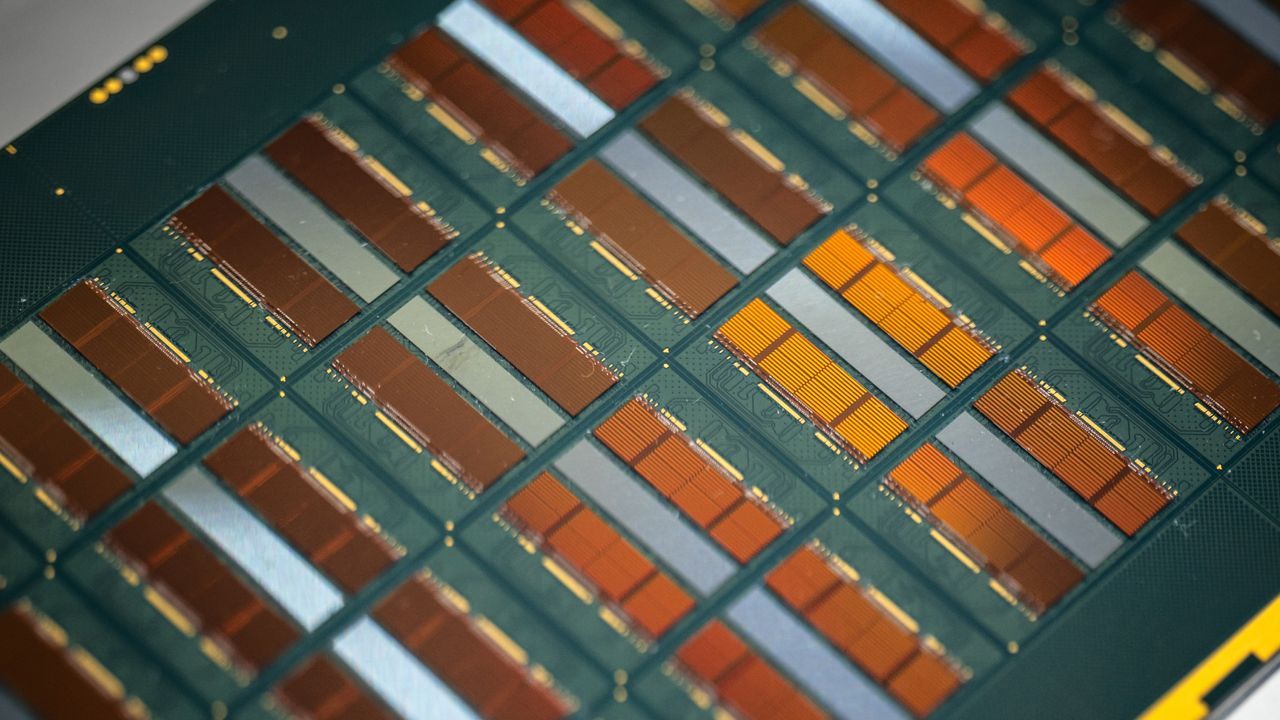
The core insight driving the company is that inference memory—the memory used for actual AI processing—is fundamentally different from the memory used for training models. This distinction opens the door for a paradigm shift. PieceMakers is proposing a future where DRAM is stacked directly onto the processor using hybrid bonding technology, eliminating layers of complexity and latency found in traditional memory architectures.
This innovative approach involves bonding the DRAM stack directly onto the logic wafer. This allows for vastly improved bandwidth and reduced power consumption by utilizing wafer-on-wafer technology, promising throughputs far exceeding current standards. PieceMakers claims their custom product achieves over 2 TB/s per layer with latency under 20 nanoseconds.
But the real value lies not in the resulting chip, but in the design itself. PieceMakers’ revenue is currently driven by non-recurring engineering (NRE) fees for custom AI design work. This indicates that the profit is found in providing the blueprints and IP—the knowledge required to design these complex systems—rather than the physical manufacturing of memory chips.
The shift is rooted in the pursuit of yield. Designing these advanced memory structures demands extremely precise manufacturing, and yield—the successful production rate of chips—has been the biggest hurdle. By focusing on selling known-good-die IP and design services, PieceMakers sidesteps the manufacturing complexities, allowing them to capitalize on the design fee model rather than the volatile market of physical memory production.
This strategy aligns perfectly with Nanya’s broader AI-memory strategy, which prioritizes custom, edge AI solutions over standard HBM3 or HBM3E. By leveraging partnerships in packaging and testing, PieceMakers is positioned to become an IP licensor for accelerator customers, anticipating volume production and licensing agreements starting in 2027.
The gap between training and inference memory is critical. As seen in the recent Groq LPU, which relies on specialized SRAM for speed rather than HBM, the market is demonstrating a need for bespoke memory solutions. PieceMakers is uniquely positioned to fill this need by offering the architectural knowledge that allows for these cutting-edge, custom designs.
The race is on to perfect the yield and the architecture, but by focusing on custom design fees and proprietary IP, PieceMakers is not just participating in the memory revolution—it is defining the blueprint for it.
Credit