Intel targets max AI FLOPS per watt with Crescent Island accelerator
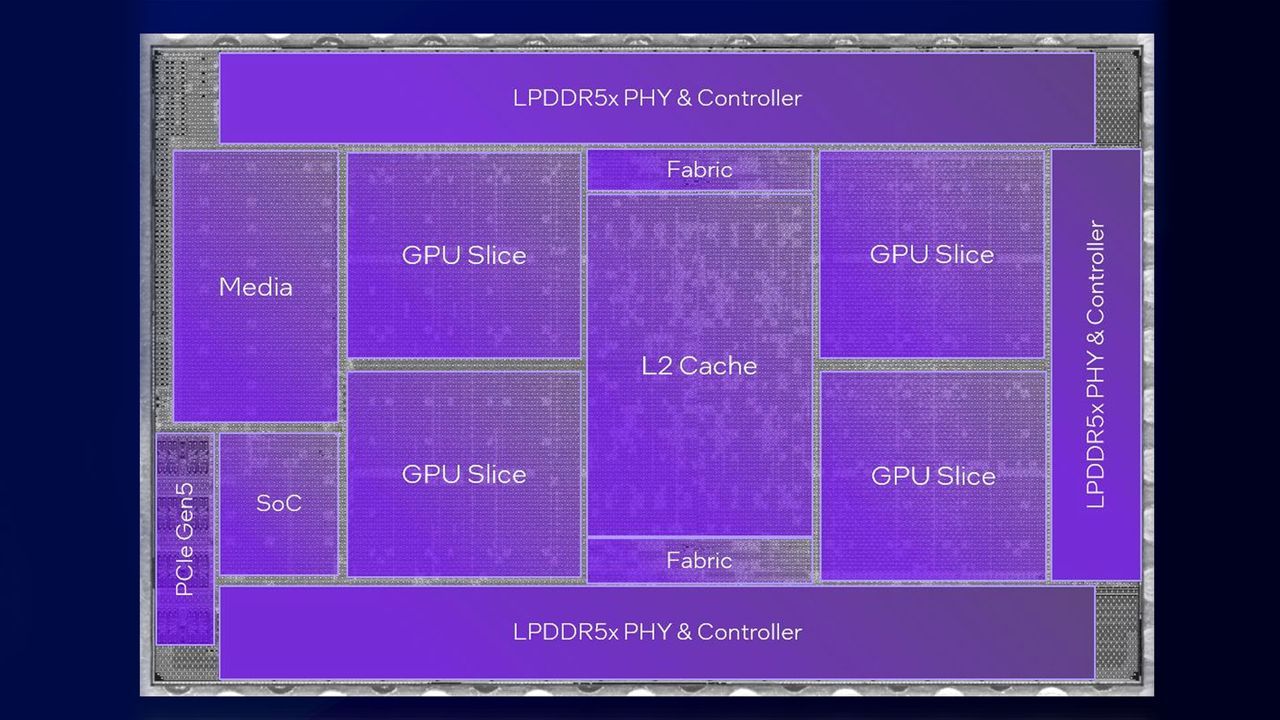
In the fiercely competitive world of AI accelerators, where Nvidia and AMD dominate the high-power, liquid-cooled training space, Intel is charting a different course. With the unveiling of its Crescent Island AI accelerator, Intel is targeting a distinct and highly valuable niche: the domain of high-efficiency, inference-first computing. This new architecture, powered by the innovative Xe3P design, redefines what is possible when balancing performance with power consumption.
While competitors focus on massive pools of HBM4 memory and extreme power delivery for heavy AI training, Crescent Island is engineered to fit into a lower-power, air-cooled environment. This design choice allows the chip to serve demanding applications within existing data center infrastructure without requiring exotic cooling solutions or dramatic power upgrades.
The architecture of Crescent Island is built upon four Xe3P slices, resulting in 32 powerful Xe Cores. Each core is packed with significant resources, including eight Xe Vector Engines and eight XMX matrix accelerators, totaling 256 of each component. This design prioritizes maximizing compute efficiency for inference workloads.
Under the hood, the Xe3P refinement builds on previous architectural advancements to enhance data handling. The new Xe3P Xe Core boasts twice the general register file space compared to previous generations, offering 1MB of general-purpose register space per core—a substantial leap for complex data manipulation. Furthermore, the chip integrates larger cache structures, including 512KB of L1 cache or shared local memory per core, alongside a generous 32MB of shared L2 cache, all designed to feed the specialized matrix accelerators efficiently.
For AI-specific computation, the Xe3P architecture introduces specialized features that directly benefit inference. The XMX systolic engines feature a larger 16-deep design, allowing them to process matrices in much larger chunks than prior designs. This increased depth translates into superior performance for matrix-multiply operations, which is critical for accelerating the complex calculations required during AI inference.
Intel is also focused on supporting a broader range of data types crucial for diverse AI models. The chip supports FP4 formats with microscaling, as well as full-rate double-precision processing via 64 FP64 FMA units per Xe Core. While full double-precision is not always essential for every AI task, its inclusion positions Crescent Island as a genuinely converged high-performance computing and AI chip.
Key to modern AI deployment is optimizing tasks like speculative decoding, a technique that uses lightweight mechanisms to generate draft tokens, improving overall decode performance. Because Crescent Island operates on LPDDR5X memory rather than massive HBM stacks, its strength lies in optimizing compute-bound tasks like prefill processing and KV cache construction—operations that benefit significantly from the chip’s focus on high FLOPS per watt.
This focused approach creates compelling synergy across the ecosystem. Intel’s strategy aligns perfectly with partners like SambaNova, whose SN50 inference accelerators are explicitly built to benefit from disaggregated prefill processing powered by GPUs. Both Crescent Island and the SN50 aim to provide lower-power, air-cooled solutions that fit seamlessly into existing data centers, fostering a shared market opportunity.
While Intel is yet to disclose exact theoretical FLOPS figures, the architectural decisions shared so far point toward a sound strategy. By concentrating on efficient computation and heterogeneous deployment, Crescent Island carves out a vital space for specialized AI hardware. As the launch window approaches in the second half of 2026, the industry is keenly watching to see how this powerful, power-conscious accelerator will reshape the future of AI inference.
Buy on Amazon
Credit