Kioxia SSD Speed Test Review Performance
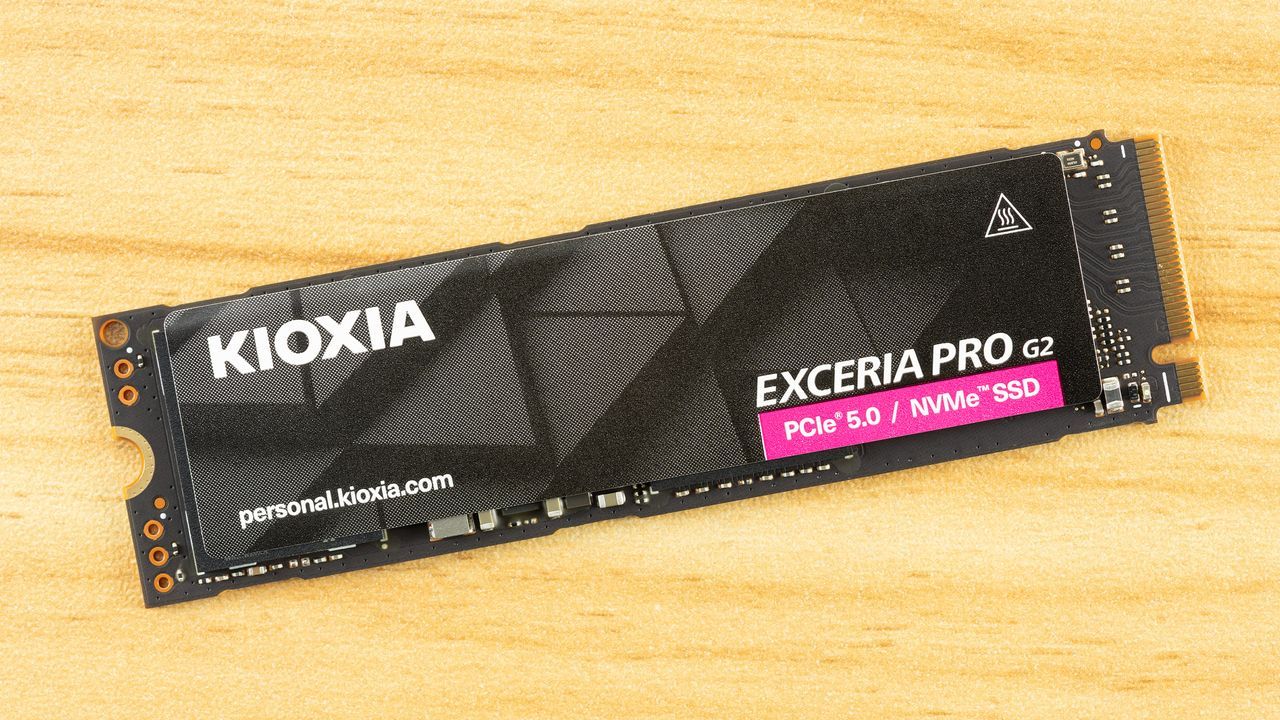
This article from Tom’s Hardware provides a detailed, multi-faceted performance review of the Kioxia Exceria Pro G2 SSD, often comparing it against competitors like the Black SN8100 and the Fury Renegade G5. The core theme of the analysis is the trade-off between raw, peak performance and reliability, thermal management, and power efficiency.
Here is a summary of the key findings:
1. I/O Performance and Consistency
Block Size Impact: Analysis using ATTO and logarithmic graphs shows that while the Exceria Pro G2 performs well, it shows minor lags at small I/O sizes, which is common in modern NVMe performance.
Sequential Reads: In sequential workloads (like 1MB reads), the drive was found to be slightly weaker than drives using different controllers (like the MP700 Pro XT), suggesting that firmware optimization plays a role in extracting maximum bandwidth rather than purely raw hardware limitations.
Random Reads: The drive trails its hardware twin (Fury Renegade G5) in high Queue Depth (QD) random reads. However, it still delivers excellent latency (under 35µs for 4KB QD1 random reads), making it very fast for application and game loading.
2. Sustained Write Performance and Caching
Write Cache Behavior: The analysis of sustained write performance reveals that the SSD uses a write cache (pseudo-SLC) to absorb data. When this cache is saturated and the workload spills into the native TLC/QLC flash, the performance drops.
Cache Management: The Exceria Pro G2’s cache size is smaller than some competitors, but it successfully recovers from cache exhaustion, settling into a steady state performance of around 2.96 GB/s. The article suggests this behavior is intentional, designed to manage wear and reliability.
3. Power Consumption and Thermal Management
Efficiency: The article emphasizes performance-per-watt over raw speed. While the drive performs well, its efficiency is described as average compared to top-tier drives.
Temperature: The drive proved to run relatively cool (52°C max) and features a heat-spreading label. This suggests a design philosophy geared toward reliable operation in OEM or laptop environments, rather than pushing absolute thermal limits.
Idle Power: Idle power consumption is noted, suggesting the drive supports NVMe low-power states, which is beneficial for always-on systems.
4. Overall Verdict (Kioxia Exceria Pro G2)
The final conclusion positions the Exceria Pro G2 as a solid drive that hits the right balance for reliability and performance:
Pros: It offers high-end PCIe 5.0 bandwidth, excellent BiCS latency, good power efficiency, and thermal management. It is a worthy choice for users prioritizing a reliable, long-lasting experience in demanding environments like laptops or always-on systems.
Cons: It does not necessarily outperform the absolute fastest drives (like the Black SN8100) in every single metric.
Recommendation: The author leans toward the Exceria Pro G2 if the user values reliability, thermal management, and a reliable “just works” experience over achieving the absolute highest possible peak speed.
Buy on Amazon
Credit
