Lenovo ditches fans for AirJet tech and rollable screen notebook
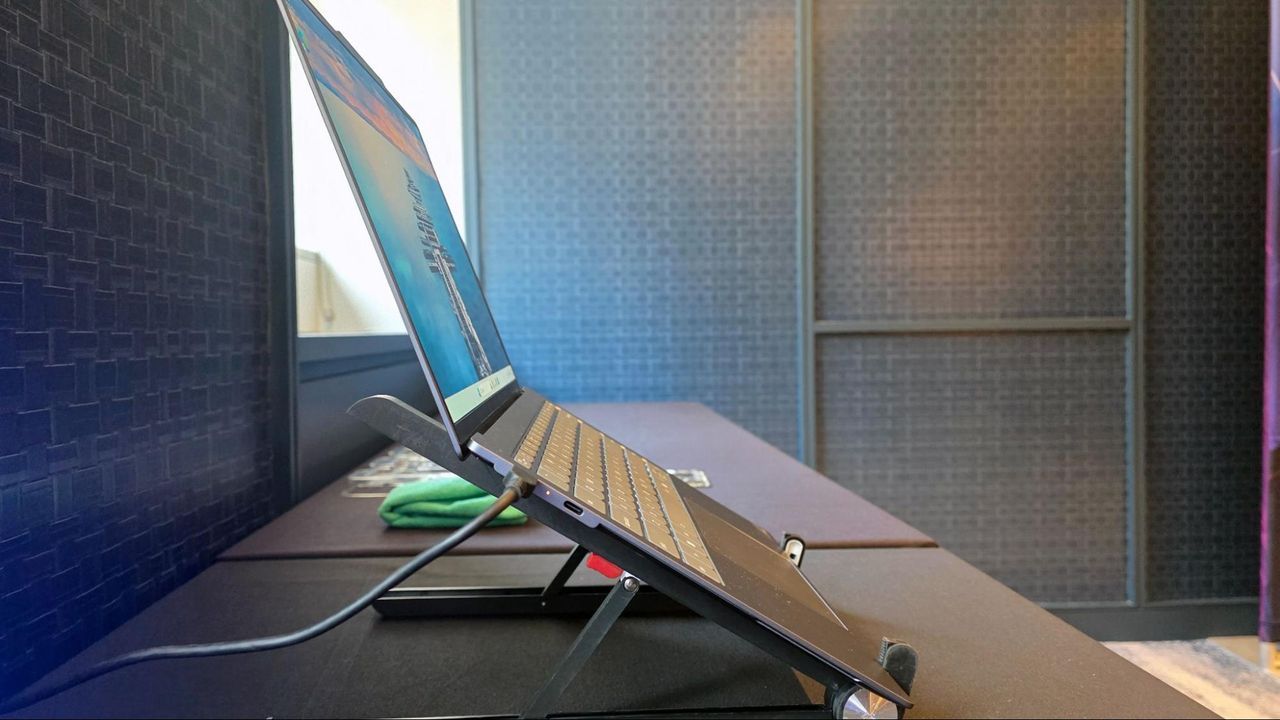
Lenovo is not just playing around with concept designs; they are redefining what a modern laptop can be. Bringing their concepts to the IFA trade show in Berlin, the company is pushing the boundaries of productivity and portability, offering visions that feel much closer to commercial reality than previous conceptual leaps.
One of the most striking examples of this ambition is Project AeroBlade, a 14-inch laptop engineered from the ground up around mobility. This machine demonstrates a radical shift in thermal management by entirely foregoing traditional fans in favor of Frore Systems’ AirJet solid-state cooling technology. This innovative system uses piezoelectric membranes that vibrate ultrasonically, silently managing heat. AeroBlade features four AirJet Mini modules, which are rated to dissipate 7.5 watts of heat, resulting in 30 watts of active heat dissipation. This approach pairs seamlessly with Intel’s Lunar Lake silicon, offering exceptional sustained performance while maintaining a featherlight footprint.
The result of this design philosophy is stunning: a laptop that is incredibly slim and light. Utilizing a magnesium-aluminum frame and a tiny motherboard, the AeroBlade measures just 0.39 inches (10 mm) thick and weighs less than 1.83 pounds (830 grams). Despite its extreme thinness, it packs a powerful feature set, including an OLED screen, Wi-Fi 7, and three USB-C/Thunderbolt 4 ports, showcasing how essential functionality can be packed into a minimalist chassis.
Moving beyond pure thermal efficiency, Lenovo is also tackling the screen dilemma with Project Swan. This concept aims to bring back the exciting idea of rollable screens, but in a way that feels more achievable and mainstream. Housed in a standard-looking 14-inch ThinkBook chassis, Project Swan expands its display into a 17-inch, 16:9 panel, delivering a resolution of 2850 x 1672. This is an ambitious feat for a mobile device, but the concept demonstrates a clear vision for highly flexible workspace solutions.
While the physical mechanism requires an expanding lid, the intent is to offer a compact 14-inch device that can effectively provide a larger, more immersive 17-inch display on the go. Although the motor mechanism itself would likely be louder than ideal for a final consumer product, the concept proves the viability of integrating large, flexible displays into highly portable form factors. Lenovo continues to demonstrate that the future of computing lies in bold, innovative engineering.
Buy on Amazon
Credit
