Magnetic Joy-Cons snap onto Switch 2 inside Wii Remote shells
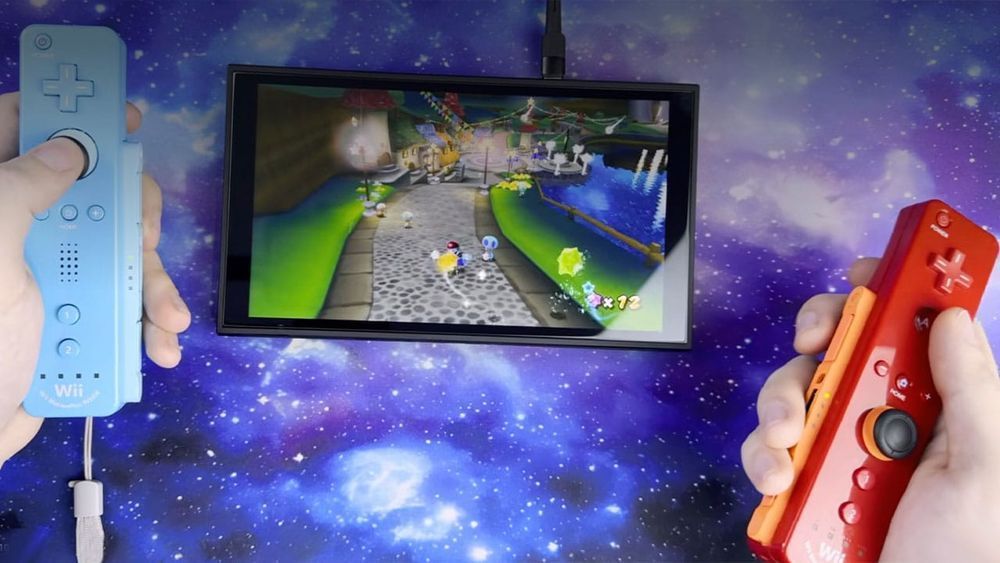
The history of gaming is filled with beloved peripherals, from the venerable Wii Remote to the modern Nintendo Switch Joy-Cons. But what if you could bridge that gap, creating a seamless, cross-generation experience? Enter YouTuber Kouzex, who has taken a fascinating engineering challenge and transformed discarded components into a bespoke motion controller system for the Switch 2.
Kouzex’s ingenuity lies in transplanting the complex internals of a pair of Joy-Con 2 controllers into the familiar shells of original Wii Remotes. The result is a unique motion controller setup that snaps magnetically onto a Switch 2 and functions flawlessly in a variety of games.
This wasn’t just a simple swap; it was a deep dive into component engineering. To achieve this, Kouzex kept only five essential parts from the Joy-Con 2: the motherboard, the thumbstick, the magnetic rail, the battery, and the HD rumble motor. The original Wii Remote’s circuit board, however, was retained to handle the familiar button functionality.
The construction required clever modifications to fit the components. The battery and rumble motor cables were adjusted, and the magnetic rail was carefully integrated into the Wii Remote’s thicker rear section. This process necessitated removing three of the shell’s four screw posts, allowing the magnets to securely hold the casing when the controller is docked. Importantly, the setup eliminates a physical release button, requiring the user to manually detach the controllers.
The connection process involved creative wiring hacks. Because the Joy-Con 2 stick ribbon cable was too short, Kouzex harvested a connector from a dead first-generation Joy-Con, soldering individual wire extensions to the pins before sealing the joints with UV resin. This ensured the necessary connection for the thumbsticks to operate.
The button mapping was another layer of customization. The D-pad and minus button were wired directly to their Wii Remote equivalents. The Home map mapped to Capture, the Plus button to one shoulder button, and the rear B trigger was mapped to R. When held sideways, buttons 1 and 2 served as B and A.
While the motion control aspect is key, even the thumbsticks were handled with careful design. They were epoxied only around their outer frame, a choice that allows for easy replacement if they ever drift. This design choice aligns with the fact that the Joy-Con 2 does not use Hall effect sticks, streamlining the physical architecture.
This project taps into a broader conversation about console evolution. While Nintendo has released controllers for many previous generations, the Switch 2 faces the challenge of integrating these disparate systems. Kouzex’s creation, tested in titles like Mario Kart World and Super Mario Galaxy, offers a unique, hands-on way to bridge the nostalgia of the Wii with the functionality of the Switch ecosystem.
As the Switch 2 prepares for new content, such as Switch Sports Resort, this modified setup promises a fresh, adaptable interface for players looking to explore the rich history of motion controls in a modern context.
Buy on Amazon
Credit