
NPO optics gain ground volume extends through decade
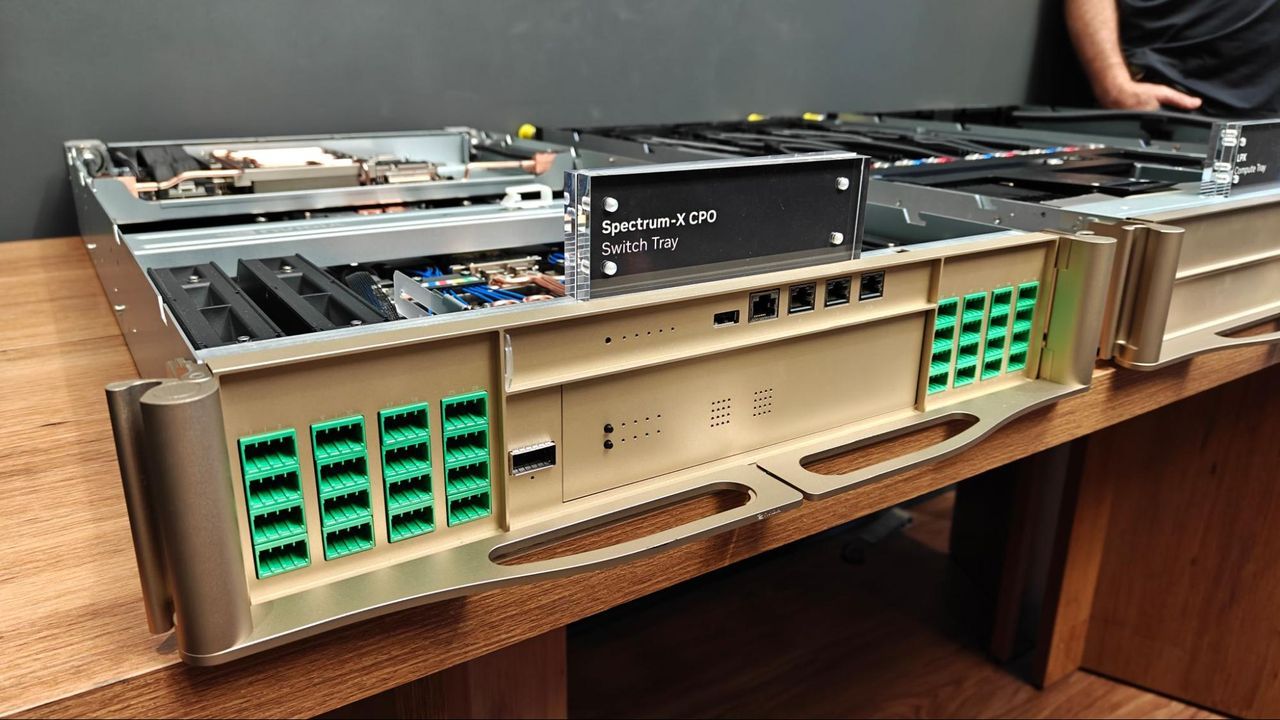
The high-speed networking world is on the brink of a massive architectural shift, moving from bulky pluggable components to integrated designs known as Co-Packaged Optics (CPO). But before we reach true co-packaging, a clever interim solution has emerged, promising flexibility and resilience: Near-Packaged Optics (NPO).
NPO isn’t just a technical footnote; it represents the strategic pivot many industry leaders are exploring to bridge the gap between current pluggable systems and the fully integrated future of CPO. As the industry races toward ultra-dense interconnects, the debate over how we integrate light into silicon has become critical, focusing intensely on performance, reliability, and—most importantly—serviceability.
The core difference between these architectures boils down to physical placement. In traditional pluggable optics, the optical components sit far away from the switch’s central processing unit (ASIC), requiring long copper traces and dedicated Digital Signal Processors (DSPs) to handle signal cleaning. This setup is convenient but introduces significant power overhead.
True CPO seeks to eliminate this distance entirely by placing the optical engine directly onto the same substrate as the ASIC, drastically reducing the electrical path. While this results in impressive power savings—with some companies reporting up to a 70% reduction in optics power—it introduces a major reliability challenge: soldering the optical engine permanently creates a single point of failure. A fault in one module can compromise the entire package, making field repair virtually impossible.
Enter NPO, which acts as the pragmatic middle ground. Instead of fusing the optical engine to the ASIC substrate, NPO places the optical engine on a separate substrate but connects it via a socket. This design achieves the goal of shortening electrical paths and reducing power consumption, yet retains the critical feature of serviceability.
This distinction is crucial for mass production yield. When components are soldered onto a single package (CPO), eliminating a dead optical engine forces engineers to accept lower compound yields, potentially resulting in only one functional assembly out of five or more parts.NPO sidesteps this issue by allowing the optical module to be pulled and replaced just like a pluggable component, ensuring that failure is confined to a single socketed unit rather than taking down the entire chip.
This focus on maintainability has solidified NPO‘s appeal. It offers field-replaceable modules, limits the blast radius of any fault, and simplifies assembly, proving to be an excellent interim solution while the full CPO transition is being finalized. Major players are actively pursuing this path, with companies developing standards to define a common interface for these socketed optical engines.
The push for standardization is gaining momentum. Industry groups are working to create a unified socket standard, which addresses the complexities of integrating various vendors and technologies into the next generation of high-speed networking gear. As production scales up—with estimates pointing toward over 100 million annual port shipments within five years—the architecture that balances performance with practical engineering is poised to define how future data centers connect.
Credit

