Nvidia and Japan build world’s first 140MW AI factory
The future of industry isn’t just arriving—it’s being built, one colossal AI factory at a time. Nvidia has just unveiled an ambitious plan to partner with Japan’s Noetra Corp. to create a foundational infrastructure designed to power the next industrial revolution, signaling a massive convergence between cutting-edge silicon and national strategic goals.
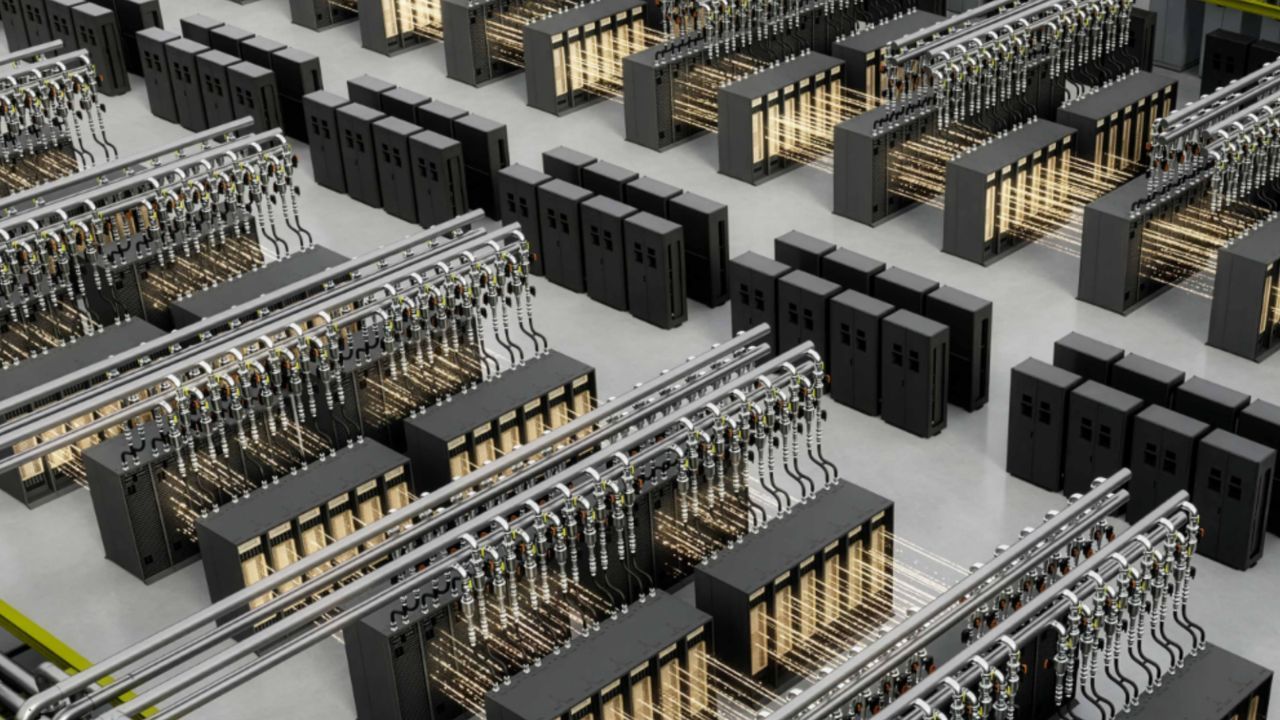
This collaboration is centered on building a 140-megawatt AI factory, establishing the core compute foundation for FRONTia, Japan’s state-funded physical AI program. The scale of this endeavor is staggering: it will house 27,500 Rubin GPUs and 13,750 Vera CPUs, creating an unprecedented engine for training open multimodal foundation models.
The blueprint for this facility utilizes specialized Rubin NVL72 racks running on Nvidia’s DSX reference platform, connected by high-speed Spectrum-X Ethernet. This setup is designed not just for computation, but for real-world application—training complex systems essential for robotics, digital twins, and industrial automation.
“Japan invented modern manufacturing. Now, it is building the AI factories that will power the next industrial revolution,” stated Jensen Huang, founder and CEO of Nvidia, emphasizing the transformative role of this infrastructure.
The sheer computational power involved pushes the boundaries of what is achievable. The chip count divides into 382 Vera Rubin NVL72 racks. These systems represent the power needed to process trillions of parameters, positioning this factory as a global hub for AI development.
The economics of this venture underscore its importance. While Nvidia has not disclosed specific project costs, the underlying hardware is already commanding massive investment; VR200 NVL72 systems are currently quoted between $5 million and $7 million apiece. This means the rack hardware alone could cost somewhere between $1.9 billion and $2.7 billion.
The value extends beyond the physical chips. The memory requirements for these advanced AI systems are equally demanding, with estimates suggesting that building the necessary memory can account for 25 percent of the total cost. This indicates that the pursuit of this infrastructure is a monumental investment in the future of technology.
Noetra itself is a dynamic consortium, brought to life by a coalition of major players including SoftBank Corp., Sony, NEC, and Honda, alongside 44 other organizations. This collaboration integrates private industry power with national research initiatives, demonstrating how large-scale AI goals require global coordination.
The roadmap for this initiative is ambitious, targeting the realization of “real-world native AI” capable of spatial awareness by fiscal year 2030. The long-term vision aims to develop reasoning foundation models by 2026 and omni-modal systems processing text, images, video, and audio by 2028.
This massive infrastructure serves as a vital link in Japan’s broader AI strategy. It aligns with other major national projects, such as SoftBank’s Blackwell-based DGX supercomputer and the $740 million FugakuNEXT system, demonstrating Japan’s commitment to establishing a leadership position in the rapidly expanding field of AI robotics.
Buy on Amazon
Credit