Nvidia breaks down 88-core Vera CPU and 1.2 TB/s memory specs
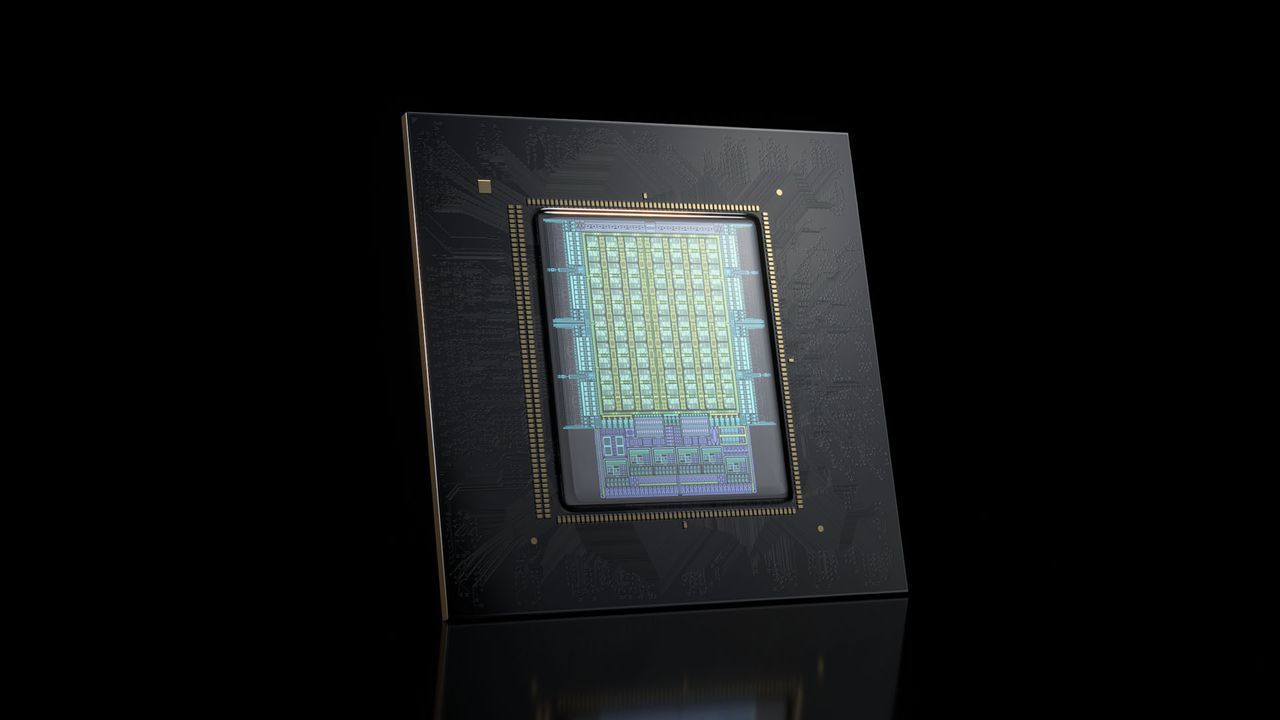
Nvidia Unveils Vera: The Brains Behind the Next Wave of Agentic AI
The race for the next generation of data center processors is heating up, driven by the insatiable demand for agentic artificial intelligence. At the forefront of this technological arms race is Nvidia’s Vera CPU, a processor designed specifically to power the complex, multi-layered workloads that define modern AI agents. It’s not just another chip; it’s a fundamental shift in how we think about processing power for the future of AI.
Nvidia has been steadily revealing the inner workings of Vera, focusing on how its architecture is optimized for this new domain. Unlike previous generations, Vera is built around a custom Nvidia core, the Olympus architecture, which incorporates revolutionary design choices aimed squarely at maximizing performance for agentic tasks. This design moves beyond traditional CPU constraints by introducing spatial multi-threading, a method that allows the processor to manage complex computational demands with remarkable efficiency.
What makes the Vera architecture particularly compelling is its approach to multi-threading. Instead of simply time-slicing resources between threads, spatial multi-threading allows core resources to be separated across two pipelines, enabling threads to work in concert while still maintaining deterministic performance. This innovative setup minimizes the “noisy neighbor” effect, leading to a more consistent and predictable performance curve, which is critical when running long, complex agentic workflows.
This architectural prowess translates directly into tangible speed gains for agentic tasks. In real-world scenarios, such as running headless browser instances—a common requirement for agents gathering information—Nvidia demonstrated that Vera can operate 24% faster than comparable CPUs when these instances scale up. Furthermore, when it comes to the foundational work of agentic AI, Vera showed significant acceleration in code compilation. Nvidia claimed Vera can compile the Linux kernel 22% faster with a native AArch64 target, and 14% faster for cross-compiling for x86.
Beyond the core design, Nvidia focused heavily on system-level efficiency. Recognizing that data center deployment demands extreme power efficiency, Vera incorporated an LPDDR5X memory subsystem. This choice was a strategic pivot, prioritizing power consumption over raw bandwidth in some comparisons. This focus aligns perfectly with Nvidia’s broader mission: delivering a CPU specifically tailored for power-limited data centers, demonstrating that efficiency is just as important as raw speed when building massive AI infrastructure.
This commitment to power efficiency is further evidenced by the system’s overall consumption. Nvidia noted that a fully loaded memory system running Vera can operate within a tight power envelope of 30W to 40W, a significant advantage when compared to traditional memory setups that can easily exceed 100W depending on configuration. This focus on power-per-watt is the silent engine driving Vera’s competitive edge.
Nvidia is positioning Vera not just as an incremental upgrade, but as a targeted solution for the burgeoning agentic CPU market. By delivering a single, powerful 88-core SKU and deploying it in massive projects like SpaceXAI, the company is setting a clear course. While competitors like AMD’s Venice and Intel’s Diamond Rapids are also pushing boundaries, the architectural innovations embedded in Vera—particularly spatial multi-threading and power-conscious memory—provide a powerful argument for its place at the center of the next era of agentic AI computing.
Buy on Amazon
Credit
